AI education by phone: African students win global prize for offline learning
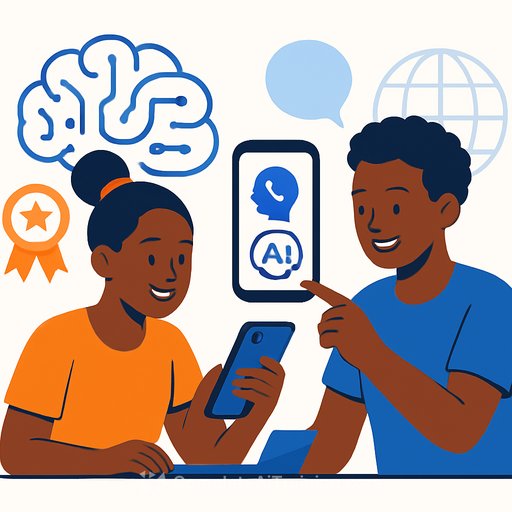
Two students from Texas Christian University, Happy Niyorurema and Mame Niang, built an AI system that teaches over ordinary phone calls-no internet, no smartphone. Their work was recognized in Dubai with the Global Best M-Gov Award at the World Government Summit.
Billions of people still lack internet access, especially across the Global South. This approach meets them where they are: on basic mobile phones.
How it works
The team trained a large language model - a form of Generative AI and LLM - and deployed it on telephony. Learners call a number and access lessons, explanations, and practice using voice through a standard call, relying on Speech-To-Text technology.
"When we talk about AI, we often assume people are online and able to use it. But there are 2.9 billion people, most of them in the Global South, who still lack internet access… We built our own AI (large language model), but instead of putting it on the web, we deployed it on telephony," said Happy Niyorurema.
Where it's live-and what's next
The pilot is underway in Rwanda. Expansion is planned across Africa, starting with Senegal and Zambia.
"It's extremely easy to use-you don't need a smartphone… With this, you can use even the most basic phone," said Mame Niang.
Why this matters for educators
- Reach students beyond connectivity limits: evening homework help, exam prep, or remedial support by phone.
- Reduce device barriers: any basic mobile works-no apps, no data plans.
- Support equity goals: serve rural communities, low-income families, and learners in emergencies.
- Scale teacher impact: free teachers from repetitive Q&A and provide consistent explanations in local languages.
Implementation ideas for schools and ministries
- Content mapping: align phone-based lessons to your curriculum and exam standards; localize examples and languages.
- Telephony setup: secure a toll-free or low-cost number; configure IVR menus and call routing for peak hours.
- Safety and quality: add guardrails for age-appropriate content; log conversations for auditing and improvement.
- Data and privacy: obtain consent, avoid storing sensitive data, and publish a clear data policy.
- Assessment loop: capture quick checks for understanding via keypad prompts; send teachers weekly insight summaries.
- Cost model: forecast per-minute costs, negotiate education rates with carriers, and seek public-private funding.
- Teacher workflow: train staff to triage escalations from the AI, contribute lesson scripts, and flag gaps.
If you're building staff skills for AI-enabled instruction, explore curated resources by role: AI courses by job.
The bigger stage
The World Government Summit convenes leaders to discuss innovation and public services. This year's edition concluded on Thursday, with the award spotlighting practical tech that expands access to learning.
For context on global connectivity gaps, see the International Telecommunication Union's latest statistics: ITU internet use data.
Your membership also unlocks: