
AI news ·
African teenagers use AI to create comics rooted in their own cultures
Kelele Comics is training teenagers across Africa to create AI-generated comic books rooted in their own cultures and languages. For these young creators, the tools open doors rather than close them-access to storytelling, not a threat to it.
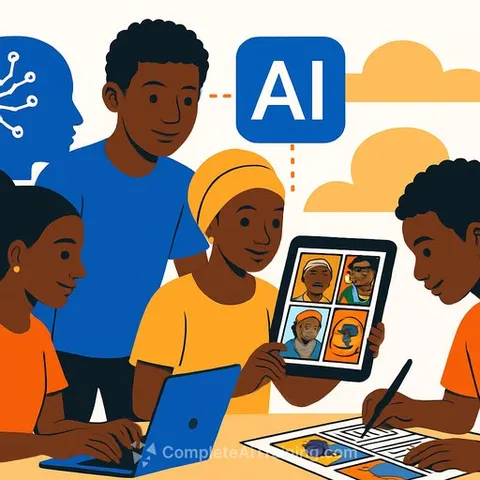
Young Africans are using AI to tell their own stories through comics
Kelele Comics is working with teenagers aged 13 to 17 across Africa to produce comic books using generative AI. The project focuses on giving young people a platform to create stories rooted in their own cultures, languages, and experiences-not on replacing professional artists or generating profit.
The initiative reflects a fundamentally different context from the AI ethics debate dominating conversations in the Global North. While Western critics argue that AI systems profit from human creative work without proper attribution or compensation, many African creators face a different problem: they lack access to creative tools altogether.
Access, not replacement
For young creatives in Kelele Comics, AI is not displacing human talent. It is removing a barrier. These teenagers are using the tools to generate images, develop storylines, and bring narratives to life-creative work they might not otherwise have been able to produce.
This distinction matters. A teenager using AI to tell a personal story about their community operates in a different context than a corporation using AI to replace a paid designer. The ethics shift when the question changes from "Who profits?" to "Who gets to create?"
Africa remains largely a consumer of global technology. Most AI systems and platforms were built by people outside the continent. If African creators wait for perfectly ethical, locally built alternatives, they risk being excluded from a digital future they're not building.
Who shapes the narrative
Africa's population is the world's youngest, with more than half under 25. This generation is coming of age in a world where digital tools determine who can tell stories and whose stories get told. For them, AI is a practical tool for participation, not an abstract ethics question.
Young creators across the continent are using these tools to embed their identities into media that has historically excluded them. They are becoming producers, not just consumers. In doing so, they're shifting who gets to define African narratives.
The ethical concerns around AI-data ownership, consent, fair compensation-remain valid and necessary. But context changes everything. Where access to creative tools has been historically unequal, the ethics of AI cannot be separated from the ethics of exclusion.
The global debate over AI ethics will continue. What's emerging in Africa is a parallel conversation: who has the authority to determine those ethics, and who gets left behind while waiting for perfect answers?
For creatives looking to understand how AI fits into your work, explore AI for Creatives and Generative Art resources.