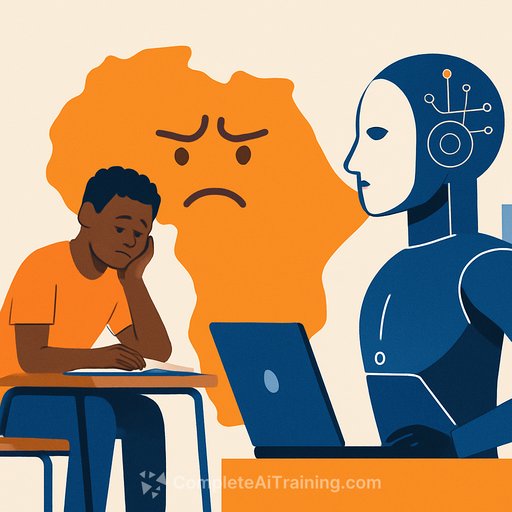
Why Universities Are The Unplugged AI Readiness Link
Artificial Intelligence (AI) is reshaping economic opportunity worldwide. Africa’s youth population is both a major asset and a challenge. By 2050, the continent is expected to supply over one-third of the global workforce. However, this potential risks becoming a liability if education systems don’t equip young people with the skills needed for an AI-driven economy.
While infrastructure and industry challenges exist, the core issue lies within Africa's higher education system. Many universities struggle to keep up with changing job market demands, sticking to outdated degree programs that fail to prepare graduates for AI and digital technology jobs. This growing skills gap limits Africa’s chances to benefit from AI and worsens employment problems.
The Depth of the Skills Gap: Quantifying the Crisis
The demand for high-skill digital and AI services is soaring globally, but Africa remains largely on the sidelines. In upper middle-income African countries, only 6-10% of the workforce works in high-skill services; this drops to 0-4% in lower middle- and low-income nations. This gap represents millions of missed opportunities and underused talent.
Many university graduates face unemployment or underemployment. For example, youth unemployment in South Africa reached 43.4% in early 2024, with many graduates lacking relevant skills. Employers often report shortages in digital literacy, critical thinking, and technical knowledge. Despite about 40% internet penetration in Sub-Saharan Africa, many with access still lack the digital skills that AI-driven industries require.
Why Are Universities Falling Behind?
The challenges in African higher education stem from several deep-rooted issues.
Outdated Curricula and Teaching Methods
Many universities focus on memorization and outdated teachings rather than fostering creativity, critical thinking, and problem-solving—skills essential for AI-related fields. Courses in data science, machine learning, and cybersecurity are slow to be introduced or updated. A 2025 report from the World Economic Forum estimates 60% of African primary students will work in jobs that don’t yet exist, highlighting the mismatch between education and future needs.
AI demands interdisciplinary skills, mixing technology, ethics, and business knowledge, but universities often remain divided into rigid departments.
Faculty Shortages and Skills Deficit
Even updated curricula require qualified teachers, yet many faculty members lack current knowledge or practical experience in emerging tech. Brain drain worsens this by drawing skilled educators abroad. Ongoing professional development opportunities are limited, leaving many instructors unprepared to teach new AI-related content.
Infrastructure and Resource Challenges
Teaching AI requires reliable internet, computing resources, and modern labs, which many institutions lack. Chronic underfunding affects facilities, research, and salaries. Large class sizes reduce opportunities for hands-on and personalized learning, which are crucial for mastering complex AI topics.
Disconnect Between Universities and Industry
Universities often operate in isolation from the industries that employ their graduates. Curricula may not reflect real-world skill demands, and practical training opportunities like internships are limited. Academic research tends to stay theoretical rather than fueling innovations that could boost local economies.
The Human Cost of Inaction
Graduate unemployment is a pressing issue across Africa. Nigeria sees many degrees misaligned with its growing digital economy. South Africa struggles to place graduates in high-tech jobs. Kenya, a leading tech hub, faces shortages in cybersecurity and data analytics skills.
AI is transforming traditional sectors as well. Agriculture, which employs around 60% of Sub-Saharan Africans, is adopting AI-based precision farming, but graduates often lack relevant skills. Finance uses AI for algorithmic trading and fraud detection, yet finance graduates frequently miss computational skills. Healthcare is integrating AI for diagnostics and personalized treatment, but medical education rarely includes these tools.
These gaps contribute to high youth unemployment, social unrest, and lost economic growth. Without skilled workers, Africa risks falling behind in AI innovation and widening its internal digital divide.
A Call for Urgent Transformation
Some progress is visible. Universities in Rwanda and Kenya are launching AI labs and tech-focused programs. Initiatives like Rwanda’s C4IR and Kenya’s School of Government, supported by the UNDP and Microsoft, show promise. South Africa invests in AI ethics and university projects, while Nigeria’s 3 Million Technical Talent initiative works with Microsoft and local universities to boost skills.
However, these efforts remain isolated and small scale. Traditional education reform moves too slowly for AI’s pace of change. Africa needs a shift from static teaching models to agile, continuous learning systems. Micro-credentials and lifelong learning frameworks must become standard.
Public-private partnerships can scale reskilling programs. Examples include Tunisia’s AI4Dev and Mastercard Foundation’s digital skilling initiatives. Governments, industry, and academia must collaborate closely to align curricula with job market needs, provide hands-on training, and focus research on practical challenges.
AI itself can help solve these problems. AI-powered platforms can create and update curricula dynamically, offer personalized learning, and extend quality education to remote areas. Adopting these technologies is essential.
Preparing For An AI-Powered Future
Africa’s universities cannot afford to stay stuck in outdated models, graduating students unprepared for modern demands. The digital divide starts in classrooms, not just in infrastructure. A skilled and adaptable workforce is Africa’s best asset for the AI era.
Incremental change won’t be enough. The focus must shift from crisis management to opportunity creation. AI presents a unique chance to develop new jobs and industries suited to Africa’s strengths.
By committing to bold educational reform, strategic investment, and innovative AI application, Africa can build economic resilience, widespread prosperity, and a leading role in global AI development. The future depends on educating youth for a world that is already changing.
For education professionals looking to expand AI skills and explore practical learning solutions, platforms like Complete AI Training offer relevant courses that align with emerging industry needs.
Your membership also unlocks: