Agentic AI in Insurance: Autonomy Requires Guardrails
Insurance companies face a widening gap between their operating model and the risks they now underwrite. Climate events escalate rapidly. Cyber exposures shift in real time. Supply chain disruptions cross borders overnight. The traditional insurance engine-underwriting discipline, structured claims adjudication, portfolio balancing-was built for a slower world.
Agentic AI offers a path forward, but only if insurers build it correctly. Unlike earlier automation tools that follow pre-set rules or generative AI that assists humans, agentic systems pursue defined goals, plan multi-step actions, adapt to feedback and retain context over time. They operate with transaction-level autonomy.
That autonomy must be calibrated to consequence. Approving low-value claims within policy terms may suit automated execution. Denying claims, alleging fraud or making material coverage decisions must remain with humans. The guardrails cannot be static rulebooks-they must be dynamic control frameworks that monitor for deviation patterns in real time and trigger secondary logic when thresholds break.
Where autonomy reshapes core functions
Underwriting: Real-time access to global developments and current claims data enables continuous portfolio management. Risk appetite can shift as exposures move across geographies and lines of business. Underwriting stops being a periodic gatekeeping function and becomes active, informed portfolio stewardship.
Claims: Agentic AI can synthesize images, correspondence, third-party data and historical precedent to accelerate decisions. Sequential steps can run in parallel. Settlements become faster and more consistent, informed by enterprise-wide and external data.
Policy servicing: A customer's plain-language email requesting an address change can trigger an endorsement. Non-premium-bearing changes execute instantly. Changes affecting premium, coverage limits or underwriting implications trigger validation logic and route for internal review before execution. Routine adjustments flow through; decisions with capital or risk implications do not.
The human role shifts, not disappears
As agentic systems handle high-volume analysis, pattern recognition and routine decisions, human experts refocus on governance, portfolio oversight and complex exceptions. They intervene when defined thresholds are breached or ambiguity arises. High-value claims and underwriting decisions outside appetite still require human review.
This is neither wholesale replacement nor static coexistence. It is strategic deployment of high-value professionals-underwriters, claims adjusters-toward judgment-intensive work. Technology delivers scale. Humans safeguard intent.
Governance must be built in, not bolted on
Insurance is a business of trust. In an autonomous decisioning environment, governance must be embedded into the architecture from the start.
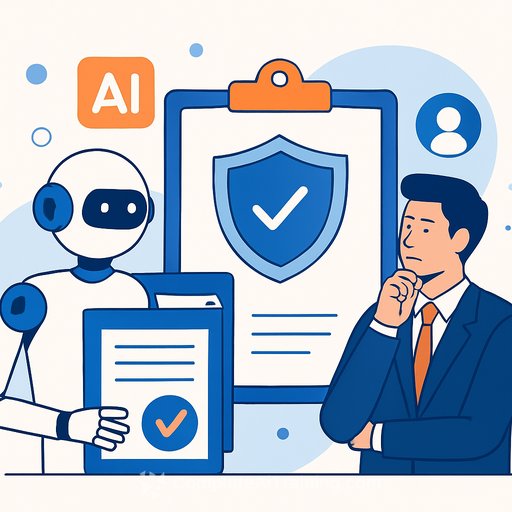
Guardrails should define what AI can recommend, decide or escalate. They should also include restrictions on task scope, self-modifying objectives and bias. Auditability is equally critical. Every decision must generate logs capturing the model version, prompts, retrieval sources, policy rules applied, reasoning pathway and data inputs.
If an auditor asks why a claim was denied on a specific date, the insurer must reconstruct the full decision chain. This traceability must be built from the outset, not retrofitted.
Not all decisions should be automated-even if they can be. Human oversight remains essential for claims denials, fraud accusations, policy cancellations, underwriting declines, high-value claims and cases involving vulnerable customers. For particularly sensitive decisions, dual approval can be built into the process.
The operating model remains fundamentally insurance
The insurer of the future is still governed by capital discipline and regulation. The difference is execution. AI orchestrates transactions at scale. Humans direct oversight and maintain accountability.
Agentic AI will transform insurers from passive payers of loss into real-time orchestrators of risk mitigation, loss prevention and capital deployment. But the operating model will see insurance specialists working with AI orchestration to supervise autonomous agents-not technology companies that happen to sell insurance.
Learn more about AI for Insurance and how AI Agents & Automation are reshaping industry workflows.
Your membership also unlocks: