Agentic AI Marks a Turning Point for Business – But Not Without Real-Time Dynamic Access to Business Data
The rise of Agentic AI is shifting how businesses approach automation and decision-making. Unlike earlier AI models that primarily answered questions or supported simple tasks, Agentic AI operates autonomously, making decisions and taking actions with minimal human input. This leap depends heavily on having real-time, dynamic access to business data.
What Makes Agentic AI Different?
Agentic AI isn’t just a smarter chatbot or search tool. It’s a system that uses multiple AI “agents” working together to perform complex, multi-step tasks. These agents can process different types of information—text, images, audio—enabling a level of reasoning that mimics human problem-solving.
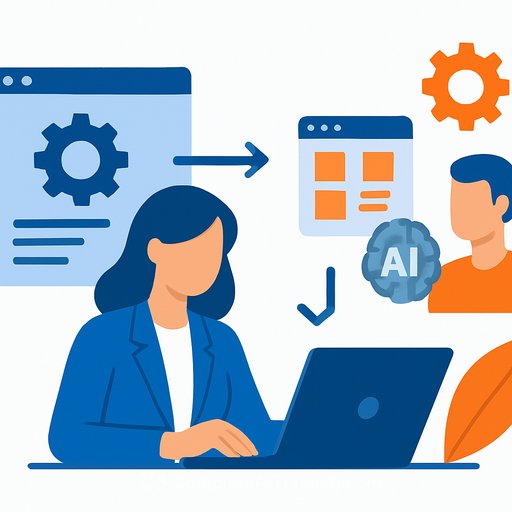
For example, an Agentic AI system could handle customer support tickets by:
- Finding similar past tickets
- Providing accurate answers based on historical data
- Adding comments to ongoing tickets automatically
This capability extends across various business needs, from managing inventory in real time to optimizing fleet operations.
The Challenge of Moving Beyond Pilots
Despite promising capabilities, many AI projects struggle to move from experimental stages to full-scale adoption. Studies indicate failure rates can reach 80%, often due to issues like limited AI expertise, complex data environments, and ethical considerations.
Legacy systems also pose a barrier. They often can’t handle the scale or performance demands of sophisticated AI, and integrating AI workflows with existing processes remains a challenge. Data quality, governance, and security concerns add further hurdles.
Real-Time Data is the Missing Link
The core problem is that many organizations rely on batch processing or static data models. These methods don’t provide the continuous, up-to-date information that Agentic AI requires to respond effectively in dynamic business environments.
An event mesh, built on event-driven architecture (EDA), offers a solution. It’s a network of event brokers that routes data instantly between applications and devices, no matter where they are located. This setup allows AI agents to access fresh, relevant data streams in real time and react immediately.
Why Event Mesh Matters for AI
- Decouples systems for easier development and updates
- Manages different messaging speeds and patterns
- Supports scaling across various applications and environments
Through event mesh, businesses create a flexible data distribution network that keeps AI agents informed and ready to act.
The Role of Agent Mesh in Simplifying Complexity
Building on event mesh, an agent mesh connects multiple AI agents under a dynamic orchestration layer. This framework lets agents collaborate on complex tasks and consolidate their outputs efficiently.
Agent mesh gateways provide controlled access points for different use cases, each with tailored input types and security measures. This setup enables truly autonomous AI systems capable of handling diverse requests, from chatbots to support tickets, without sacrificing control or security.
Phased Adoption with Minimal Disruption
One of the strengths of agent mesh is its non-intrusive design. Organizations can start small, deploying just a few agents for specific tasks, then gradually expand the system as needs grow.
This modular approach means existing applications remain intact while AI capabilities increase. It also allows for easy updates or additions of AI models and data sources without interrupting ongoing processes—vital for keeping pace with AI advancements.
Eliminating Blind Spots for Smarter Decisions
Access to timely, contextual data is critical for Agentic AI to function effectively. Without this, AI systems operate with blind spots, unable to respond swiftly or accurately to changing business conditions.
Integrating event and agent mesh frameworks ensures AI agents have the information they need when they need it. This foundation creates autonomous systems that can adapt, learn, and deliver meaningful business outcomes.
For organizations looking to expand their AI knowledge and skills, exploring targeted AI training can be a practical next step. Resources like Complete AI Training's latest AI courses offer structured learning paths suitable for IT professionals and developers aiming to implement these advanced AI frameworks.
Your membership also unlocks: