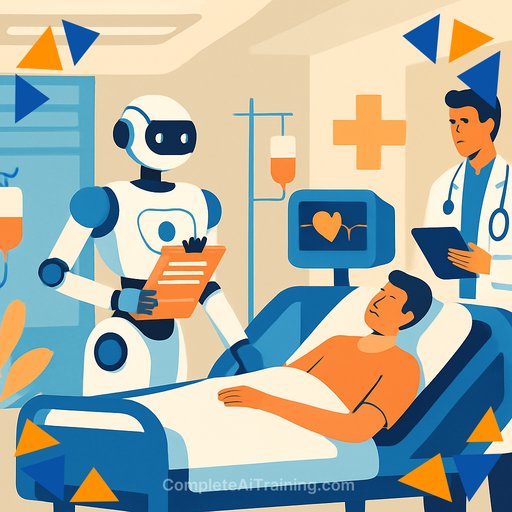
Agentic AI: The New Frontier in Healthcare Automation
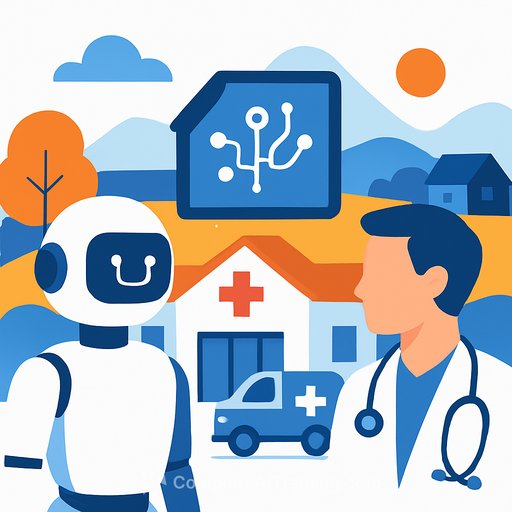
Artificial intelligence is evolving beyond tools that assist humans to systems that operate independently. Agentic AI refers to autonomous AI agents capable of initiating and completing tasks without human input. Unlike earlier AI models that required prompts or oversight, these agents can reason, ask questions, and execute workflows from start to finish.
This shift is gaining traction in healthcare, where complexity and volume of tasks demand smarter automation. At the recent Healthcare Information and Management Systems Society (HIMSS) conference, agentic AI was a key topic, highlighting its potential to transform operations and clinical workflows.
From Support to Autonomy: How AI Agents Differ
Traditional AI simplifies or accelerates human work—like transcribing notes or drafting messages. Agentic AI takes autonomy further, handling entire processes independently. For example, an agent can analyze data, make decisions, and take action without waiting for human approval.
Industry leaders like Nvidia have introduced platforms to build these “AI teammates,” estimating the market's potential to reach trillions in value. Projections suggest agentic AI will grow from $7.8 billion in 2025 to over $56 billion by 2030.
Practical Applications in Healthcare Systems
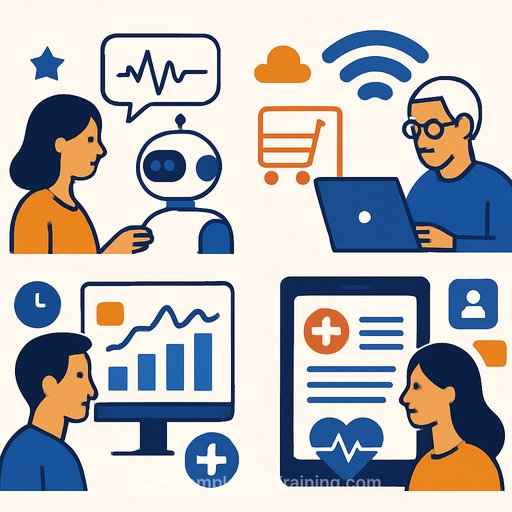
Hospitals and health systems are applying agentic AI across departments. In revenue cycle management, AI voice agents automate patient billing calls, freeing staff for complex tasks. Cedar and Zocdoc recently launched conversational AI agents that answer calls 24/7, improving patient experience and operational efficiency.
Clinically, AI agents assist physicians by rapidly synthesizing information. For instance, Google Cloud partnered with Seattle Children’s to develop Pathway Assistant, which retrieves clinical guidelines in seconds—tasks that would otherwise consume 15 minutes per query.
Enhancing Operational Efficiency
Agentic AI also optimizes hospital logistics. Platforms like Kontakt.io map real-time interactions among patients, staff, and equipment using data from electronic health records and Bluetooth tracking. Multiple specialized agents monitor different aspects—equipment availability, staffing levels—and coordinate responses when issues arise, such as alerting biomedical teams to potential shortages.
Streamlining Communication and Call Centers
Communication remains a bottleneck in healthcare, with many providers still reliant on outdated methods like fax machines. Patient satisfaction with call centers is moderate, and hold times often exceed recommended durations.
Agentic AI can improve this by automating routine calls—checking on missed appointments, scheduling labs, or addressing patient concerns. During high-volume periods like Medicare Advantage reverification season, AI agents can handle back-office calls, reducing the need for temporary staffing.
Minimizing AI Hallucinations in Clinical Settings
Accuracy is critical when AI agents support clinical decisions or patient conversations. While generative AI occasionally produces “hallucinations” or false outputs, agentic AI vendors are addressing this risk. Infinitus, for example, confines agents to specific data sets to avoid irrelevant information.
Color Health has developed a “large language expert” model combining language processing with structured clinical decision frameworks. This approach reduces the chance of fabricated responses by forcing the AI to reason through validated clinical factors.
Looking Ahead: AI’s Role in Healthcare Workflows
Both generative and agentic AI will coexist, each suited to different tasks. Agentic AI offers greater autonomy and complexity, but simpler AI remains valuable for cost-effective, less demanding applications.
While AI agents may reduce some call center roles, they are unlikely to replace physicians. Instead, expect new workflows where clinical and operational AI agents collaborate to streamline processes, optimize resources, and improve patient outcomes.
Conclusion
Agentic AI has the potential to support healthcare professionals by automating routine tasks and providing timely insights. As healthcare grows more complex, these AI systems can help physicians focus on delivering comprehensive care. This shift opens opportunities to rethink how medicine is practiced with intelligent tools assisting every step.
For professionals looking to understand how AI can enhance healthcare, exploring specialized training and courses can provide practical skills to adapt to these emerging technologies. Check out Complete AI Training’s latest courses for tailored learning paths.
Your membership also unlocks: