AI agents are automating routine lab work and accelerating scientific discovery
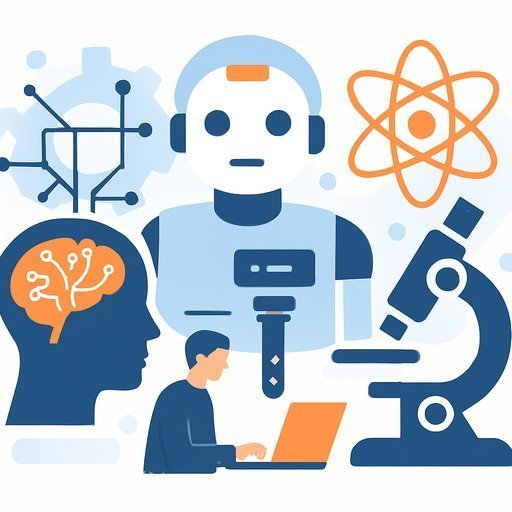
Agentic AI systems are moving beyond literature analysis into the physical lab, compressing months of experimental work into days and enabling researchers to focus on hypothesis generation rather than routine tasks.
The shift reflects a fundamental change in how AI can assist science. Large language models excelled at tasks that were easy to verify-mathematics, coding-but scientific discovery requires experimentation. Andrew Beam, chief technology officer at Lila Sciences, said the bottleneck isn't generating hypotheses anymore. "When you're talking about the discovery of new knowledge, you need verification. In science, we call it an experiment."
Lila is building autonomous labs to scale the scientific method. By running experiments at higher throughput, these systems generate data that trains the next generation of AI models, creating a feedback loop between computation and physical results.
Agents need wet lab connections
A critical limitation exists: AI agents trained only on published literature inherit the biases baked into scientific publishing. Marinka Zitnik, associate professor of biomedical informatics at Harvard Medical School, noted that 95% of life sciences publications focus on 5,000 of the most well-studied human genes.
Agents connected directly to lab instruments and diverse data sources-molecular structures, single-cell sequencing, clinical records-can generate hypotheses beyond what the literature suggests. This integration between computational reasoning and physical experiments is essential for meaningful discovery.
Four systems showing results
Kosmos (Edison Scientific) automates literature searches and data analysis while running hundreds of research tasks in parallel. The system identified a new mechanism of neuronal aging and generated evidence that high levels of superoxide dismutase 2 may reduce heart fibrosis in humans. Edison serves more than 50,000 researchers worldwide.
LabOS, developed by researchers at Stanford and Princeton, pairs AI agents with extended reality glasses and robots. The system understands experimental context and provides real-time guidance, addressing a reproducibility crisis where 70% of biomedical scientists cannot reproduce colleagues' experiments. LabOS was recently integrated with OpenClaw, an open-source AI assistant.
Latent-Y designs therapeutic antibodies from text prompts. The agent produced functional binders against six of nine targets without human intervention, working 56 times faster than traditional design approaches. It can also generate antibodies based on published research-in one case, it read a paper on blood-brain barrier crossing and designed validated antibodies targeting the human transferrin receptor.
Dyno Psi-Phi combines a molecular model with computational filters to generate protein binders more likely to succeed in experiments. The system prioritizes designs that work across multiple requirements, not just binding affinity. Dyno built the tool to be agent-friendly rather than human-centric, recognizing that AI systems will increasingly drive design campaigns.
The scientist advantage
Rory Kelleher, senior director of healthcare and life sciences at Nvidia, framed the shift plainly: "It's not that AI is going to replace scientists, but perhaps the scientists who use AI are going to phase out the ones who don't."
The advantage isn't replacing human judgment. Agents handle the overhead-searches, data organization, routine design iterations. This frees researchers to focus on what matters: asking better questions and interpreting results that machines cannot generate alone.
For researchers looking to stay current with these tools, AI for Science & Research courses cover how agents integrate into laboratory workflows and scientific discovery pipelines.
Your membership also unlocks: