
AI news ·
Agilent Technologies launches new AI chromatography tools
Agilent launches AI chromatography tools in July 2026 to automate lab workflows. The software cuts method development time by up to 40%.
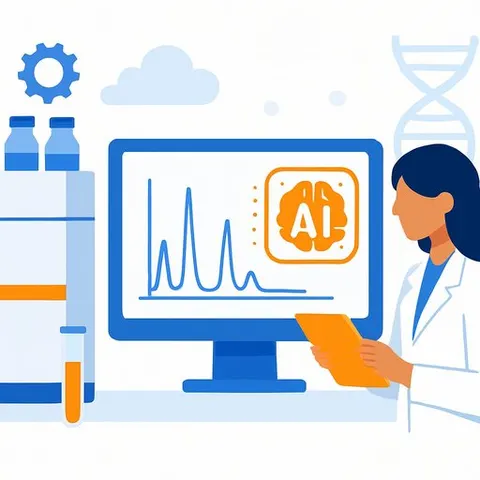
Agilent Technologies (NYSE: A) is rolling out a new set of AI-powered chromatography tools designed to automate method development, peak integration, and real-time data quality checks. The July 2026 launch expands the company's software portfolio for liquid and gas chromatography systems, directly targeting the workflow bottlenecks that cost research labs time and reproducibility.
What the new AI tools do
The software introduces machine learning models trained on thousands of chromatographic runs. It can predict optimal separation conditions, flag integration errors before they reach a final report, and adjust baselines without manual intervention. Agilent's existing OpenLab CDS platform now includes these capabilities as an upgrade, with a standalone cloud module for labs that run high-throughput screening.
One feature uses a neural network to classify peak shapes and suggest corrections. Another monitors instrument performance across multiple systems in a lab network, alerting staff when a column or detector drifts outside acceptable parameters. The company said the tools cut method development time by up to 40% in internal tests across pharmaceutical and environmental testing workflows.
Why Agilent is investing now
Chromatography data analysis remains a labor-intensive step in analytical chemistry. Experienced chemists spend hours manually integrating peaks and troubleshooting methods. Agilent's move follows similar AI integrations by competitors in the life sciences tools market, where instrument vendors are racing to add software differentiation. The company also cited growing demand from contract research organizations that need to process larger sample volumes with fewer skilled analysts.
For scientists building expertise in this area, structured programs like the AI Learning Path for Research Scientists cover the same machine learning techniques used in lab automation and data modeling. The skills translate directly to evaluating and deploying tools like Agilent's new chromatography software.
Global operations and instrument integration
Agilent's global service network will support the rollout, with remote installation and training available for labs in regulated industries. The AI tools work with the company's InfinityLab series and legacy 1100/1200 systems through a software bridge, which means labs do not need to replace hardware to access the new features. The company also updated its compliance documentation to help labs meet FDA 21 CFR Part 11 and EU Annex 11 requirements when using AI-assisted decisions.
Why this matters for science and research professionals
The shift toward AI in chromatography reduces the burden of repetitive manual analysis, but it also changes the skill profile expected in analytical labs. Researchers who understand how to validate AI-generated results and troubleshoot model outputs will have an advantage as these tools become standard. Courses focused on AI for Science & Research Courses provide practical grounding in the same algorithms now appearing in commercial lab software. For working scientists, that knowledge is quickly moving from optional to essential.