AI Agent Identifies Design Principle for CO2 Conversion Catalysts
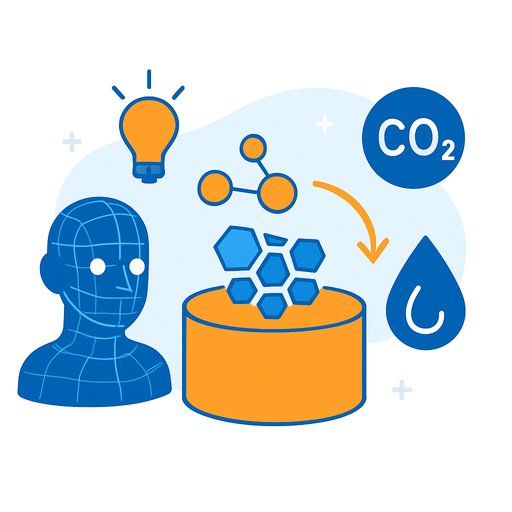
Researchers at Tohoku University used an AI system trained on a massive catalysis database to discover a universal design principle for copper-based catalysts that convert carbon dioxide into molecules for sustainable fuels. The findings, published Feb. 24 in Angewandte Chemie International Edition, move catalyst discovery away from trial-and-error toward AI-guided design.
The challenge has been straightforward: copper-based single-atom alloy (SAA) catalysts can produce different carbon products depending on chemical additives, but no one had developed guidelines for predicting which additives would yield desired results.
How the AI System Worked
The team built the Catalysis AI Agent, a large language model trained on a massive database called the Digital Catalysis Platform (DigCat). This database, currently the largest experimental database for catalysis research, contained years of experimental and theoretical data on catalyst behavior.
The AI agent analyzed the data to identify patterns. It discovered that copper-based SAAs produce desired carbon products by promoting formation of certain compounds-not by suppressing byproducts as researchers had assumed.
This insight led the team to classify the chemical additives, called dopants, in a new way. They then developed an energy descriptor to categorize SAAs and predict which products they would generate.
The Structural Descriptor
The researchers created what they call a "remarkably simple structural descriptor" that directly predicts the energy activation needed for carbon products. Testing showed it could describe not only copper dopants but other metal dopants as well.
This universal principle reveals how dopants interact with catalysts to produce predictable reactions-information that was previously unavailable to researchers designing new materials.
What This Means for Materials Science
The shift from empirical trial-and-error to AI-guided design with theoretical grounding should accelerate discovery of next-generation catalytic materials. The approach demonstrates how large-scale experimental databases combined with well-trained AI agents can both predict performance and generate design principles applicable across material types.
For researchers working on catalyst design and materials discovery, the methodology shows a concrete path for applying AI to reduce development timelines and guide experimental work more efficiently.
Your membership also unlocks: