AI Agents Are Starting to Replace Entry-Level Writers and Researchers
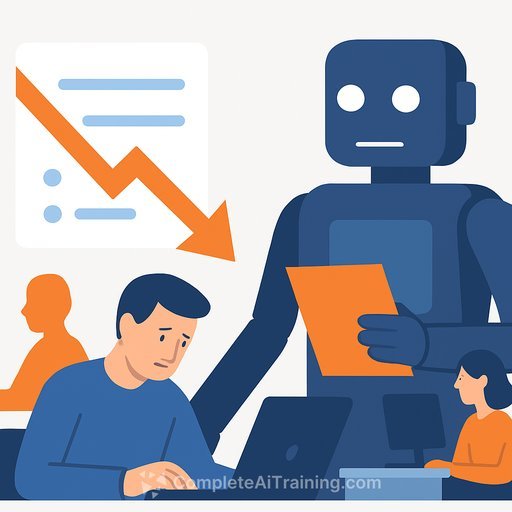
AI agents can now write content, summarize research, and organize information autonomously - work that junior writers and content researchers have traditionally handled. The World Economic Forum estimates that automation and AI could disrupt nearly 22% of existing jobs by 2030, with clerical and administrative roles among the fastest declining categories.
Unlike chatbots that respond to prompts, AI agents work independently. They access tools, data, and workflows to complete tasks without constant human direction. Anthropic's Claude Cowork sorts files and generates reports. OpenAI's Operator automates software workflows. Perplexity AI's Computer system navigates software environments like a human user would.
For writers specifically, the threat centers on research and junior content roles. AI research engines gather data, create summaries, and draft copy. McKinsey research indicates generative AI could fully automate 60-70% of tasks in document processing, research, and data analysis - the core functions of entry-level writing positions.
Which Writing Roles Face the Most Pressure
Content Researchers and Junior Writers. AI-powered research engines can aggregate information from multiple sources and produce drafts. Editorial oversight will likely remain, but the volume of junior research positions may decline as organizations consolidate these functions.
Research Analysts. Collecting information, aggregating sources, and structuring reports - tasks research analysts spend significant time on - are now faster for AI agents to complete than for humans.
Digital Marketing Executives. AI marketing platforms automatically analyze campaign performance, adjust budgets, and optimize ads. Routine execution work that junior marketers once performed is increasingly automated.
Where New Writing Work Will Emerge
The shift won't eliminate writing roles entirely. Instead, it will reshape them. Human writers will move toward work that requires judgment, creativity, and strategy - areas where AI still needs human direction.
New roles are emerging in AI supervision, prompt engineering, and content governance. Writers who understand how to work with AI systems, refine their outputs, and maintain editorial standards will find demand for their skills. Senior-level positions requiring strategic thinking and original analysis will remain largely human-driven.
The transition means writers need to adapt now. Learn how AI tools can augment your writing work rather than replace it. Understanding AI agents and automation gives you the foundation to stay relevant as these systems mature.
The challenge for writers and organizations alike is treating AI as a colleague rather than just a tool - and figuring out which work humans should keep doing.
Your membership also unlocks: