
AI news ·
AI agents could cut federal employee onboarding from two years to months, former CIO says
Federal onboarding averages 200 days before a new hire starts work, then another 6-9 months to full productivity. AI agents that answer questions and guide training could cut that timeline significantly.
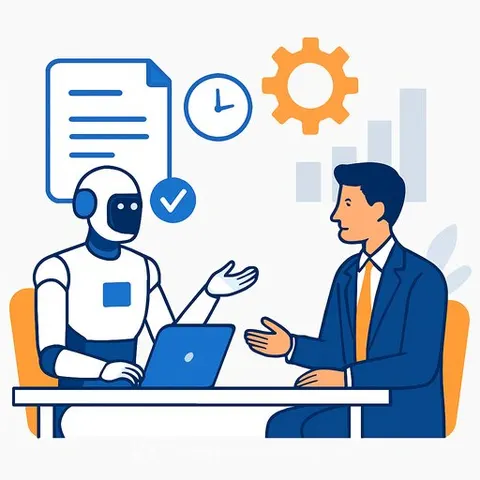
Federal Onboarding Takes 200 Days. AI Agents Could Cut That in Half
The federal government faces a staffing crisis that threatens service delivery across agencies. New hires spend an average of 200 days waiting to start work, then another six to nine months becoming fully productive-a two-year timeline the government can no longer sustain.
This comes as federal agencies are ramping up hiring after cutting 300,000 jobs last year. The Partnership for Public Service reports that federal employees under 30 make up less than 7 percent of the workforce. Meanwhile, 317,000 employees left the civil service through voluntary buyouts and early retirement programs, and 250,000 more are already eligible to retire.
The Government Accountability Office lists "Strategic Human Capital Management" as a critical vulnerability. The math is stark: the government needs to hire faster, train faster, and retain talent-or watch service delivery degrade.
The Training Trap
Current onboarding creates a self-defeating cycle. Senior staff spend hours training new hires while their own work stalls. To build workforce capacity, agencies temporarily lose it.
New employees often arrive without laptops or system access. They sit with notebooks while their enthusiasm fades. Some leave before completing onboarding.
The problem isn't just inefficiency. It's a signal to talented people that government work requires patience they may not have.
How AI Agents Can Compress the Timeline
AI agents-intelligent systems that guide, train, and adapt to individual needs-can compress the learning curve from years to months. Unlike chatbots, these tools function as active training partners that respond to questions, flag knowledge gaps, and adjust to each employee's pace.
An AI agent could guide a new hire through system access procedures, explain agency workflows, answer questions about benefits, and connect employees to human mentors when needed. Senior staff would spend less time on repetitive training and more time on mission work.
The technology works because onboarding follows predictable patterns. Most new employees ask similar questions about IT access, benefits enrollment, organizational structure, and role-specific procedures. AI agents handle these at scale without human intervention.
What This Means for Government Workers
For current federal employees, AI for Government tools could reduce the burden of training new staff. For new hires, it means faster ramp-up time and less time sitting idle.
Agencies that implement these systems first will have competitive advantages in recruitment. Candidates will see faster onboarding as a signal that the agency respects their time and is willing to invest in their success.
The federal government has resisted rapid workforce modernization for decades. The current staffing crisis removes that luxury.
Learn more about how AI Agents & Automation can address operational challenges in your organization.