AI Agents In Healthcare: From Pilot To Practice
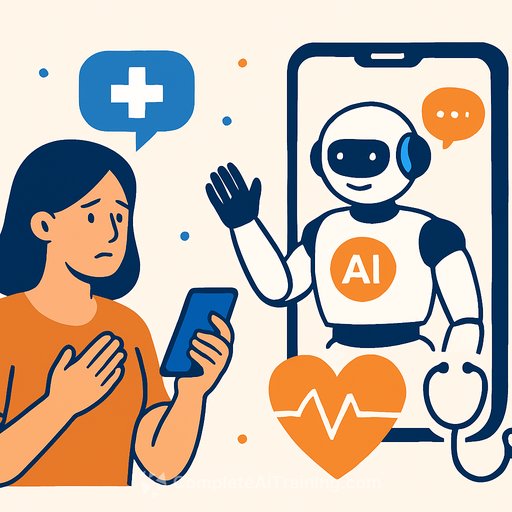
Healthcare organizations are turning to autonomous AI to handle rising patient demand, staffing gaps, and workflow inefficiencies. The market is projected to grow from USD 1.11B in 2025 to USD 6.92B by 2030, a 44.1% CAGR. The signal is clear: AI agents are moving into core clinical and operational workflows, not side projects.
What's In Scope
The latest analysis spans 530 pages with 550 data tables and 61 figures. AI agents now combine Generative AI and LLM, NLP, and real-time EHR integrations to interact with patients, clinicians, and core systems. Epic Systems, for example, is using agents to draft patient message replies, support documentation, and summarize charts-reducing administrative load and improving turnaround times.
Clinical Applications Are Scaling Fast
Clinical use cases are the fastest-growing segment because they directly impact care quality and outcomes. Agents support early disease detection, diagnostic prioritization, clinical decision support, and care coordination. They can execute multi-step tasks across imaging and EHR systems, which shortens time to diagnosis and treatment and reduces variability.
Multi-Agent Systems Move To The Front
Overall, multi-agent architectures are set to grow the quickest through 2030. These setups coordinate contextual, conversational, pattern-recognition, and analytical agents across clinical, operational, and analytical workflows. The result is synchronized insights and handoffs across hospitals, ambulatory settings, imaging centers, and large networks.
Providers Lead Adoption
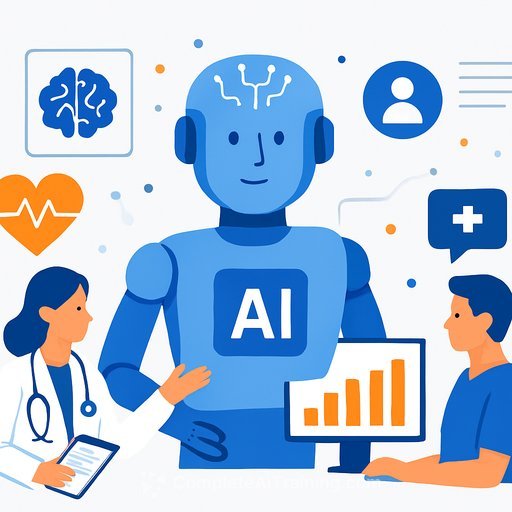
Hospitals, clinics, and IDNs are deploying agentic AI for intake, triage, scheduling, documentation, diagnostic routing, and care coordination. Tight staffing and resource constraints make automation practical, not optional. The biggest gains show up when agents plug into EHRs, imaging, and scheduling tools-fewer clicks, faster cycles, safer handoffs.
Vendors To Watch
Established platforms are investing heavily in healthcare-grade models and tooling: Oracle, Microsoft, IBM, Google, Amazon Web Services, and NVIDIA. Expect continued investment in platforms, clinical integrations, and partner ecosystems.
Specialists and enablers are active as well: NextGen Invent, Automation Anywhere, Innovaccer, SoundHound AI, CitiusTech, Databricks, Salesforce, Kore.ai, LivePerson, LeewayHertz, Gupshup, and Irisity AB. Partnerships and co-development are accelerating use-case delivery.
What Healthcare Leaders Should Do Next
- Pick two high-friction workflows (e.g., inbasket triage, prior auth, discharge summaries) and set clear metrics: turnaround time, staff hours saved, patient wait time.
- Map integrations first: EHR, imaging, scheduling, call center, payer portals. No integration, no value.
- Start with human-in-the-loop. Route edge cases to clinicians and keep full audit trails inside the record.
- Stand up governance early: clinical safety review, bias checks, PHI handling, incident response, and model update policy.
- Run a 60-90 day pilot with baselines and targets, then expand. Treat agents as a product with ownership, SLAs, and continuous tuning.
- Plan for orchestration - single-use bots help, but coordination across departments multiplies the gains; see AI Agents & Automation best practices.
- Upskill staff so adoption sticks and shadow processes don't reappear.
Key Figures And Resources
Market size: USD 1.11B (2025) to USD 6.92B (2030), 44.1% CAGR. Scope: 530 pages, 550 data tables, 61 figures.
Download the industry analysis (PDF). For workforce enablement, explore AI training by job role.
Your membership also unlocks: