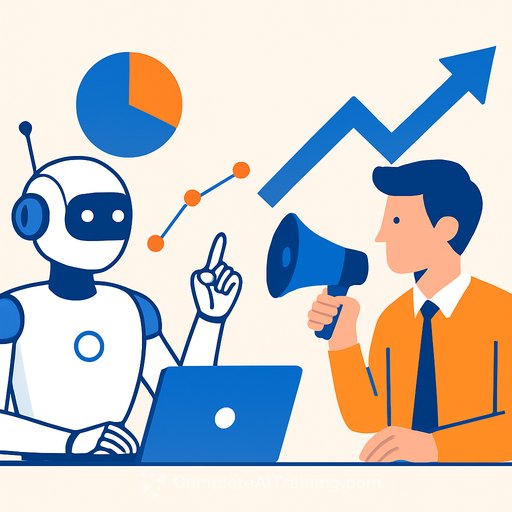
AI Marketing 2025: From Tool to Strategic Partner
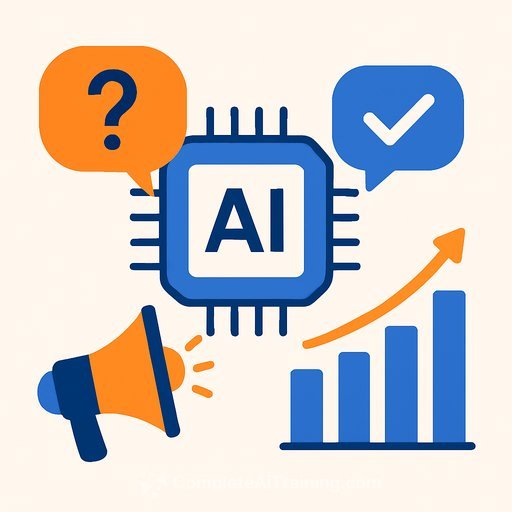
AI has moved from support act to central operator. It now plans, simulates, and executes campaigns with the speed and accuracy you expect from a top-tier team-at a fraction of the time.
The promise is clear: up to 50% efficiency gains while keeping trust front and center. The shift starts by treating AI as a strategic partner that drafts the plan, tests it virtually, then improves it live.
AI Agents Take the Helm in Campaign Orchestration
AI agents are moving beyond demos and into daily workflows. They ideate, brief, A/B test, optimize budgets, and push updates without waiting on weekly standups.
Marketing cycles compress from weeks to hours. Personalization tightens. Budgets stretch further because agents route spend to what works in the moment.
- Stand up an agentic pipeline: brief creation → asset generation → auto A/B → budget reallocation.
- Set guardrails: brand rules, risk thresholds, and approval triggers for sensitive campaigns.
- Pilot in one channel (paid social or CRM) before rolling out across your stack.
Synthetic Influencers Reshape Brand Narratives
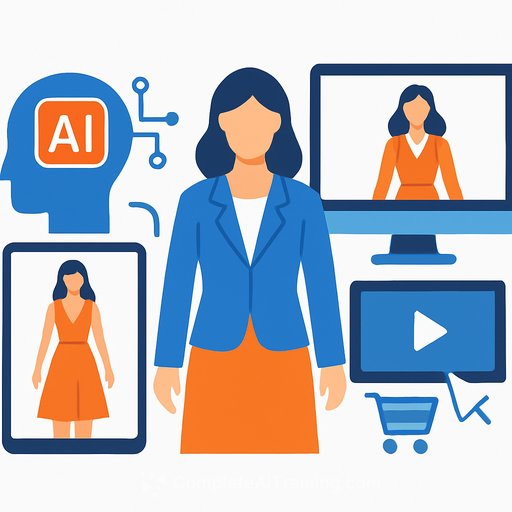
AI-generated personas are engaging audiences across TikTok and Instagram with human-level conversation and consistency. Content creation speeds jump (reports show up to 40% faster), while unit economics improve because these personas scale without burnout.
But privacy is the line. Expect "privacy-balanced personalization" with techniques like federated learning to keep user data decentralized. In the EU, non-compliance can lead to fines up to 4% of global revenue-worth having your legal and data teams aligned. See official guidance on GDPR enforcement from the European Commission: EU Data Protection.
- Use synthetic creators for product education, promo variations, and multilingual content.
- Lock down disclosures and brand safety. Build "do/don't say" rules into the model.
- Measure comment quality and conversation depth, not just views.
Dynamic Content Engines Drive Hyper-Personalization
Dynamic content engines adapt in real-time-mood, location, behavior-to generate thousands of on-the-fly ad variants. Teams report up to 50% efficiency improvements when creative, media, and data run through one adaptive system.
Expect "adaptive websites" by default and AI-first SEO that predicts topics with viral potential. Adoption is already strong: roughly 70% of marketers are using generative AI for personalization, up from 45% a year earlier.
- Ship modular creative: hooks, bodies, CTAs, and formats the engine can mix and match.
- Connect CDP data to trigger dynamic offers and product displays in-session.
- Add AEO (Answer Engine Optimization) to your SEO roadmap as assistants grow.
Privacy Tech Emerges as the Trust Anchor
Zero-party data becomes your cleanest signal: ask for preferences and give clear value in return. Train models with synthetic customer data to reduce risk while keeping model quality high.
Natural language querying lets non-technical teams ask questions and get insights without dashboards. This spreads intelligence across the org, not just the analytics pod.
- Implement federated learning for personalization without centralizing raw user data.
- Stand up a synthetic data pipeline for model development and testing.
- Publish a lightweight data ethics policy customers can actually read.
Agentic Workflows Redefine Metrics
Clicks and CTRs won't tell the full story. New agent-driven KPIs are emerging: trust scores, reliability indices, autonomous conversion rates, and cost-per-agent-assisted sale.
Teams report agents closing more sales on their own, while AEO begins to edge past traditional SEO in voice-led journeys. Custom brand models are lifting engagement by double digits when trained on your tone, product logic, and buyer objections.
- Shift your scorecard: add "assist rate," "safe automation rate," and "brand consistency score."
- Build a brand model fine-tuned on style guides, product FAQs, and compliance rules.
- Map where agents should act solo vs. hand off to humans for high-empathy moments.
Quantum Leaps and Cybersecurity Imperatives
Quantum AI threatens current encryption standards, pushing teams to explore post-quantum cryptography. For background, review NIST's work here: NIST Post-Quantum Cryptography.
Meanwhile, agent vulnerabilities expand the attack surface. Expect AI-fortified defenses, continuous monitoring, and red-teaming your own agents. In e-commerce, agents acting as shoppers are set to reshape how discovery, comparison, and checkout happen.
- Run a security audit on every agent: prompts, permissions, data access, and logs.
- Adopt post-quantum readiness in your security roadmap; track vendor timelines.
- Tie ESG goals to AI usage: energy impact, data minimization, and transparent AI labeling.
Leadership Evolution: CMOs as Human-AI Orchestrators
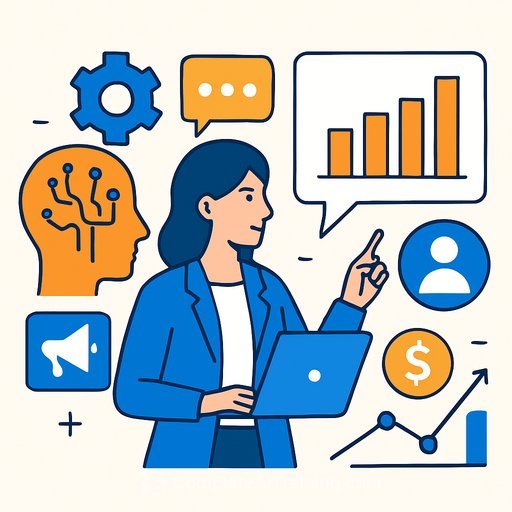
CMOs are moving into orchestration: process design, ethical oversight, cross-functional enablement, and talent upskilling. The core skill is turning messy inputs into clean workflows where humans and agents complement each other.
- Define a marketing playbook where agents do repeatable work and humans handle insight, taste, and relationships.
- Create an AI review board for privacy, bias, and brand risk.
- Upskill weekly-short cycles, hands-on practice, and metrics tied to real campaigns.
Your 30-Day Action Plan
- Week 1: Pick one use case (email personalization or paid social creative). Set guardrails, data sources, and success metrics.
- Week 2: Deploy a dynamic content engine with modular assets. Turn on auto A/B testing.
- Week 3: Launch a zero-party data prompt with a clear value exchange. Feed results into the engine.
- Week 4: Roll out an agent-driven scorecard and present outcomes to leadership. Approve next channel expansion.
Keep Your Team Current
If you're building AI fluency across your marketing org, explore these resources:
2025 is the tipping point. Teams that pair AI's precision with human taste, empathy, and judgment will move faster, spend smarter, and earn trust at scale.
Your membership also unlocks: