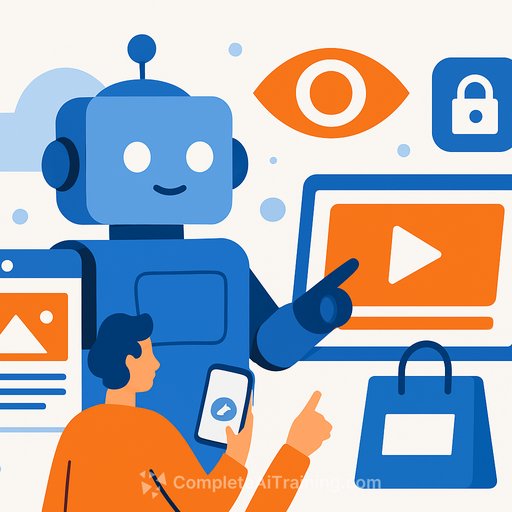
AI, Advertising & The Battle For Consumer Attention
Attention is scarce. Feeds are louder, formats are shorter, and the cost of a thumb-stop keeps climbing. Flam's Karthik K Raman points to the next frontier: immersive formats, consent-driven ads, and visual commerce. He's right-this is where performance will come from in 2026.
The shift: from loud to useful
Interruptions are losing. Utility wins-try-ons, demos, and content that sells without feeling like an ad. Pair that with clear consent and frictionless shopping, and you have the new baseline.
1) Immersive formats that earn the pause
Vertical video, AR try-ons, 3D demos, shoppable stories-these formats work because they simulate the in-store moment. They invite action. Build for native contexts and keep the feedback loop tight.
- Creative rules: Hook in 2 seconds, design for sound-off, use human presence, show outcome before process.
- Interactivity: Tap-to-compare, 360 product spins, swipeable bundles, live price/stock cues.
- Shoppable video basics: Pin the product early, repeat the CTA, keep SKUs visible, respect platform pacing.
- Production speed: Use AI to generate variations, auto-caption, and test thumbnails at scale. See Generative Video for practical tools and workflows.
2) Consent-driven ads that people opt into
Trust converts. Move from covert tracking to value-for-permission. Ask for what you need, explain why, and give something back-exclusive access, perks, or genuinely useful content.
- Value exchange: VIP drops, loyalty boosts, insider pricing, creator-only content.
- Progressive profiling: Start with email or SMS, layer preferences over time (style, size, interests).
- Targeting shift: First-party data + contextual + cohorts. Build segments by consent depth, not just events.
- Standards to watch: IAB Transparency & Consent Framework, Google Privacy Sandbox.
Copy that works: "Tell us what you like. We'll only send what you want." Short, honest, and specific. Then prove it with fewer, better messages.
3) Visual commerce that closes the loop
Make discovery shoppable and remove steps. If someone sees it, they should be able to buy it-without going on a scavenger hunt.
- On-site: Shoppable galleries, SKU-level videos on PDPs, UGC carousels, size/fit visualizers.
- Social: Native shops, Live + product pins, creator storefronts, image search readiness.
- Signals: Auto-pull price, variants, and stock into creatives to keep ads current.
- Proof: Show social proof overlays (bought X times today), and dynamic bundles based on browsing.
Where AI fits (and pays back)
- Creative volume: Generate multiple hooks, cuts, and aspect ratios; auto-caption and brand-safe edits.
- Attention scoring: Predict which frames hold focus; reorder scenes; test thumbnails pre-flight.
- Personalization: Swap products, price, and copy per segment or consent tier.
- Optimization: Budget shift by creative/placement in near-real time; suppress fatigue proactively.
If you're building this muscle, start with AI for Marketing to align tools with your funnel and consent model.
Practical playbook
30 days
- Audit: creative hit rate, attention metrics (3s views, hold %, VTR), and consent opt-in sources.
- Stand up a shoppable video pilot on one paid channel and one owned surface (homepage or PDP).
- Test a clear value exchange for consent on top 3 traffic pages.
60 days
- Produce AR/3D for top 5 SKUs or one hero experience.
- Roll out progressive profiling in lifecycle flows (welcome, post-purchase, win-back).
- Launch creator-style UGC with 5-10 fast variations per concept.
90 days
- Segment media by consent depth; shift spend to high-consent audiences and contextual cohorts.
- Automate creative swaps by stock/price and seasonality.
- Scale shoppable content to two more channels with unified SKU feeds.
Metrics that matter
- Attention: 3s view rate, average hold time, scroll-stop rate.
- Consent: Opt-in rate, preference depth per user, unsubscribe-to-send ratio.
- Commerce: PDP video engagement to add-to-cart lift, click-to-cart time, assisted revenue from shoppable media.
- Efficiency: CAC by consent tier, ROAS by format, creative fatigue half-life.
Common pitfalls
- Ported TV edits: Long intros and brand-first framing lose the first two seconds.
- Asking for too much, too soon: Kill opt-ins by demanding full profiles on the first touch.
- Static product data: Out-of-stock ads erode trust and waste spend-connect real-time feeds.
- One-size-fits-all CTAs: Match CTAs to intent: watch, try, save, or buy now.
The takeaway
Immersive beats interruptive. Permission beats tracking. Visual commerce beats extra clicks. This is the new attention stack-and it's where your next lift will come from.
Flam's Karthik K Raman put a spotlight on it. Your move is to operationalize it-one format, one consent win, and one shoppable flow at a time.
Your membership also unlocks: