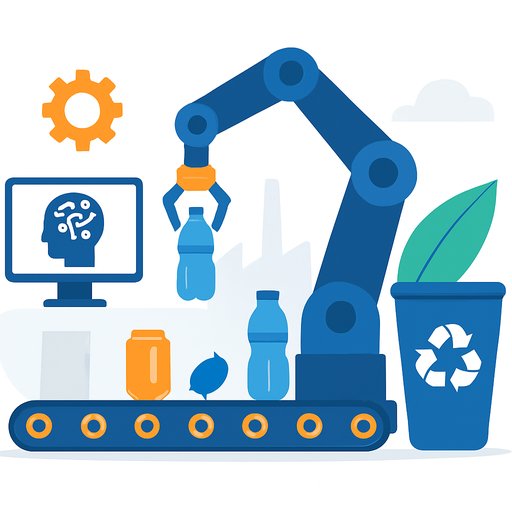
Modern material recovery facilities: Automation, safety & sustainability
MRF operations are shifting toward smarter automation and tighter safety. The result: higher throughput, cleaner commodities, and fewer people at risk on the line.
This isn't about hype. It's about solving labor gaps, meeting stricter contamination limits, and keeping uptime steady.
Current trends in MRFs
- Adapting systems to changing inbound streams and tougher contamination thresholds
- Reducing manual touchpoints with proven automation and safer layouts
- Using real-time data to tune equipment, cut downtime, and hold purity targets
Advanced optical sorting with AI and air ejection
AI-driven optical sorters paired with precision air ejection deliver speed and accuracy at scale. The air jets can eject multiple targets at once, which keeps throughput high during peak loads.
Compared to robotic arms, air ejection has fewer moving parts to service and less frequent stoppages. That lowers total cost of ownership while protecting purity and bale quality.
Nonwrapping screen tech: OCC Auger Screen
The OCC Auger Screen removes the need for a manual presort on common contaminants. That lowers headcount on the line and reduces exposure to hazards.
- Anti-wrapping, anti-jamming design manages "stringy" items-ropes, chains, film-without clogging
- Recognized with the 2022 NWRA Recycling Equipment Innovator of the Year Award
Example: Metro Waste Authority's MRF operates with no presort or postsort stations and eliminated labor dedicated to nonprogram material by 100 percent.
Data-driven performance optimization
AI-enhanced controls and SCADA give operators a live view of belts, screens, optics, and bunkers. With accurate flow data and quality feedback, you can adjust setpoints before issues spread.
For additional perspectives on designing AI-driven and automated systems in this space, see Design (AI & Automation).
Standardized reporting supports continuous improvement and compliance with contamination targets. Think faster changeovers, fewer surges, and predictable purity.
Safety and workforce management
Automation reduces contact with sharps, medical waste, and other hazards. Strong safety programs still matter: train for infectious material handling, equipment lockout, and emergency response.
High turnover and temporary staffing make consistency hard. Automated stations stabilize performance and keep essential roles focused on maintenance, quality checks, and control room ops.
For reference on exposure risks and controls, see OSHA's Bloodborne Pathogens Standard here. For guidance on reducing contamination, review the U.S. EPA's overview here.
Creating sustainable operations
- Higher throughput and cleaner output with AI optics and air ejection
- Improved worker safety by removing manual presort and hazardous touchpoints
- Lower labor dependency and steadier staffing plans
- Consistent compliance with strict contamination standards
Operator checklist: move from idea to impact
- Map current flow, purity, and downtime by shift; set target KPIs (throughput, purity, OEE)
- Model TCO for air ejection vs. robotic arms on critical lines
- Pilot AI optics and SCADA dashboards on one stream; validate with bale audits
- Update SOPs, lockout procedures, and safety training before commissioning
- Schedule weekly reviews of alarm trends, ejection accuracy, and contamination reports
About CP Group
CP Group designs, integrates, and optimizes MRFs with advanced sorting and automation. The focus: higher recovery, better quality, and lower operating cost. Learn more at www.cpgrp.com.
Your membership also unlocks: