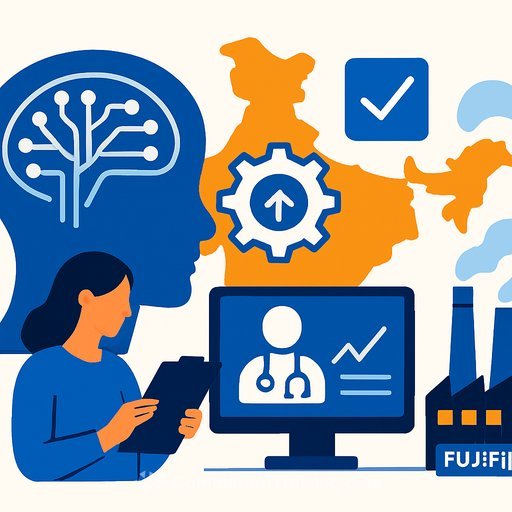
AI and Data Must Shorten Diagnostics: Key Takeaways from LG Manoj Sinha at APCON 2025
At Government Medical College, Jammu, Lieutenant Governor Manoj Sinha called for integrating Artificial Intelligence and big data into diagnostic workflows to improve accuracy and speed up clinical decisions. Speaking at the inaugural session of APCON 2025, he urged health systems to narrow the gap between diagnosis and treatment-especially for patients outside urban centers.
The conference, themed "Emerging Trends in Pathology: From Morphology to Molecular Insights," brought leading pathologists and microbiologists together for five days of focused discussions and practical updates. The message was clear: precision diagnostics should move from aspiration to daily practice.
Why this matters for care teams
Diagnostic delays compound risk, cost, and patient anxiety. AI-assisted interpretation and data-driven triage can lift accuracy, reduce turnaround time, and support clinicians with clearer, earlier insights. Done well, it also helps standardize care across facilities with varying resources.
Core priorities outlined by the LG
- Make precision medicine routine through advanced diagnostic tests and decision support.
- Equip pathology with modern tools for image analysis, pattern recognition, and molecular reporting.
- Develop standardized treatment protocols through multidisciplinary research.
- Update medical education with current training modules on AI, data literacy, and quality systems.
- Expand digital health records and strengthen the ABHA ecosystem to enable secure, longitudinal data use.
- Link smaller health centers with larger laboratories for expert advisory support and faster escalation.
- Establish dedicated diagnostic facilities in remote areas to cut diagnostic-to-treatment intervals.
Data and interoperability: make it usable, not just stored
Data only helps if it's clean, connected, and accessible at the point of care. The call to strengthen ABHA is practical: unify records, reduce duplication, and enable timely insights across settings.
For teams building digital pathways or referral networks, align with national standards under the Ayushman Bharat Digital Mission. Learn more about ABHA here: ABHA overview.
What labs should build next
Laboratories were urged to invest in infrastructure that turns raw data into clinical meaning. That includes validated AI tools for morphology and molecular analysis, structured reporting, and analytics that feed back into quality improvement.
- Digitize slides and reports where feasible; standardize nomenclature and templates.
- Adopt quality metrics: turnaround time, concordance, re-review rates, and alert thresholds.
- Create data pipelines for de-identified outcomes research to refine protocols.
- Set up telepathology consults for complex cases to support peripheral centers.
Public-private collaboration for rural diagnostics
The LG emphasized a shared responsibility to bring reliable diagnostics closer to patients. Public-private partnerships can pool equipment, talent, and logistics to extend services beyond district hospitals.
Think hub-and-spoke: central labs handle specialized testing; spokes manage sample collection, POCT, and teleconsults. This model improves access without compromising quality.
Suggested 90-day action plan for administrators and lab leads
- Map the diagnostic-to-treatment interval for top five conditions in your facility; identify bottlenecks.
- Pilot AI-assisted triage or image review for a single high-volume test (e.g., hematology smears or histopath screens) with a defined validation protocol.
- Standardize report templates and SNOMED/LOINC mappings where applicable.
- Integrate ABHA IDs into registration and LIS; train front-desk and lab staff on workflows.
- Set up telepathology links with a referral lab; define SLAs for consult turnaround.
- Run a CME on AI safety, bias, and human oversight using current guidance from WHO on AI in health.
Education and upskilling
Clinicians and lab professionals will need practical fluency in data interpretation, validation, and oversight of AI tools. For structured learning paths by role, see this curated list: AI courses by job.
Who was in the room
The session was attended by Dr Ashutosh Gupta (Principal, GMC Jammu), Dr Usha Kini (President, IAPM), Dr Reeni Mallik (Vice President, IAPM), Dr Ranjan Agarwal (Honorary Secretary, IAPM), office-bearers of IAPM and IAP-ID, and a large group of pathologists and medical professionals. MLA Arvind Gupta, Dr Syed Abid Rasheed Shah (Secretary, Health & Medical Education), and senior civil and police officials were also present.
The takeaway: invest in AI-enabled diagnostics, unify data, and connect centers so patients get answers faster. That's how we move precision medicine from conference halls to bedside decisions.
Your membership also unlocks: