AI-Powered Content: Creative Revolution Or Creative Crisis?
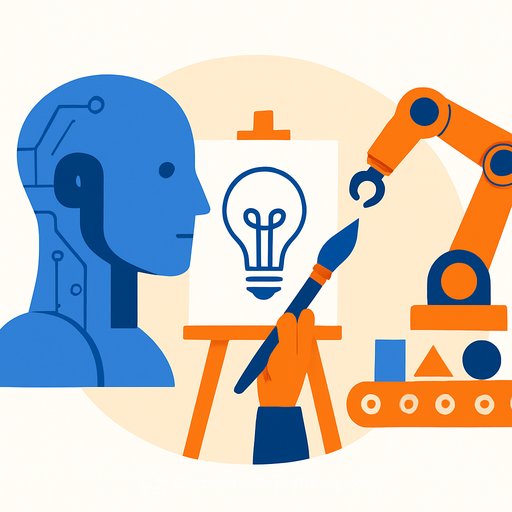
AI is everywhere in creative work. Output is up. Deadlines feel lighter. But the question won't go away: are we amplifying originality, or standardising taste at scale?
Industry voices including K Ganapathy Subramaniam, Karthik K Raman, Divya Krishnan, Amar Kondekar, and Sumeet Pahwa have been pressing on the same tension. AI can help you make more. The risk is you start sounding like everyone else.
What's actually at stake
- Speed vs. taste: Faster drafts are helpful, but speed can flatten taste if unchecked.
- Exploration vs. convergence: Models widen idea space, then push everything to the mean.
- Scale vs. soul: Brand consistency is good; brand sameness is not.
- Signals vs. loops: Data-driven content performs-until everyone copies the same signals.
Where AI lifts creative work
- Rapid ideation: Generate 20 angles, pick 2 worth pursuing, discard the rest.
- Constraint play: Ask for ideas within strict limits (tone, length, taboo words). Constraints spark better choices.
- Cross-style fusion: Blend references across mediums (poster + haiku + product teardown) to find fresh shapes.
- Iteration sprints: Move from rough to sharp with clear feedback tokens (sharper verb, bolder contrast, tighter hook).
Where it dulls the edges
- Template gravity: Recycled hooks and safe structures lead to bland work. Counter by banning your top three clichés.
- Model bias: Training data favors common styles. Inject your own data points, stories, and visuals to tilt the output.
- SEO sludge: If the brief is "rank," expect sameness. Anchor briefs to a stance, a story, or a proprietary insight.
- Over-automation: Autopilot removes friction-the same friction that creates voice. Keep at least one hard step human.
A simple workflow that protects originality
- Write a one-page brief: audience, promise, tension, non-negotiables, proof.
- Create a taste board: 5 references you love and 5 you refuse to imitate-state why.
- Run divergent rounds: 3 radically different directions before choosing one.
- Do a novelty check: Compare against top 5 search results or brand archives-what's truly new?
- Human rewrite: Keep the structure, rewrite the language in your voice.
- Specificity pass: Replace generalities with numbers, names, places, and lived detail.
- Final AI assist: Grammar, rhythm, headline variants, alt text, and accessibility polish.
Keep your voice unmistakable
- Build a "voice DNA": 10 phrases you'd say, 10 you wouldn't; rhythm notes; taboo words.
- Collect field notes: Conversations, mistakes, behind-the-scenes shots-feed the model your life, not the internet's average.
- Use proprietary assets: Your data, research, or process diagrams beat generic facts every time.
- Write one line only you could write. Make it the spine of the piece.
Team guardrails that scale taste, not sameness
- Creative lead sets taste and stance; no prompts without a brief.
- AI wrangler builds prompt libraries, style guides, and negative lists (what to avoid).
- Editor enforces clarity, cuts filler, and protects brand voice.
- Legal/brand sanity checks for rights, disclosure, and data safety.
Measure what matters
- Originality: % of content anchored to proprietary insights or stories.
- Clarity: Reading ease, message recall in quick user tests.
- Resonance: Saves, shares, replies-signals of felt value, not just clicks.
- Time-to-ship: Faster cycles without quality drops.
Ethics and transparency
- Credit sources and obtain rights for training snippets or references.
- Disclose meaningful AI assistance when it affects authorship or expectations.
- Avoid training on client or user data without explicit consent.
Practical prompts to try this week
- Angle grid: "Give me 10 angles for [topic] mapping tension x promise; exclude these clichés: [list]."
- Voice contrast: "Rewrite this paragraph in my voice DNA: short lines, active verbs, no filler, banned words: [list]."
- Specificity pass: "Replace general statements with concrete details; ask me 5 questions to source specifics."
- Novelty check: "Compare this draft to top results for [query]; list 5 ways to differentiate without clickbait."
Bottom line
AI makes output cheap. Taste is what holds value. Treat models as collaborators for exploration, then make the call only a human with context and scars can make.
Further reading and tools
- Study: Generative AI and knowledge worker productivity (MIT)
- Model collapse and training on model-generated data (arXiv)
- AI for Creatives
Get Daily AI News
Your membership also unlocks:
700+ AI Courses
700+ Certifications
Personalized AI Learning Plan
6500+ AI Tools (no Ads)
Daily AI News by job industry (no Ads)