Data science and AI are transforming market intelligence
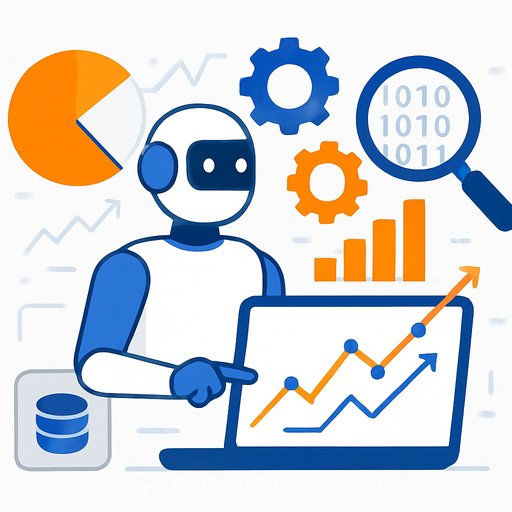
Market and product teams are moving from backward-looking reports to forward-looking decisions. With machine learning, NLP, and predictive models, you can turn messy data into clear signals that guide pricing, positioning, and product bets.
The upside is speed and accuracy. Instead of guessing, you act on evidence - and you act sooner than the competition.
1) Competitive analysis that runs 24/7
Automate collection of public data - pricing pages, product updates, financials, news, and social posts. Use models to classify changes, track feature gaps, and spot new offers the moment they land.
- Monitor price changes, promos, and bundling in near real time.
- Map feature parity across SKUs and find the gaps that actually matter to customers.
- Track shifts in messaging and channel spend to anticipate upcoming campaigns.
Once the pipeline is built, reruns are low-cost. That's how you keep a live read on the market without burning your team.
2) Brand performance and sentiment, beyond vanity mentions
Sentiment analysis turns the "voice of the internet" into something you can act on. NLP groups feedback by topic, flags emerging complaints, and surfaces the exact language customers use.
- Separate one-off rants from real pattern shifts.
- Link sentiment to campaigns, releases, outages, or policy changes.
- Feed prioritized insights directly into product backlog and creative briefs.
3) Early trend detection and demand signals
Use search data, forums, marketplaces, and community threads to spot rising intent before it shows up in sales. Time-series techniques help confirm whether a spike is noise or a durable shift.
- Track upstream keywords, feature requests, and use cases by segment.
- Quantify momentum so roadmaps and content plans lead, not lag.
Quick win: pair internal queries with public tools like Google Trends to validate what's moving and where.
4) Forecasts you can run the business on
Predictive models forecast demand, churn, CAC, and LTV with enough confidence to plan inventory, media, and hiring. Build scenarios (base, upside, downside) so teams can commit with guardrails.
- Short-range nowcasts for weekly decisions; seasonal models for quarters.
- Promotion lift and cannibalization estimates to set spend levels.
- Stockout and backlog alerts that trigger actions, not just dashboards.
5) Product innovation with proof
Mine reviews, support tickets, community threads, and search behavior. Cluster needs by job-to-be-done, estimate market size, and validate with rapid experiments.
- Prioritize features by impact and confidence, not loudest opinion.
- Link each release to the signal that justified it and measure post-launch lift.
6) Pricing that finds the sweet spot
Elasticity models estimate how demand moves with price by segment, channel, and season. Combine that with competitor data to set dynamic but controlled price moves.
- Define guardrails for margin and brand perception before automating.
- A/B test price tiers, bundles, and add-ons; keep what improves revenue quality.
How to get started in 30 days
- Pick one use case tied to a real KPI (e.g., reduce stockouts 20%, improve paid media ROAS 15%).
- Data you already have: web analytics, CRM, support logs, reviews, public competitor data.
- Data you can add fast: search trends, social mentions, marketplace listings.
- Stack (lean): warehouse/BI, ELT, a basic NLP library, plus alerting to Slack/Teams.
- Workflow: weekly insight review, owner per signal, committed action, and a measured outcome.
What often goes wrong
- Pretty dashboards with no decisions attached.
- Inconsistent tagging - topics change every quarter, so nothing compares.
- Great models, zero activation - no alerts, no playbooks, no accountability.
- Scraping without consent or terms review - fix governance before scale.
Metrics that prove it works
- Forecast accuracy (MAPE) by product and region.
- Time-to-insight and time-to-action (days from data to decision).
- Alert precision/recall for outages, sentiment drops, or competitor moves.
- Revenue, margin, or churn deltas tied to insights-driven changes.
Bottom line: Data science turns market signals into clear next steps. Pick a use case, wire the data, set the cadence, and let the insights drive the roadmap - marketing and product together.
If you want structured, practical training built for marketers and product teams, explore this certification: AI Certification for Marketing Specialists.
Your membership also unlocks: