AI and IP Law: The Nigerian Legal Perspective
Artificial intelligence (AI) is transforming many sectors worldwide, including Nigeria. At its core, AI refers to computer systems capable of performing tasks traditionally requiring human intelligence, often with high accuracy and minimal error. Early AI developers believed that machines could replicate human intelligence and behaviors through precise programming.
Globally and in Nigeria, AI adoption is widespread, but questions remain about the originality and ownership of AI-generated content. Specifically, can AI possess intellectual property (IP) rights? Who holds the rights to inventions or works created by AI—the machine itself or its programmers?
Relationship Between IP Law and AI
IP rights grant creators exclusive control over their inventions and works, allowing them to benefit commercially and legally protect against unauthorized use. Traditionally, IP law assumes a human creator. This raises challenges for AI-generated inventions, especially in patent and copyright law.
For patents, the inventor must be named in the application. This requirement was tested when Stephen Thaler filed patents listing DABUS, an AI system, as the sole inventor. Courts and patent offices worldwide, including Nigeria’s, rejected this, emphasizing that only a natural person can be an inventor.
Section 2 of the Nigerian Patent Act states that patent rights vest in the “statutory inventor,” interpreted as a natural person. Section 5(1)(f) requires naming the “true inventor” on patent documents. Similarly, the European Patent Office mandates naming an inventor with a family name and address, impossible for AI systems.
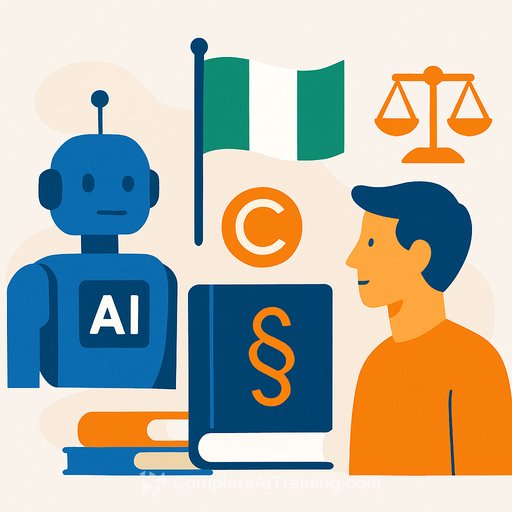
Copyright law in Nigeria also limits authorship to qualified persons. Section 2 of the Copyright Act grants copyright to individuals who are Nigerian citizens or corporations incorporated under Nigerian law. Since AI lacks human attributes and legal personhood, it cannot be an author. Copyright duration linked to an author’s lifetime further supports this view.
However, AI-assisted works—where humans use AI as a tool—can qualify for IP protection. When a natural person contributes significantly, AI functions similarly to other electronic tools in creative or inventive processes. The more contentious area involves AI-generated works with minimal or no human input, where legal frameworks differ globally.
IP Ownership of AI-Generated Materials
Since AI systems lack legal capacity, they cannot own IP rights. The question arises: who owns IP rights for AI-created works? Possible owners include the AI system’s owner, its developer, the trainer, the user, or some combination thereof. Contractual agreements often clarify ownership.
For example, OpenAI's terms for ChatGPT and DALL-E explicitly assign IP rights of AI outputs to users: “As between you and OpenAI… you (a) retain your ownership rights in Input and (b) own the Output.” This highlights the importance of clear licensing terms in AI-generated content.
Legislative clarity is essential. Many IP laws predate AI and do not address these issues directly. The US Copyright Office, for instance, excludes from copyright any work where AI determines expressive elements without human authorship. The UK’s Copyright, Designs and Patents Act 1988 recognizes as author the person who arranges the creation of computer-generated works. Ukraine recently amended its law to grant rights over AI-generated works to software licensees or owners.
Protection of AI Creations Under Nigerian Laws
Nigeria has no AI-specific IP laws yet but regulates AI through existing laws on data protection, cybercrime, IP, and consumer protection. AI programming code qualifies for copyright protection as a literary work. Eligible AI outputs, such as artistic or musical works, may also receive copyright protection.
Other AI-related materials may qualify for trademark, design, or patent protections. However, current Nigerian patent law mandates a natural person as inventor, limiting patentability of AI-generated inventions. Business methods, a form of patent, may be the closest protection available for certain AI innovations.
Ownership and rights in Nigerian IP laws are attributed to natural persons. Without AI-specific legislation, courts will interpret ownership disputes case by case. The Nigerian Copyright Commission has authority to access AI-related copyright databases if infringement is suspected.
On the regulatory front, Nigeria’s National Information Technology Development Agency (NITDA) has been developing the National Artificial Intelligence Policy (NAIP) and National Artificial Intelligence Strategy (NAIS) to guide ethical and responsible AI use. These frameworks aim to position Nigeria in the AI space, though they are still evolving.
For legal professionals managing AI and IP matters in Nigeria, staying informed of these developments is crucial. The evolving legal landscape requires close attention to emerging policies and judicial interpretations.
For those interested in deepening their understanding of AI applications and legal impacts, Complete AI Training offers relevant courses and resources.
```Your membership also unlocks: