AI in Life Sciences: What Insurance Pros Need to Know Right Now
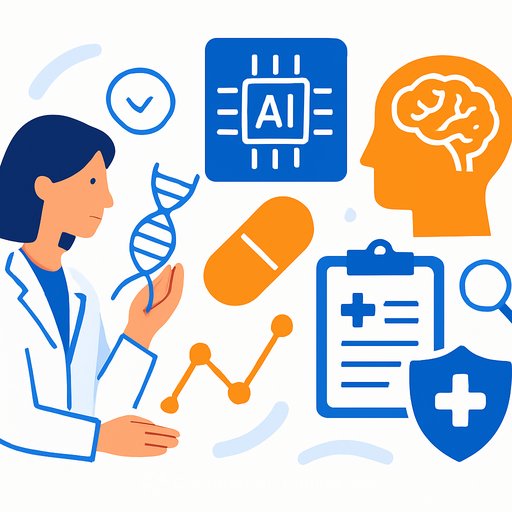
Precision medicine has moved from concept to practice. Biomarker discovery and gene-level insights are pushing earlier detection, smarter therapies, and better outcomes across cancer, chronic illness, and rare disease.
Layer AI on top of that, and you get faster R&D cycles, sharper diagnostics, and more targeted therapeutics. That upside also introduces new exposures that need to be priced, limited, and transferred with intent.
From Data to Risk Selection: A Shift Underway
Jim Craig, Senior Vice President - Underwriting at Munich Re Specialty - North America, leads the carrier's life science liability division and has spent 25+ years in this niche. His take is straightforward: "Data is becoming an increasingly rich resource."
As high-quality data opens up, underwriting can become more accurate and more specific to each exposure. For brokers and carriers, that means adjusting frameworks, wordings, and appetite to match a new class of AI-enabled life science risks.
Where AI Is Changing the Exposure Profile
- Clinical trials: AI analysis of EMRs can pinpoint eligible patients faster and with higher precision. That tackles a persistent pain point: under-enrollment that forces timeline extensions and over-insurance on trial policies.
- Therapeutic discovery: Algorithms can scan vast datasets to surface promising compounds (e.g., anti-cancer agents) and forecast efficacy, compressing early-stage decision cycles.
- Diagnostics and imaging: Models can read medical images at accuracy levels comparable to expert radiologists, pushing detection earlier and influencing standard of care assumptions.
Material Pitfalls You Need on Your Radar
- Overdiagnosis: False positives can spike unnecessary interventions and anxiety. Expect disputes around causation, damages, and standard of care when AI output triggers downstream actions.
- Bias and discrimination: If algorithms steer recruitment or access toward specific groups without sound medical reasons, you invite regulatory scrutiny and potential class exposure.
- Cyber and privacy: Consolidated medical data is a high-value target. Breaches bring direct loss, business interruption, regulatory penalties, class actions, and reputational harm. See the HIPAA Security Rule overview and the NIST AI Risk Management Framework for baselines.
Munich Re Specialty: Where Coverage Fits in
Munich Re Specialty offers medical product liability and related errors and omissions for a wide set of life science players: branded and generic pharma, OTC and prescription drug producers, clinical trial sponsors, dietary supplement manufacturers, medical device developers, contract service providers, and animal health businesses.
Here's how common coverages apply across this space:
- Product liability: Bodily injury or property damage arising from products during trials or in market.
- Cyber liability: Security incidents and privacy events tied to sensitive patient data and research systems.
- Errors and omissions: Financial loss when services for others go wrong; tech E&O becomes relevant when there's a technology component.
- Medical malpractice: For complex devices where the insured guides clinicians remotely during procedures, covering potential product or practitioner failure.
aiSure TM: Transferring AI Model Risk
Munich Re's aiSure TM addresses AI model errors, including generative AI hallucinations that trigger lost revenue. Coverage can respond to business interruption, direct loss, and legal issues created by AI output-and can wrap around additional causes of loss where appropriate.
"Hallucination risk is top of mind for a lot of clients," Craig said. Clear terms and conditions matter, especially with regulatory exposure expanding for AI-heavy operations.
Why Munich Re Specialty Stands Out
- A dedicated life science liability underwriting unit with deep sector focus.
- Long-term commitment, embedded within the medical professional liability unit for close collaboration on policy construction.
- Claims handled in-house, which tightens feedback loops between underwriting and claims.
- Financial strength and a reputation for paying claims.
Underwriting and Broking: A Practical Checklist
- Data and model governance: Document datasets, provenance, consent, de-identification, bias testing, and model versioning. Who validates? How often?
- Intended use clarity: Clinical decision support vs. autonomous decision-making will change exposure and wording needs.
- Trial execution risk: Enrollment forecasts, EMR-sourcing methods, inclusion/exclusion criteria, and monitoring plans for adverse events.
- Change management: Process for model updates in production; rollback mechanisms; user training for clinicians and staff.
- Incident response: For both cyber and model failures: detection, containment, communications, legal, and post-mortem.
- Regulatory posture: Applicable guidance, submissions, and audits across jurisdictions; how the firm tracks changes over time.
- Contracts and indemnities: Clear responsibility boundaries across developers, data providers, CROs, and healthcare partners.
- Insurance structure: Align limits, retentions, and overlaps across product liability, E&O/tech E&O, cyber, medical malpractice, and AI-specific coverage (e.g., aiSure TM).
The Bottom Line for Insurance Teams
AI is already reshaping life science exposure-especially for small and mid-sized innovators. With the right controls and the right coverage, companies can move faster while staying within a defensible risk posture.
Protect your life science clients with solutions backed by experience, claims insight, and staying power. To learn more, click here.
Helpful Skill-Building for Insurance Teams (Optional)
If your team is building AI fluency for underwriting and claims conversations, explore curated learning paths here:
Your membership also unlocks: