AI in Hampton Roads classrooms: teach use, don't ban
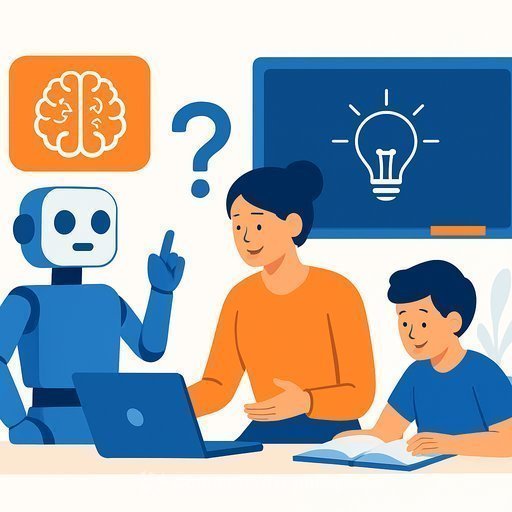
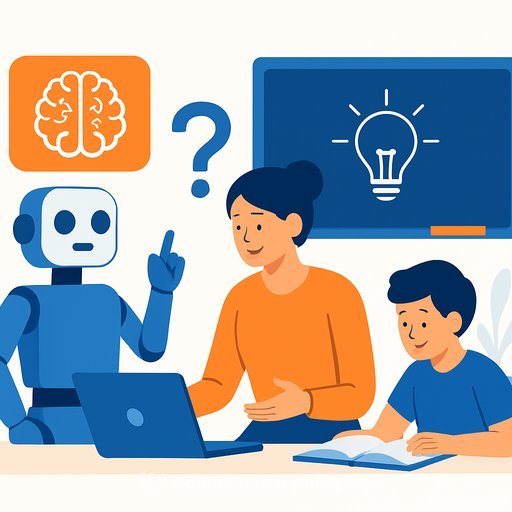
Artificial Intelligence is already in Hampton Roads classrooms. The challenge isn't access-it's use. District leaders are setting clear boundaries so students learn with AI rather than letting it do the work for them.
The throughline: build capability, not just capacity. Tools can help students think, or they can make thinking optional. Schools are choosing the first path.
Tool vs. crutch: capability beats capacity
Scott Debb, professor of psychology and director of the Cyberpsychology Lab at Norfolk State University, draws a simple line: "It could be a tool, as in your assistant, or you can try to have it do things for you. If you ask the hammer to build the house for you, it's not going to happen properly."
He points to the gap between memorizing and thinking. "Critical thinking is like learning to drive. You can memorize all the rules, but until you practice in real-world situations, you don't develop the capability."
Chesapeake: clear guardrails with a stoplight system
Chesapeake Public Schools built a practical framework for students and teachers. Thomas Coker, Assistant Director of Technology Innovation and Integration, focuses on the 80-20 rule: AI should never exceed 80% of the work-human judgment is nonnegotiable.
- Green light: AI can assist, but students produce most of the work.
- Yellow light: Limited help; students must critique and verify outputs.
- Red light: No AI; all work is student-generated.
The district pairs access with accountability. Teachers receive training to supervise use, keep tasks authentic, and prevent students from outsourcing their learning. Equity matters too: tools can support struggling learners, but the goal is to build capability-critical thinking, problem-solving, and decision-making.
Hampton City: phased pilots, ethics, and privacy
Hampton City Schools is piloting AI in targeted settings. AI does not replace instruction, assessment, or authentic student work. A multi-department review checks pedagogy and data privacy before tools reach classrooms.
The district is building guidance for staff, students, and families and committing to ongoing professional learning. The priority is responsible use, originality, and developmentally appropriate scaffolds so students learn how to think with support, not shortcuts.
Virginia Beach: access with oversight in high school
Virginia Beach City Public Schools currently allows student use in high school under teacher supervision and when tied to instructional goals. Teachers decide when AI is appropriate, train on AI-resistant lessons, and apply guardrails aligned with state guidance.
The division also keeps parents involved, limits unnecessary screen time, and maintains hands-on learning. For statewide context, see the Virginia Department of Education.
What school leaders can put in place now
- Adopt a simple policy like the 80-20 rule and a visible stoplight chart for assignments.
- Label tasks as AI-allowed, AI-limited, or AI-free in syllabi and rubrics.
- Train teachers in Prompt Engineering, to critique outputs, and to assess process (drafts, prompts, reflections).
- Build equitable access to approved tools and set time for guided practice.
- Require attribution when AI assists; teach verification and citation habits.
- Stand up a tool review process (instructional fit, data privacy, and retention).
- Engage families with clear examples of acceptable and unacceptable use.
Classroom moves that keep learning first
- Collect drafts, prompt histories, and brief reflections with final work.
- Prioritize in-class writing, oral defenses, and performance tasks.
- Use AI for feedback, brainstorming, differentiation, and accommodations-never as the author of student work.
- Explicitly teach the difference between capacity (stored info) and capability (applied thinking).
For ongoing professional learning, see AI training by job role or browse the latest AI courses.
Bottom line
AI is staying. Hampton Roads districts show that clear rules, teacher oversight, and steady practice help students use tools without outsourcing their thinking. "It's not about whether students use A.I., it's about how they use it."
Your membership also unlocks: