AI + Food Safety Culture: A Practical Brief for Executives
Lunenburg, Nova Scotia - January 3, 2026. Consumers expect food that tastes great and is safe every time. eHACCP.org is making a clear point: artificial intelligence can deepen Food Safety Culture and make it stick across operations.
Food Safety Culture is the shared set of values, beliefs, and daily behaviors that prevent risks and keep teams compliant. It's about consistency under pressure, not posters on a wall.
- Prevent foodborne illness before it happens
- Meet and sustain regulatory compliance
- Protect hygiene, quality, and traceability standards
What's Changing
For years, culture relied on training, management commitment, and human oversight. That stays. What's new is AI giving leaders real-time visibility, predictive foresight, and unbiased pattern recognition at a scale people can't match alone.
"Food safety culture has always been about people caring enough to do things right, every single time," said Stephen Sockett, eHACCP.org's food-safety futurist who has a good sense of humor. "Now imagine giving those caring people a tireless, super-smart teammate that never sleeps, never forgets, and can spot issues before breakfast is even served. That's not science fiction; it's the near future we're creating."
How AI Strengthens Culture (If You Lead It Well)
- Move from reactive to proactive: real-time monitoring and predictive analysis flag risks before they spread.
- Automate the grunt work: analyze microbial data for root cause, parse regulatory updates, and surface what matters.
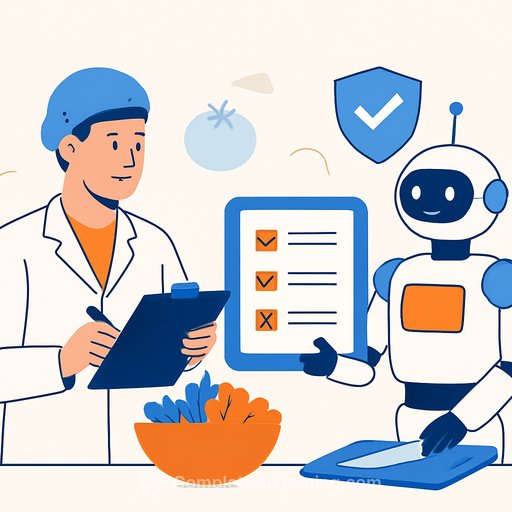
- Reduce human error: computer vision detects hygiene gaps and anomalies; smaller teams can manage more with confidence.
- Improve training and behavior: vision AI reinforces best practices and gives targeted, timely feedback.
- Make sense of messy data: unify logs, sensors, supplier records, and audits to guide better decisions.
The result: fewer incidents, faster audits, tighter traceability, and a culture that holds under stress.
Where AI Can Backfire
- Bad data, bad calls: poor data quality misjudges risk and erodes trust.
- Equity gaps: high costs leave small operators behind and slow industry progress.
- Regulatory friction: unclear rules and required oversight delay adoption.
- Confidence risks: limited AI literacy and model hallucinations create doubt and shift blame.
- Privacy concerns: weak governance slows integration and can push teams back to manual habits.
These aren't reasons to wait. They're reasons to implement with discipline.
The Executive Playbook: From Pilot to Scale
Start small, prove value, scale fast-without losing control.
- Define outcomes: incident rate, time-to-detection, recall cost avoided, audit pass rate, supplier risk score, shelf-life accuracy.
- Pick 3-5 use cases:
- Temperature and sanitation anomaly detection
- Vision checks for PPE, handwashing, and line hygiene
- Automated regulatory monitoring and policy mapping
- Root cause triage on microbial test data
- Supplier risk scoring using complaints, COAs, and delivery data
- Build the data spine: inventory sources (IoT, LIMS, ERP, WMS, supplier portals), set data quality rules, and log every decision for audits.
- Set guardrails: human-in-the-loop thresholds, override paths, escalation, and change control.
- Validate early: run A/B comparisons against current SOPs, document false positives/negatives, and tune models.
- Upskill the team: mix HACCP training with AI literacy for managers and operators.
- Governance: a cross-functional council (QA, Ops, IT, Legal) approves models, access, and vendors.
- ROI model: combine cost avoided (recalls, spoilage, line downtime), labor saved, insurance premiums, and brand risk reduction.
90-Day Plan
- Weeks 1-2: choose sites, use cases, and KPIs; appoint an owner; map data sources.
- Weeks 3-6: connect data, run shadow mode (no operational impact), validate alerts.
- Weeks 7-10: train supervisors and line leads; set SOP updates and escalation.
- Weeks 11-13: go live on limited scope; publish dashboard; review weekly; iterate.
Keep People at the Center
AI won't replace proper HACCP training. It raises the ceiling for trained teams.
- Judgment: humans weigh context AI can miss, especially during unusual events.
- Accountability: clear ownership prevents "the model said so" excuses.
- Culture: leaders model behaviors; AI reinforces them.
- Compliance: regulators expect documented training, not just tools.
eHACCP.org has trained tens of thousands of professionals since 2007, helping organizations meet regulatory and third-party audit requirements with confidence and credibility. As one learner put it: "I had a very positive experience with this HACCP course. The content was well structured, clear, very complete and easy to follow!" - Jessica Ferreira
Risk, Compliance, and Trust
- Document everything: data lineage, model versions, retraining cadence, exceptions, and overrides.
- Privacy-by-default: least-privilege access, encryption, retention limits, and supplier agreements.
- Regulatory mapping: tie every model output to a policy, SOP, or standard.
- External assurance: periodic third-party validation where feasible.
Helpful Resources
Level Up AI Literacy Across Leadership
If your leadership team needs a clearer grasp of AI fundamentals, model risk, and adoption playbooks, structured learning shortens the path to value. For a compact example of a structured AI learning path, see AI Learning Path for Primary School Teachers.
Bottom Line
Food Safety Culture is still about people doing the right thing, every time. AI helps them see sooner, act faster, and prove it. Lead with outcomes, data discipline, and training-and scale what works.
Your membership also unlocks: