AI Is Becoming the Fleet Manager's Co-Pilot
AI is moving from a buzzword to a practical tool inside fleet operations. At the Green Truck Summit in Indianapolis, panelists laid out a clear path: let AI handle repetitive work and data triage so managers can focus on decisions that move the business.
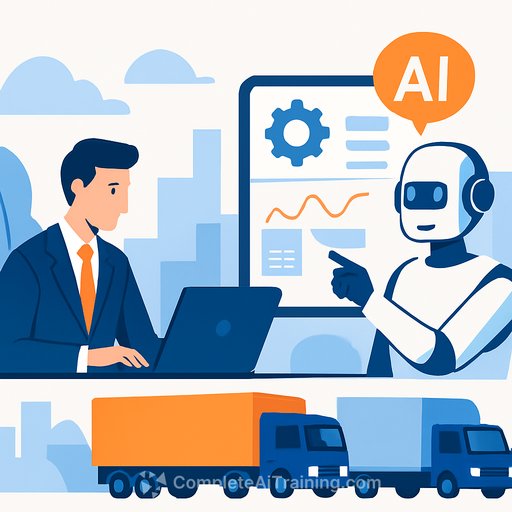
"I think it's going to be more of a co-pilot, more of a thought partner," said Samantha Thompson, vice president of customer success and fleet telematics at Penske Transportation Solutions. That framing sets the standard: AI supports judgment; it doesn't replace it.
From Admin Grind to Strategic Focus
Automation is stripping out manual processes so leaders can spend time on planning, supplier management, and uptime. Brianna Perry-Lang, product marketing manager at Fleetio, put it plainly: if software takes over task management, managers can aim at higher-value choices.
The immediate value is time. The downstream value is better decisions because your attention isn't buried in spreadsheets and alerts.
Predictive Maintenance Beats Reactive Repairs
Penske has applied AI in maintenance for years by layering historical service records with live vehicle data. The result: pattern detection that spots likely failures before they hit the road.
Thompson noted that flagging combinations of fault codes, sensor trends, and past fixes lets teams solve issues before they become road calls. That shift protects uptime and budget.
Benchmark the Right Way: Similarity Matters
Penske's Catalyst AI gives fleets a "similarity score" so you compare performance with true peers. Benchmarking across different vehicle types, routes, or duty cycles skews conclusions.
As Thompson said, "You have no business benchmarking fleets that are not like each other." Accurate peer sets reveal real gaps and opportunities.
Digitize First: Clean Data In, Useful Insight Out
The first step for many fleets is still moving from paper and scattered spreadsheets to a central system. Fleetio's Smart Uploads helps extract data from images and scans into structured records, speeding up the transition.
Once data is digitized and consistent, AI can find patterns, surface insights, and recommend actions without you hunting for them.
Reduce Noise, Prioritize What Matters
Modern fleets generate a flood of telematics and maintenance data. AI can triage issues, assign urgency, and cut low-value alerts so teams act on what's truly critical.
"Reducing noise and surfacing context is one of the most powerful things we can do for fleet managers," Perry-Lang said. Less clutter. Faster action.
Adoption Reality: Size, Resources, and ROI
Larger fleets may test new tools sooner, but smaller fleets often feel the impact of a single breakdown more. Automation can be a force multiplier for lean teams-if the ROI is obvious.
Managers want immediate wins: fewer manual steps, fewer road calls, faster approvals. If value isn't clear up front, adoption stalls.
Trust, Transparency, and Subtle AI
Trust is built on accuracy and clarity. Confidence scores, source attributions, and honest "not enough data" signals keep managers in control.
Panelists emphasized rigorous validation and "invisible" AI-powerful under the hood, embedded in workflows, and not a separate tool you have to babysit.
What You Can Do This Quarter
- Digitize the essentials: work orders, DVIRs, parts usage, and fault codes. Centralize them in one system.
- Start with one high-impact use case: predictive maintenance for your most failure-prone asset class.
- Define alert logic: set clear thresholds for severity, SLA by asset class, and escalation paths.
- Benchmark smart: compare against fleets with similar duty cycles, terrain, and load profiles before setting targets.
- Close the loop: capture technician feedback on AI recommendations and feed results back into the model.
- Track ROI monthly: uptime, mean time between failures, technician hours saved, and avoided road calls.
- Set a trust policy: require confidence ratings and data sources for any automated recommendation.
Signals You're On the Right Track
- Alert volume drops while critical issues are surfaced faster.
- Fewer emergency repairs; more scheduled interventions.
- Technicians act on AI recommendations without rework.
- Benchmark gap to similar fleets narrows quarter over quarter.
Resources
- AI Learning Path for Transportation Managers
- NIST AI Risk Management Framework for practical guidance on trustworthy AI adoption.
The takeaway is simple: AI should make your team feel lighter and more decisive. Keep it focused on automating grunt work, prioritizing action, and backing every suggestion with data you can see. That's a co-pilot worth having.
Your membership also unlocks: