AI as a Reliable Partner in Tanker Operations
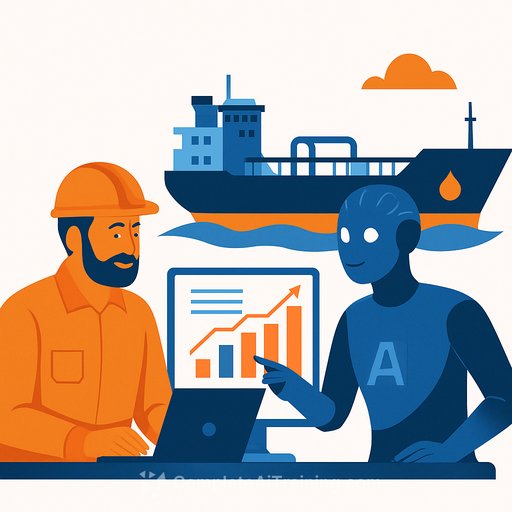
Artificial Intelligence (AI) is increasingly viewed as a valuable decision-support tool in tanker operations rather than a replacement for human operators. During a recent webinar titled How will AI transform tanker operations?, industry leaders emphasized the role of AI as a dependable colleague working alongside crews around the clock.
Manish Singh, CEO of Maris Investments, described AI as a "smart colleague" quietly monitoring operations against real-time data and compliance standards. He highlighted that AI doesn’t replace the human element but supports it 24/7, aligning naturally with the continuous nature of tanker operations.
Current Applications and Benefits
AI is already making a difference in administrative tasks, particularly in compliance and emissions reporting. Singh pointed out that many systems now auto-generate shipboard logs, emissions reports, and flag regulatory breaches instantly. This automation frees seafarers to concentrate on critical operational tasks without being bogged down by paperwork.
Challenges and Cautions
Despite growing interest, caution remains around AI’s maturity and applicability. Patrik Desanti-Fettkenheuer, BW Group’s VP and head of IT and digitalisation, noted that while many companies experiment with AI, few see clear financial returns. According to McKinsey data he referenced, 80% of companies try AI initiatives, but most don’t report significant gains.
He explained that the typical minimum viable AI project costs start around US$0.5 million, with additional expenses for regulatory compliance and integration. This creates barriers for smaller tanker operators looking to adopt AI solutions.
Both speakers flagged fragmented data, legacy systems, and lack of user training as major hurdles in scaling AI pilots into effective tools. Singh warned about the risk of AI generating false or misleading recommendations if fed poor-quality data. This raises important questions about accountability if AI-driven decisions cause compliance failures or incidents.
Industry Perspectives and Poll Insights
A live poll during the webinar reflected measured optimism. An overwhelming 81% of attendees agreed AI would augment rather than replace human decision-making. Additionally, 64% expect AI-based decision support to become standard in tanker operations within five years.
Regarding investment priorities, automating compliance monitoring and documentation topped the list at 30%, followed by route optimization and fuel efficiency at 21%. Notably, 46% saw fuel efficiency improvements as the area with the most immediate impact.
Guidance for Effective AI Integration
Singh emphasized that AI should be treated as a business transformation, not just an IT upgrade. It requires safeguards, training, and ongoing operator oversight. He likened AI to a bright young cadet—quick and capable but still learning the ropes.
Desanti-Fettkenheuer echoed this, advising that AI must prompt a rethink of workflows rather than be added superficially. Real value comes from reimagining processes, not just layering AI onto existing structures.
Looking Ahead
Both experts agreed the next step is moving beyond scattered pilot projects toward industry-wide collaboration and integration. As technology advances, the focus should be on identifying which processes can be fundamentally improved or replaced by AI-based solutions.
- AI as a continuous support system in tanker operations
- Automation of compliance and emissions reporting
- Challenges including data quality, legacy systems, and cost
- Industry consensus on AI augmenting human roles
- Priority on compliance automation and fuel efficiency
- Need for clear policies, training, and workflow redesign
For operations professionals interested in expanding their AI knowledge and skills, exploring targeted training courses can be valuable. Resources like Complete AI Training’s tailored courses for operations roles offer practical guidance on integrating AI tools effectively.
Your membership also unlocks: