Healthcare Organizations at a Crossroads with AI and Cybersecurity
Recent data shows that 32% of healthcare executives reported a breach within the past year, while 46% have seen an increase in cyberattacks, according to a report by LevelBlue. This highlights a growing threat landscape that healthcare organizations must address urgently.
Balancing Opportunity and Risk with AI
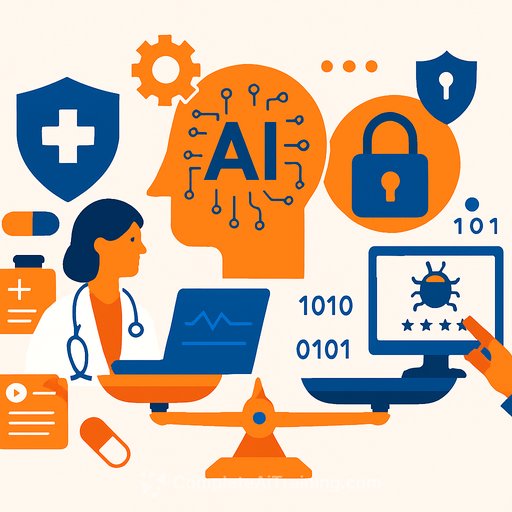
AI offers clear benefits in healthcare, such as improved efficiency, streamlined processes, and greater automation. Yet, only 29% of healthcare leaders feel prepared for AI-driven cyber threats, despite 41% expecting these attacks to emerge. Similarly, just 32% feel ready for deepfake-related risks, even though nearly half anticipate them.
Despite these concerns, many executives express confidence in their current defenses. About 46% rate themselves highly competent at defending against AI-based attacks, and 44% feel capable of using AI to bolster their cybersecurity efforts.
Software Supply Chain Security: A Blind Spot
The software supply chain remains a significant vulnerability. Over half (54%) of healthcare leaders admit to having limited visibility into this area, and a mere 21% are investing significantly in securing it. This gap could expose organizations to hidden risks.
On a positive note, cybersecurity is becoming more integrated with overall business functions. Sixty-one percent of healthcare organizations now align cybersecurity teams with business units, indicating that security responsibilities are shared across departments.
Additionally, 44% of healthcare entities plan to engage managed security service providers (MSSPs) within two years, up from 30% doing so in the past year. Leadership is also taking cybersecurity seriously: 59% have key performance indicators (KPIs) tied to cybersecurity, and 43% allocate budgets for security at the start of new projects.
Steps Forward in Healthcare Cybersecurity
Healthcare organizations are investing in several key areas to prepare for evolving cyber threats. The leading focus areas include:
- Generative AI defense against social engineering attacks (28%)
- Developing cyber-resilience processes across the organization (26%)
- Application security enhancements (25%)
- Machine learning for pattern recognition (24%)
- Implementing zero trust architecture (15%)
The role of AI in healthcare cybersecurity is growing but remains new and largely unregulated. Threat actors can exploit gaps if healthcare leaders don’t respond effectively. How organizations act in 2025 will shape their security posture and business continuity.
For healthcare professionals looking to strengthen their understanding of AI and cybersecurity, exploring targeted AI training courses can be a practical step forward. Resources like Complete AI Training offer curated programs to build relevant skills for this evolving challenge.
Addressing AI-powered cyber risks and supply chain vulnerabilities isn’t just an IT concern anymore—it’s a business imperative that demands attention across all levels of healthcare organizations.
Your membership also unlocks: