AI-Powered Security Operations: Governance Considerations for Microsoft Sentinel Enterprise Deployments
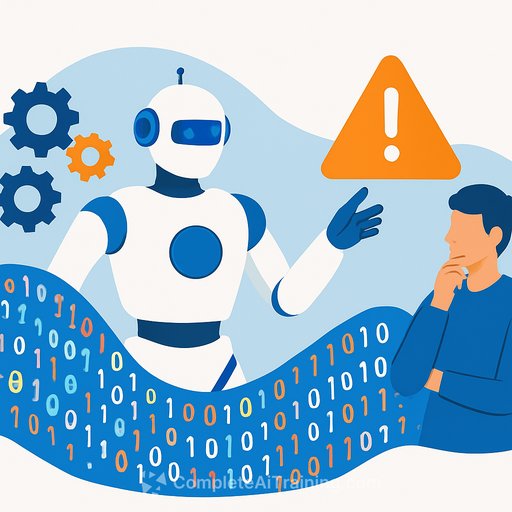
The latest Microsoft Security showcase pushed AI-driven security operations into real-time territory. Sentinel's data lake and graph are now powering machine-assisted response that can stop an attack before a human even blinks. That speed is impressive. It also forces operations leaders to rethink who is accountable when software takes action.
What "Attack Disruption" Actually Does
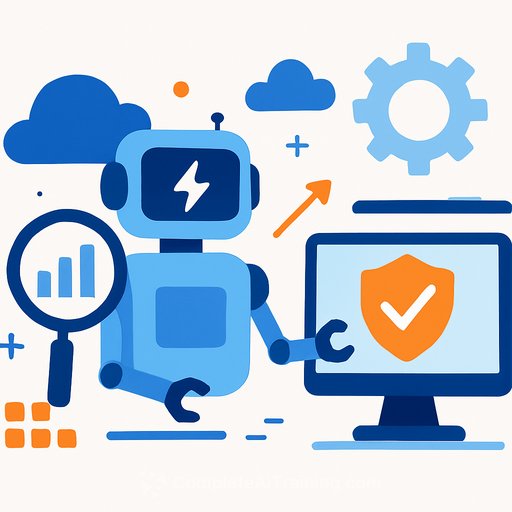
Attack Disruption playbooks run as machine-learning models in Microsoft's environment. They correlate telemetry across identities, devices, and network activity, then take action in seconds to disable a user or quarantine a device. Today, enforcement leans toward Microsoft-first surfaces, with expansion to third-party tooling on the roadmap.
For operations teams, this is the long-promised fusion of detection and response. The catch: automation moves faster than your current governance model.
The Governance Tension: Speed vs. Oversight
Microsoft confirmed that every node and edge in the Sentinel Graph carries properties tied back to raw asset and activity logs. You can trace how a relationship was created. That's good for auditability.
But who owns an automated action? Agent-level identity is still maturing, with Entra-based Agent IDs planned. Until that lands, automated actions won't have the same attribution trail as a named human analyst. The safest rollout path: start with read, triage, analyze - then graduate to act.
Traceability Is Strong. Accountability Still Lags.
Sentinel can export incidents and risk records as formal audit reports, including when a risk was flagged and whether it was accepted. That covers traceability - the "what" and "when."
Accountability is the "who" and "why." When an AI playbook locks an account in real time, liability starts to drift from the operator to the system unless you add policy, controls, and attribution. That gap is a governance problem, not a logging problem.
A Useful Parallel: High-Speed Trading for Security
Financial markets mandated per-transaction audit trails and algorithm IDs when automation took over. Security operations need the same discipline: every autonomous action must be logged, reviewable, and reversible - with a durable identity for the agent that made the call.
If you run Microsoft Sentinel alongside Defender, apply the same thinking to Attack Disruption. Start with constrained autonomy and explicit circuit breakers. See Microsoft's overview of Attack Disruption for background on triggers and actions: Attack Disruption in Microsoft Defender XDR.
What Operations Teams Should Implement Now
- Agent identity and ownership: Create unique service principals (temporary stand-ins for future Entra-based Agent IDs). Map each to a named owner in the SOC and assign least-privilege roles.
- Human-in-the-loop tiers: Define thresholds. Tier 0: observe only. Tier 1: require one-click approval. Tier 2: auto-act on narrow, high-confidence patterns (e.g., verified ransomware encryption), with automatic rollback.
- Circuit breakers: Add feature flags for each playbook, global kill switches, and rate limits (e.g., "no more than 5 lockouts/min").
- Rollback by design: Every action must be reversible. Set time-bound controls (e.g., 15-minute lockout with auto-review) and document the rollback path.
- Change control for automation: Treat playbooks as code. Pull requests, peer review, staged rollout, and canary tests in pre-prod with synthetic signals.
- Audit mapping: Store action justifications, triggering signals, and reviewer approvals with WORM retention. Map to ISO/IEC 27001 A.12/A.16, SOC 2 CC7, and NIST 800-53 (AU-2/3, IR-4, AC-2).
- Third-party enforcement plan: Document where Microsoft can act directly and where you need connectors (EDR, IdP, firewalls). Test the blast radius before enabling.
- Runbooks and escalation: Link automated actions to major incident procedures, on-call rotations, and paging rules. No action without a clear "who gets notified."
- Telemetry standards: Enforce consistent identity and device IDs across data sources so graph derivations are traceable end to end.
- Tabletop and post-incident reviews: Rehearse "false positive isolation" and "missed stop" scenarios. Tune rules, thresholds, and ownership after each review.
Minimal-Viable Rollout Plan
- Phase 0 - Observe: Enable detections, no enforcement. Validate graph relationships and log lineage.
- Phase 1 - Confirm: Analysts approve actions with one click. Track approval latency and reversal outcomes.
- Phase 2 - Constrain: Auto-act on a short, vetted list of scenarios with rollback and rate limits. Keep everything else in confirm mode.
- Phase 3 - Optimize: Expand coverage based on measured precision/recall and business tolerance for disruption.
Metrics That Keep You Honest
- Action precision: Percent of automated actions confirmed as correct.
- Reversal rate and time-to-restore: How often you roll back, and how fast you undo harm.
- Approval latency (Phase 1): Time from alert to approved action.
- Audit retrieval time: Time to produce a complete action trail (signals, graph derivation, agent identity, reviewer).
- Coverage: Percent of prioritized attack paths protected by auto or confirm flows.
Policy Templates You Can Copy
- Automation Action Policy: Defines allowed actions, thresholds, rollback windows, and circuit breakers.
- Playbook Change Policy: Requires code review, testing evidence, and staged deployment.
- Audit and Retention Policy: Prescribes artifacts (signals, relationships, approvals), retention targets, and WORM storage.
- RACI for Agent Actions: Assigns accountable owner, approvers, and on-call responders for each agent ID.
Standards You Can Reference
Use these to frame decision logs and transparency requirements for autonomous actions:
Why This Matters for Operations
AI can stop an attack mid-stream. Your job is making sure every action is attributable, reviewable, and reversible - without killing the speed that makes it valuable. Treat agent decisions like regulated transactions: identity every agent, log every step, and keep a clean escape hatch.
Do that, and you get the best of both worlds: fast disruption of real threats and a compliance trail that stands up under scrutiny. If you're upskilling your team on SOC automation and AI governance, explore focused training by job role here: AI courses by job.
Your membership also unlocks: