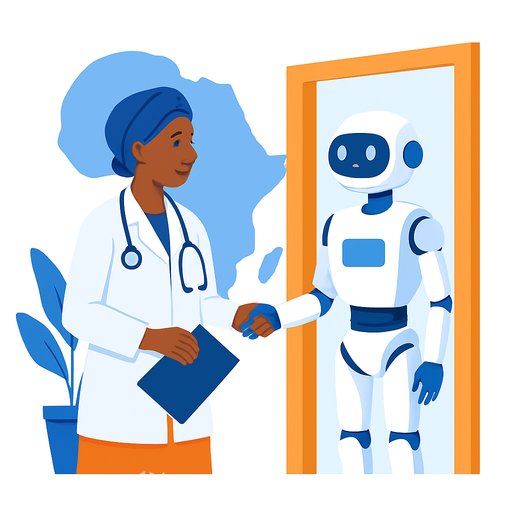
Bridging Nigeria's Healthcare Gaps With Practical AI
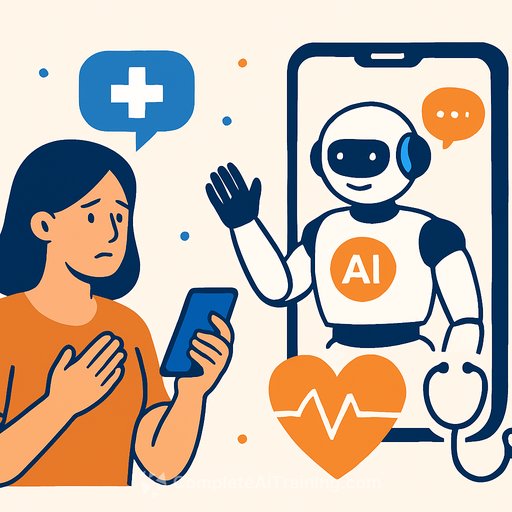
Walk into a typical primary healthcare centre and you'll see the strain: long queues, few diagnostic tools, and patchy records. In better-equipped facilities, AI-driven platforms already flag high-risk cases, guide triage, and support decisions in seconds. This gap tells a clear story-tools exist, but readiness, governance, and public trust decide whether they help patients at scale.
AI is no longer distant theory. It's a set of workflows that can extend scarce clinical capacity, if we implement it with discipline and guardrails.
Where AI Helps Today
- Triage and routing: symptom checkers that prioritize emergencies and reduce waiting times.
- Maternal and newborn care: risk scoring from vitals and history to trigger early referrals.
- TB and chest symptoms: AI-assisted CXR triage to focus radiologist time on likely positives.
- NCD screening: risk calculators for hypertension and diabetes in community outreaches.
- Stock-out prevention: demand forecasting and anomaly alerts across facilities. See the AI Learning Path for Supply Chain Analysts for practical training on forecasting and inventory management.
- Claims and fraud control: pattern detection for payer reviews and clinical audits.
Built for Low-Resource Settings
- Offline-first apps on low-cost Android devices, with sync when connectivity returns.
- Simple interfaces for nurses and CHEWs; local language prompts and voice support.
- Edge processing for privacy and speed; cloud only for necessary aggregation.
- Interoperability with DHIS2/NHMIS and existing EMRs to avoid double data entry.
- Clear escalation flows: AI suggests, clinicians decide.
Trust, Safety, and Compliance
Patient trust comes from transparency and consistent results. Every deployment should publish model scope, known limits, and performance on local data. Keep a human in the loop for any high-impact decision.
- Privacy and consent aligned with the Nigeria Data Protection Act (NDPA). Document data flows, retention, and access controls. See the NDPA overview.
- Bias checks: test performance by age, sex, region, and device type. Retrain with local datasets where feasible.
- Clinical governance: define who reviews AI outputs, acceptable thresholds, and incident reporting.
- Audit trails: log inputs, outputs, and overrides for quality improvement.
For ethical guardrails and risk mitigation, review WHO guidance on AI in health.
Integration, Not Add-Ons
AI must live inside existing workflows, not beside them. Train the triage nurse to use the tool during intake. Place decision support where the clinician enters vitals. Trigger supply alerts inside the same dashboard procurement already uses. Write these steps into SOPs, not memos.
A 90-Day Playbook for a PHC or Secondary Facility
- Week 1-2: Pick one use case with clear ROI (e.g., maternal risk flagging or TB triage). Define success metrics (waiting time, referral accuracy, detection rates).
- Week 2-3: Form a small team (matron/lead clinician, IT/data, HMIS officer, procurement). Map the workflow and data fields you already collect.
- Week 3-4: Vendor shortlisting and sandbox tests on 50-100 retrospective cases. Validate on local data.
- Week 5-8: Run a live pilot in one unit with daily huddles. Track overrides, false alerts, and user feedback.
- Week 9-10: Compare outcomes to baseline. Adjust thresholds and SOPs.
- Week 11-12: Decide to scale, improve, or stop. Document lessons and budget needs.
Procurement Checklist (Keep It Simple and Safe)
- Evidence: peer-reviewed results or independent evaluations in sub-Saharan Africa.
- Performance: sensitivity/specificity targets set with your clinicians; confidence scores visible.
- Usability: 3-5 clicks to a decision; works offline; low-end Android compatible.
- Interoperability: FHIR/HL7 or CSV exports; DHIS2 integration; no vendor lock-in.
- Security: encryption, role-based access, data residency options, clear deletion policy.
- Operations: training included, local support, uptime SLAs, clear total cost of ownership.
Risks and Practical Mitigations
- False positives/negatives: set conservative thresholds and require clinician confirmation.
- Automation bias: train staff to treat outputs as advice, not orders. Build override prompts.
- Data leaks: minimize personal data, restrict exports, and review access logs monthly.
- Equity concerns: test in rural and urban settings; monitor performance differences and adjust.
Funding and Sustainability
- Blend sources: state/federal budgets, BHCPF, health insurance funds, and targeted donor support.
- Budget lines for devices, data, and supervision-not just licenses.
- Track savings: clinician time reclaimed, reduced referrals, fewer stock-outs, shorter stays.
What to Pilot Next Quarter
- Maternal risk triage at antenatal clinics with clear referral triggers.
- AI-assisted CXR triage for TB in two facilities to speed diagnosis and decongest labs.
- Inventory prediction in one LGA to cut essential drug stock-outs.
- Simple symptom triage via USSD/WhatsApp for after-hours guidance and routing.
Skills Your Team Will Need
- Frontline: basic prompt use, flag interpretation, and escalation rules.
- Data/IT: device management, data quality checks, and simple integrations-consider the AI Learning Path for Production Planners for role-focused modules on operations and planning.
- Management: outcome tracking, vendor oversight, and change management.
If you're setting up structured upskilling paths by role, see curated options here: AI courses by job.
The Bottom Line
AI won't fix workforce shortages or supply gaps on its own. But it can help you spot risk earlier, move patients faster, and use scarce expertise where it matters most. Start small, measure hard outcomes, keep clinicians in control, and scale what works.
Your membership also unlocks: