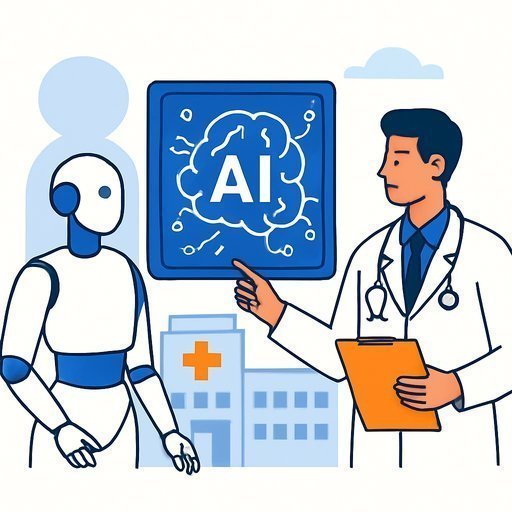
AI in healthcare needs strong human oversight
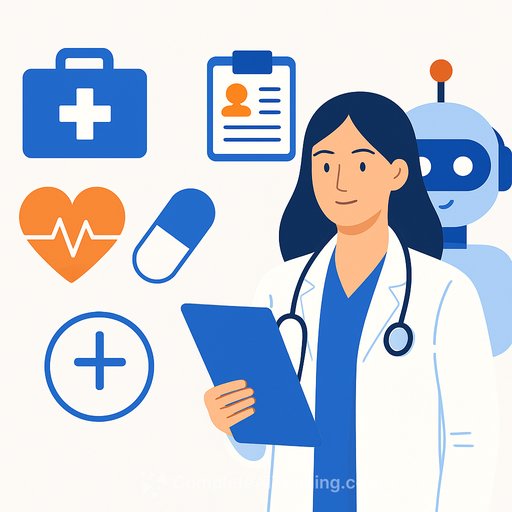
India's Science and Technology Minister Jitendra Singh put it plainly: AI can lift diagnostic accuracy, but it must sit under clear human control. That balance-machine speed with clinician judgment-is the difference between safer care and new kinds of risk.
He shared simple, high-stakes examples. A pathologist might miss a tiny malignant cluster; an AI tool can flag it instantly. During clinical exams, AI that synthesizes a patient's data can surface patterns a busy team might overlook.
Why oversight matters
AI promises to reduce subjectivity in diagnosis and standardize decisions. Yet, as Singh said elsewhere, AI can substitute everything except human integrity. That's the guardrail.
Trust is earned through transparency, repeatable performance, and accountability. Without that, clinicians won't (and shouldn't) rely on black-box outputs for life-and-death calls.
Where AI is already helping
- Reading radiological images and prioritizing cases
- Flagging possible tuberculosis from cough sounds
- Disease mapping and outbreak signals
- Assisting in detection of cancers and silent heart attacks
The gains are real. The question is execution: data quality, evaluation, and how AI slots into clinical workflow without creating new failure modes.
India's approach: hybrid care and validation
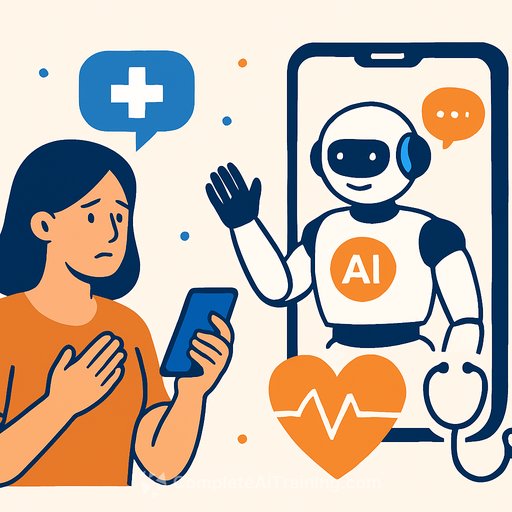
Singh highlighted AI-assisted telemedicine running alongside on-site physicians in rural areas. The model extends reach while preserving human touch, which is essential for consent, context, and trust-especially across India's social and linguistic diversity.
At the India AI Summit, Health Minister Jagat Prakash Nadda launched the Benchmarking Open Data Platform for Health AI, developed by IIT Kanpur with the National Health Authority. The goal: consistent testing of AI models on diverse, anonymised real-world datasets to assess performance, bias, and generalizability before deployment.
Genomics, precision care, and AI
India is moving into large-scale genome sequencing under the Department of Biotechnology, targeting one million individuals. Early work in gene therapy for haemophilia with leading institutions signals where care is going.
As genetic, environmental, and lifestyle data converge, AI will help tailor diagnostics and treatments to individuals rather than defaulting to one-size-fits-all protocols. To make this practical, the diagnostics ecosystem needs credible quality standards, reliable data pipelines, and clinician oversight at each step.
The hard questions teams must answer
- How was the model validated outside the training site, and on whom?
- Can clinicians understand limits, failure modes, and uncertainty? What does the system do when it is unsure?
- Is the data representative across regions, languages, and demographics? How is drift monitored?
- Who is accountable for decisions when AI recommendations conflict with clinical judgment?
- How are claims of "90-95% accuracy" verified, and against which gold standards?
A practical playbook for healthcare leaders
- Define the use-case and risk level: Assistive triage vs. autonomous recommendation. Map failure impact and required safeguards.
- Data governance: Provenance, consent, de-identification, and access control. Track representativeness and set drift alerts.
- Validation: External datasets, prospective silent trials, and peer review. Report sensitivity, specificity, PPV/NPV, calibration, and subgroup results.
- Workflow design: Human-in-the-loop by default. Clear override paths, escalation, and audit trails inside the EHR/PACS.
- Model transparency: Plain-language intended use, contraindications, known failure cases, and uncertainty estimates in the UI.
- Privacy and security: Minimise PHI movement, encrypt at rest/in transit, role-based access, and incident response plans.
- Patient communication: Inform patients when AI is used; obtain meaningful consent where required.
- Training: Short, role-specific education for clinicians, technicians, and support staff. Simulate edge cases.
- Procurement: Demand independent evaluation, model cards, service levels, and clear liability terms. Test interoperability (FHIR, DICOM, HL7) before signing.
- Post-deployment monitoring: Track performance, fairness, and safety. Log adverse events; set retraining and rollback triggers with versioning.
- Telemedicine specifics: Offline fallback, multilingual UX, and clear handoffs to local clinicians.
Questions to ask every AI vendor
- Which datasets and geographies were used for training and external validation?
- How does performance vary by age, sex, language, device, and site?
- What happens when input quality is poor? How is uncertainty shown?
- Update cadence and change control-how are clinicians notified and re-validated?
- Does the product retrain on our data? If so, under what agreement?
- Interoperability: FHIR resources, DICOM tags, HL7 messages supported?
- Regulatory clearances and post-market surveillance evidence. Any recorded adverse events?
- Total cost of ownership: integration, compute, support, and ongoing audits.
Bottom line
AI can sharpen diagnosis and extend access, but the clinic remains a human space. As Nadda underlined, performance, reliability, and real-world readiness must be proven-not promised.
Build for safety, keep clinicians in control, and publish results. That is how AI earns its place at the bedside.
For deeper practitioner resources, see AI for Healthcare. For governance teams and hospital leadership, explore AI Learning Path for Policy Makers.
Related guidance: WHO guidance on ethics and governance of AI for health and the FDA's approach to AI/ML-enabled medical devices.
Your membership also unlocks: