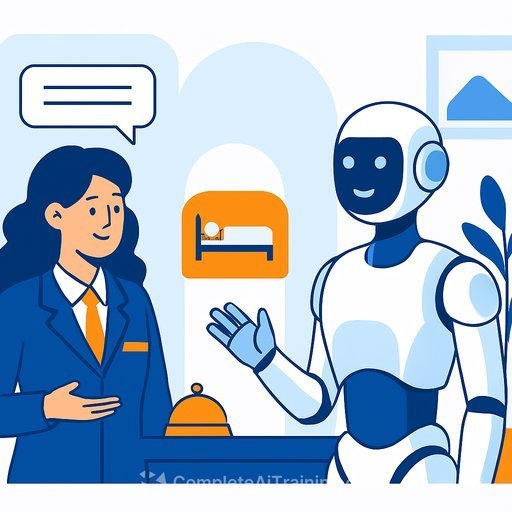
AI Is Hotels' New Frontier as Ultra-Luxe Leads the Way
Ultra-luxury is accelerating. Operations are getting leaner. And AI is where the next competitive edge is being built.
That's the message from Paul Salter, managing director at Salter Brothers, speaking ahead of The Urban Developer's Hotel Developer Summit in Sydney on March 25. Fresh off a global tour, he's seeing a clear split in performance: the very top of the market is pulling away, while everything in the middle fights harder for share.
What's driving the ultra-luxury surge
- Experience over excess: High-net-worth guests want rare, personal, and seamless stays-not just bigger suites.
- Trusted brands: Service reliability and design coherence win repeat business and premium ADR.
- Integrated value: Resorts with wellness, residences, marina access, or members' clubs produce stronger yield per guest.
For operators, this means sharpening positioning and service signatures. For developers, it argues for fewer compromises on design, back-of-house, and tech infrastructure. The guest may see the marble, but they feel the systems.
AI that actually moves the needle
AI is no longer a side project. The gains are real when you target clear bottlenecks and wire tools into existing workflows.
- Revenue and distribution: Demand forecasting, micro-segmented pricing, OTA parity monitoring, and automated rules for shoulder nights and special events.
- Housekeeping optimization: Live assignment by room status, stayover probability, and staff capacity; auto-prioritization on early arrivals and VIPs.
- Maintenance: Predictive alerts on HVAC, lifts, and kitchen equipment tied to usage and sensor data to cut downtime and extend asset life.
- Front-of-house: Pre-arrival messaging that collects preferences, AI concierge for routine requests, and instant-service routing to the right team.
- F&B and events: Banquet forecasting, menu engineering by contribution margin, and function-space yield by daypart and setup type.
- Fraud and chargeback defense: Pattern detection across transactions and stay behavior.
- Talent: Smart scheduling by demand curves, skill mix, and compliance rules; faster onboarding with AI playbooks.
If you want a deeper primer on practical use cases across guest experience, hotel automation, and event workflows, start here: AI for Hospitality & Events. For back-of-house process tuning and workflow automation, see AI for Operations.
90-day playbook to prove value
- Pick one metric and one venue: Example-cut housekeeping overtime by 15% at your flagship property.
- Map the data you already have: PMS, POS, ticketing, time & attendance, BMS. Don't buy new tools until you see where the gaps are.
- Pilot with guardrails: 4-6 weeks, a control group, weekly check-ins, and a pre-agreed rollback plan.
- Train the team before go-live: 90-minute hands-on sessions beat PDFs. Appoint one "floor champion" per shift.
- Measure hard outcomes: Labor hours per occupied room, response time to tickets, upsell take rate, energy per occupied room.
Build the stack that scales
- Data foundation: Standardize IDs across PMS, CRS, POS, and CRM. If you can't link them, personalization won't work.
- APIs over screenshots: Choose vendors that integrate cleanly-no gray-market connectors.
- Privacy and consent: Make preference capture transparent and useful; store only what you need.
- Human-in-the-loop: Keep people in charge of rates, comp sets, and high-stakes guest decisions.
- Playbooks, not heroics: Document prompts, exception rules, and escalation paths so wins repeat across properties.
For developers and owners
- Design for service flow: Back-of-house adjacencies, IoT coverage, and device charging/storage impact labor and response times more than you think.
- Capex with ROI: Budget for sensors, guest-facing messaging, and an integration layer; they pay back in labor, energy, and upsell.
- Brand fit: Ultra-luxury tech should feel invisible-anticipatory, quiet, and precise.
- Mixed-use optionality: Wellness, membership, and residential components can smooth seasonality and raise lifetime value.
If you're heading to the Hotel Developer Summit
Bring pointed questions. Where is your margin leaking? Which guest moments feel clunky? What would you automate if you had the data? The best sessions turn into operating decisions within a week.
Want independent research on AI's impact across travel and hospitality? This is a solid starting point: McKinsey on generative AI in travel.
The bottom line
Ultra-luxury is winning by being unmistakable and effortless. AI helps deliver both-less friction for guests, fewer steps for teams, and better use of space and time. Start small, measure honestly, and scale what pays back fast.
Your membership also unlocks: