
AI news ·
AI augments rather than replaces third-party administrators in health insurance claims
AI will automate over 80% of routine claims at third-party administrators, but human staff aren't going away. Complex disputes, denied claims, and patient advocacy still require judgment machines can't replicate.
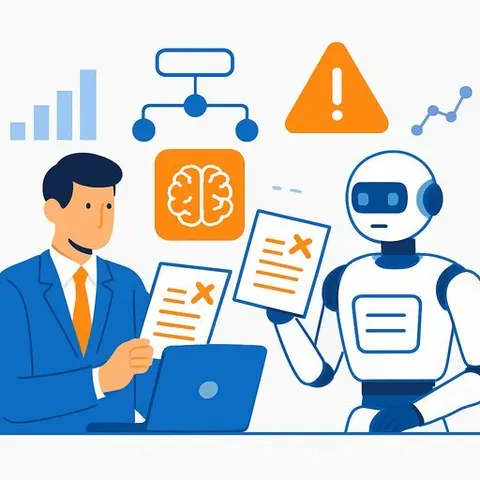
AI Won't Replace Third-Party Administrators in Health Insurance. It Will Reshape Them.
Third-Party Administrators (TPAs) face a fundamental shift in how they work, but not elimination. AI for Insurance will automate routine claims processing while pushing human staff toward complex cases that demand judgment, negotiation, and empathy.
This matters for executives overseeing insurance operations. The question isn't whether AI replaces TPAs-it's how to restructure your workforce and systems to capitalize on what machines do well and what humans do better.
Where AI Takes Over
Machine learning algorithms can now handle over 80% of routine claims instantly. What previously required manual document review, eligibility checks, and policy cross-referencing now happens in seconds.
The specific gains:
- Claim categorization: AI instantly classifies claims by complexity and risk, routing them appropriately.
- Rapid adjudication: Clean, low-value claims get approved in real time, cutting turnaround times dramatically.
- Fraud detection: Machine learning identifies suspicious billing patterns faster and more reliably than human reviewers.
- Customer service: Chatbots handle 24/7 routine inquiries-deductible questions, in-network provider checks-freeing agents for complex issues.
Some TPAs are already reducing manual-processing staff by up to 70% for routine claims.
Where Humans Remain Essential
AI flags disputes. Humans negotiate them. The distinction matters.
High-stakes conversations with healthcare providers and policyholders require judgment calls that algorithms can't make. A denied claim for an experimental treatment, a coverage dispute over a pre-existing condition, a patient confused about their options-these need someone who understands both policy language and human circumstances.
Complex case navigation also stays human-driven. Policyholders with family floater plans or multiple concurrent claims need professionals who can guide them through policy clauses and regulatory requirements while ensuring compliance.
Fraud investigation follows the same pattern. AI detects the pattern. Investigators determine whether it's fraud and build the case.
The Workforce Shift
TPAs that succeed will reclassify their staff. Claims processors become care coordinators. Call center agents become patient advocates.
Instead of handling volume through speed, human TPAs spend time on:
- Explaining coverage details to confused policyholders
- Advocating for appropriate care with providers
- Managing denied claims and appeals
- Coordinating care for chronic conditions
This requires different hiring and training. You're recruiting for emotional intelligence and problem-solving, not data entry speed.
The Operational Reality
AI functions as a co-pilot, not a replacement. AI Agents & Automation handle the straightforward work, which lets human adjusters focus on exceptions and anomalies that need context.
The system works because it removes friction. Policyholders get faster answers to routine questions. Claims handlers spend their time on cases that actually need them. Insurers process more claims with fewer staff dedicated to busywork.
The core TPA functions-intermediation between insurer and policyholder, claims management, network coordination-remain too vital to fully automate. These require negotiation, interpretation of policy language, and judgment.
What Executives Should Do Now
Start mapping which roles will shift. Identify your highest-volume, lowest-complexity claims-those are your AI targets. Plan workforce retraining for staff moving into complex case handling.
Assess your current TPA vendors or internal operations. Are they building AI capabilities? Do they have a plan for the transition? Vendors stuck in manual processing will struggle.
The future isn't the end of TPAs. It's TPA 2.0-smaller teams handling larger volumes while delivering more personalized service. The transition requires planning, but the alternative-staying in manual claims processing-isn't sustainable.