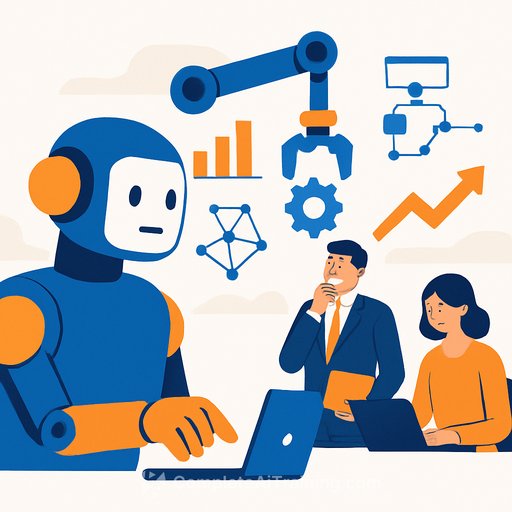
Innovation Unleashing AI Automation: Transforming Business Operations In 2025
AI tools have become essential allies in business automation. They handle repetitive, routine tasks and convert them into smooth, automated workflows that require minimal human intervention. As 2025 progresses, businesses have a prime chance to adopt these technologies to eliminate inefficiencies and streamline their operations. Picture your HR team completing data entry at lightning speed, freeing up time and reducing errors. It’s time to explore how AI can improve your daily operations.
Real-World Success Stories
Amazon uses AI to predict inventory needs, ensuring customers get their orders quickly while keeping costs low. By analyzing past sales data, seasonal trends, and even weather, Amazon adjusts stock levels in real-time across its warehouses. This approach cuts down delivery delays and supports their reputation for fast shipping.
UPS leverages AI through its ORION system to optimize delivery routes. It considers traffic, weather, and delivery schedules to save millions of gallons of fuel and reduce emissions. These examples prove that AI can solve common operational challenges and boost sustainability—no matter the business size.
Spoiler: Even AI Systems Face Challenges
Implementing AI isn’t always straightforward. Here are some common hurdles and ways to overcome them.
Integration Complexity
Start small by running a pilot project in one department. This allows you to identify issues and refine the process before expanding. For example, an accounting team struggling with invoice approvals introduced robotic process automation (RPA) for a small subset of invoices. This quick win revealed gaps in API setups and user permissions, which were fixed before a broader rollout.
Data Quality Governance
AI depends on clean, accurate data. Outdated or inconsistent information will reduce its effectiveness. One client discovered that their sales and marketing databases hadn’t been synced for years. After a six-week audit, they created unified data standards, added automated validation, and appointed data stewards to maintain accuracy.
Ethical and Security Concerns
AI introduces risks like bias and data exposure. Strong security measures and clear governance policies are essential. For example, a healthcare client implementing AI for customer support ensured HIPAA compliance by encrypting data, restricting access based on roles, and tracking consent. Training the entire team on AI ethics and risk management helped maintain trust and compliance.
Embracing the Future: Widespread Adoption
By 2025, AI innovations will impact many industries. Employees will shift from routine tasks to strategic roles. Upskilling is critical, focusing on data literacy, prompt engineering, AI ethics, and low-code/no-code platforms. Leaders should develop AI governance strategies and create cross-functional teams to align efforts across departments.
Encourage experimentation with low-risk AI tools to build confidence. Internal events like hackathons or lunch-and-learns can spark interest and uncover employees who become AI champions.
Strategies for AI Integration
Effective AI adoption depends on smart execution. Here’s what works.
Phased Integration Approach
Target repetitive, well-defined tasks first. A finance team spent hours processing invoices manually, which caused errors and delays. They piloted AI on invoice approvals, creating a feedback loop where humans reviewed flagged invoices and corrected the system. Approval times improved quickly, and error rates dropped. This success justified expanding automation into procurement and vendor onboarding.
Robust Data Management
A healthcare SaaS provider faced inconsistent user data, causing inaccurate reports and flawed automation. They standardized data formats, added real-time validation, and assigned “data champions” to own datasets. Monthly reviews reinforced accountability. Better data led to more accurate prediction models and faster user adoption.
Cultivating an AI-Ready Culture
Technology alone isn’t enough. Employees need to see how AI benefits their work. Hosting informal AI demo days where teams share real-life examples of AI saving time can shift attitudes from skepticism to curiosity. For instance, a marketing employee showed how AI-generated draft content reduced hours of work. Celebrating these small wins encourages broader acceptance.
Conclusion
AI tools offer practical ways to cut inefficiencies and open new growth opportunities. As 2025 unfolds, businesses that adopt AI thoughtfully will transform routine tasks into strategic advantages. Start by identifying pain points, pilot small projects, improve data quality, and foster a culture open to experimentation. Equip your operations team with the skills and mindset to work alongside AI, and watch your workflows become faster, smarter, and more reliable.
To explore AI courses and resources that can help you and your team develop essential skills, visit Complete AI Training - Courses by Job.
Your membership also unlocks: