AI Avatars Enter the Classroom: What Educators Can Learn from a First-Year Study Skills Program
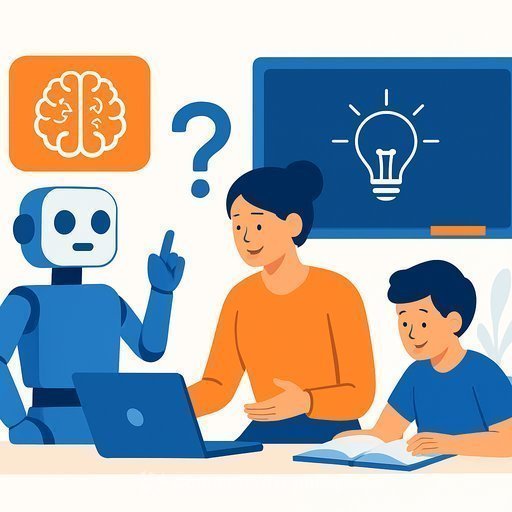
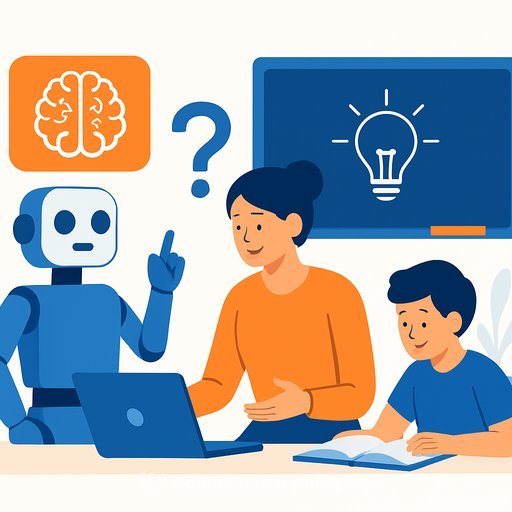
AI avatars are now part of the University's Cognitive Science-Based Learning Hub, a program that teaches first-year students how to study smarter. The goal: expand access and keep instruction consistent while mentors focus on human connection.
The avatars, built by Alpha Education, are marketed as adaptive tutors that can condense a day's learning into a two-hour experience. They're not unique to this campus; Morehouse College and Columbia University have also tested avatar-led instruction.
How the program works
The Learning Hub is a peer-mentoring course run by advanced Cognitive Science students. It covers note-taking, exam prep, and core cognitive principles that boost retention and comprehension.
This fall, the team used avatars to add 80 online seats alongside a 40-student in-person section, raising capacity to 120. In person, students attend six sessions led by upperclass mentors. One early lesson: extract the hierarchy of a lecture-identify the main idea, then map the supporting details.
What students see online
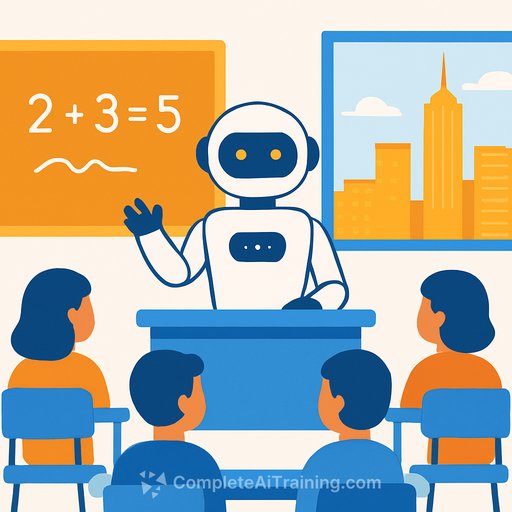
Online, students learn the same strategies through pre-recorded avatar lessons. They look and sound like a real instructor delivering a structured mini-class.
"I'm Ali, your AI mentor, and I'm here to help you transform how you learn using proven strategies from cognitive science research," one avatar explains in a demo. "Over the next six sessions you'll discover why some study methods work better than others, and, more importantly, how you apply them."
Related: AI Research.
Where avatars help-and where they fall short
Mentors say AI can reduce common teaching gaps-missed details, uneven explanations, and drift from the lesson plan. Fourth-year mentor Katie Chervenic admitted there were moments she wished she could add context she didn't have; a capable avatar could fill those gaps.
Still, mentors see a ceiling. "Having the opportunity to learn from someone truly passionate about the topic allows students to connect with the material on a more personal level," Chervenic said. "I don't believe AI would be able to capture this passion because it is so inherently human."
Program director and psychology professor Mariana Teles agrees the in-person piece matters. Advanced majors act as guides through a stressful first semester-talking through exam anxiety, enrollment choices, and how to course-correct. "I feel like there is an effective component with the in-person interaction that we will never be able to address with the AI avatars," Teles said.
Engagement and motivation are the sticking points
Psychology Prof. Dan Willingham, an advisor to the project and author of Outsmart Your Brain, flagged a familiar risk: it's hard to keep students engaged through a screen-especially if they believe they're talking to AI.
He expects avatars to work best for students who are already motivated and only use them in a limited context like this program. "One of the things everybody learned during [COVID-19] is it's really not very fun to talk to a screen," he said.
Access, confidence, and practice
First-year student Fabiola Torres-Rodriguez, who took the in-person version, sees a different upside: lower barriers to practice. Avatars can offer a low-pressure space to rehearse skills before class or try out ideas without fear of judgment.
She believes this can help first-generation students, neurodivergent students, ESL and heritage speakers, and anxious learners build confidence by "practicing thinking out loud."
Quality control and metacognition
Willingham cautioned that large language models can sound authoritative even when they're wrong. They're most useful when students already have enough background knowledge to vet answers.
Teles raised a related issue: metacognition. If AI speeds up problem-solving but students can't explain their reasoning, they get the grade without the growth. "We have carefully designed this online AI-guided program to avoid a negative impact on metacognition, because the core aim of the program is to increase the students' awareness of their own process of learning," she said.
See more on AI Design.
Measuring what matters
The Learning Hub runs two assessments: one pre/post across the program and another every two weeks between sessions. Surveys track which strategies students use, their motivation, and their grades.
Data for both in-person and online groups from Fall 2025 will be available in January. The team will compare results to see where avatars complement or fall behind in-person instruction.
What you can apply now
- Use avatars to increase capacity and standardize core content. Keep humans focused on discussion, feedback, and mentoring.
- Pair avatar lessons with short live touchpoints to sustain motivation-office hours, small groups, or peer-led Q&A.
- Make metacognition explicit. Require brief reflection prompts: how you studied, what worked, where you struggled, and why.
- Guard against misinformation. Give students checklists to verify facts and model how to cross-reference sources.
- Pilot, then measure. Compare learning strategies used, grades, and engagement pre/post and across formats before scaling.
- Teach AI literacy. Show students where AI helps (practice, feedback, organization) and where it doesn't (final answers, nuance without context).
Further reading and resources
Evidence on effective study techniques (e.g., practice testing, spaced study): Psychological Science in the Public Interest review.
On teaching how learning works: Outsmart Your Brain by Dan Willingham.
If your team is building AI skills for instruction and student support, explore structured training models like the AI Learning Path for Primary School Teachers as a role-based pathway template.
Teles summed up the goal well: integrate AI where it helps, and keep humans where they matter most. The balance-not the tool-decides whether students actually learn.
Your membership also unlocks: