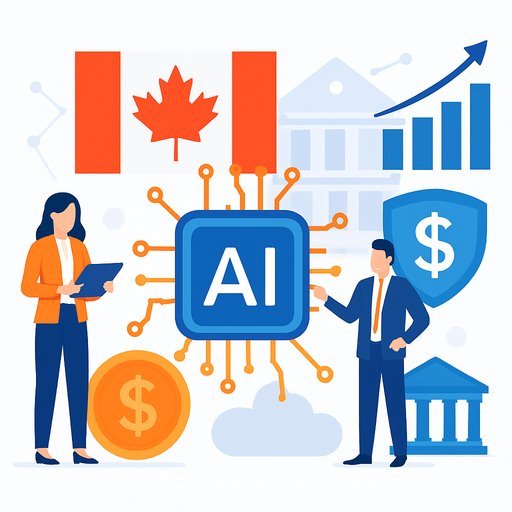
Insurance in 2026: AI moves from sidecar to core system
Expect AI to shift from "helpful add-on" to the operational backbone of insurance. Pressure from climate risk, economic uncertainty, and new rules is forcing faster decisions, tighter controls, and better margins. The message is clear: integrate AI into core workflows or fall behind.
From policy admin systems to insurance copilots
Large carriers are preparing to phase out heavy, monolithic policy admin systems in favor of AI copilots that sit on top of trusted data. Some are already signaling big budgets for this. Recent survey data shows insurance executives trust generative AI more than traditional machine learning-by a wide margin.
The implication: interact with data through copilots to underwrite and settle, instead of routing every task through legacy admin screens. It won't happen overnight, but the shift begins in 2026.
Claims in minutes-governance is the gate
Straightforward claims will be decided in minutes by agentic AI. That only works if governance is built in-security controls, auditability, bias monitoring, and fail-safes across the stack.
Insurers that install strong guardrails will earn trust and keep it. The standard isn't just "fast," it's "fast and correct."
Actuarial modeling and decisioning get an upgrade
Expect deeper AI in pricing, reserving, and claims decisioning. Gains will show up in accuracy, speed, and unit cost across the policy life cycle.
There's also a bigger prize on the table: real progress against the industry's $1.8T protection gap and better resilience amid climate and economic shocks.
Underwriting becomes adaptive and explainable
Underwriting will move from static, rule-based approaches to AI that learns from longitudinal customer data. Think of an ongoing dialogue between models and customers, with risk recalibrated as behaviors change.
The carriers to watch will pair this adaptivity with clear explanations and ethical transparency-so underwriters, regulators, and customers can see why a decision happened.
Climate will squeeze pricing and capacity
With climate-driven losses mounting, carriers will reassess exposure and optimize reinsurance more often. Expect tighter capacity in stressed geographies and lines, plus higher premiums where the math no longer works.
The protection gap may widen in places where pricing and risk diverge. Planning for that now-both commercially and socially-matters.
Fraud: best-of-breed beats all-in-one
Fraudsters are using AI to fabricate identities, documents, and images. The response: specialized, best-of-breed models stitched together rather than one "end-to-end" tool.
Investigations will also level up with copilots and AI agents that automate prep work, surface evidence, and let investigators cover more ground with less effort.
US AI rules: states set the pace
State-level action will make AI compliance more complex and more fragmented. The smart move is to embed oversight and compliance into the model lifecycle-data, training, testing, deployment, and monitoring.
For context on where regulators are heading, see the NAIC AI Model Bulletin summary here, and consider aligning your governance with the NIST AI Risk Management Framework here.
Cyber insurance grows-and underwriting gets technical
Cyber is a $16.3B global market and still growing. Underwriting will lean more into technical assessments on a client-by-client basis.
Clients with strong security controls and enforced policies will get better terms. Those without them may get declined.
What to do now: a practical checklist
- Stand up an AI governance program that covers data lineage, model risk, bias testing, human-in-the-loop, and incident response.
- Map policy admin workflows and target 2-3 copilots (underwriting intake, claims triage, FNOL summarization) to remove manual friction.
- Upgrade data foundations: identity resolution, consent tracking, feature stores, and secure access patterns.
- Shift underwriting toward adaptive models with clear explanations and override workflows for edge cases.
- Tighten catastrophe views and reinsurance optimization using updated climate scenarios and portfolio simulations.
- Modernize fraud defenses with document forensics, image authenticity checks, network analytics, and investigation copilots.
- Embed compliance early: model inventories, policy libraries, approval gates, and continuous monitoring tied to state requirements.
- Raise the bar for insureds in cyber: evidence of controls, patch cadence, MFA, EDR, backups, and tabletop exercises.
- Upskill teams-underwriting, claims, actuarial, SIU, compliance-on AI literacy and prompt practices. See role-based learning paths here.
The bottom line
AI is moving to the center of the insurance operating model. The carriers that win will combine copilots, adaptive models, and strong governance-then scale what works across underwriting, claims, fraud, and cyber.
Start small, move fast, prove value, and keep humans in control. That's the playbook for 2026.
Your membership also unlocks: