AI Controversy in Fantasy Romance Publishing
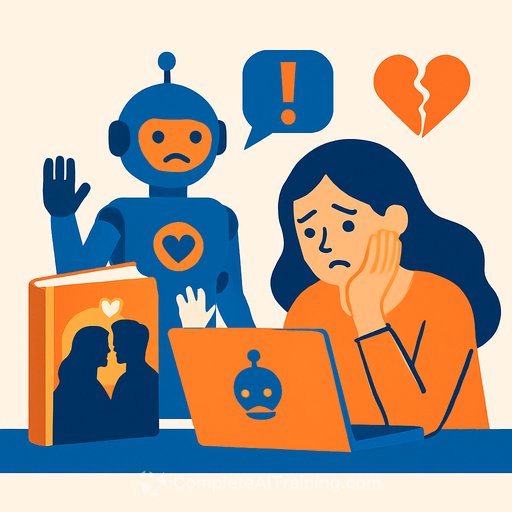
In late May 2025, fantasy romance authors K.C. Crowne, Rania Faris, and Lena McDonald became the centre of an unexpected controversy. Readers discovered unedited AI-generated prompts embedded within their newly published novels. These excerpts, which quickly spread across platforms like Reddit, Goodreads, and Bluesky, included revision notes and editorial cues that pointed to the use of AI tools such as ChatGPT during the writing process.
What made this incident stand out was not the use of AI itself—many writers use it behind the scenes—but that these AI-generated pieces were left visible in the final, published books. For readers expecting a polished, immersive experience, stumbling across placeholder text or draft instructions felt jarring and raised questions about the authenticity of the work.
How Readers Spotted the Errors
Readers first noticed odd language in Lena McDonald's Darkhollow Academy. One passage explicitly referenced rewriting a scene to imitate another author's style, reading more like an internal note than narrative text. One user commented, "It's like she copied and pasted directly from her AI draft and forgot to clean it up."
Shortly after, similar screenshots emerged from books by Crowne and Faris, showing strange or out-of-place lines. While the wording varied, the pattern was clear: AI-generated content or phrasing had slipped into the finished product. Some authors admitted to using AI for brainstorming or minor editing but said the visible prompts were left in by accident.
A Divided Response from Readers
The reaction split the book community. Some accepted AI as a practical tool in today's fast publishing cycles. Others felt let down. A popular Goodreads reviewer put it bluntly: "It's not just about AI. It's about trust. When you buy a book, you expect the voice behind it to be human, not a chatbot."
Critics also pointed to the speed of production. One reader noted that one author released three novels in under three months, faster than even Stephen King. "Unless you're a machine yourself, it's hard to believe you're doing this without help," they wrote.
Why This Matters to Writers
AI controversies are not new in creative fields, but this one struck a nerve because it touches the core connection between storyteller and reader. In fantasy romance, emotional depth and immersive world-building are key. If readers doubt the storyteller's authenticity, the story's impact weakens.
This debate raises ethical questions: Should authors disclose AI use? If AI helps brainstorm, edit, or draft scenes, do readers deserve to know? Or is an author’s final approval enough to claim full creative ownership?
What Publishers and Lawmakers Are Saying
Publishing AI-assisted books is legal in both the US and UK, but copyright laws vary. In the US, only human-authored content gets copyright protection, so fully AI-written works lack legal coverage. In the UK, computer-generated works can have copyright lasting 50 years, credited to the guiding person.
While laws offer some clarity, the publishing industry still debates ethics. Many call for clear standards and disclosures, especially in self-publishing, to maintain reader trust and editorial integrity.
Balancing AI Assistance and Authenticity
Whether the authors intended to mislead or simply missed these AI prompts during editing, the issue remains sensitive. As AI tools grow more advanced and accessible, the lines between inspiration, assistance, and authorship blur.
For now, readers aren’t asking for flawless books—they want honesty and care before a book reaches their hands.
Writers interested in understanding how AI tools fit into their workflow can explore practical courses on AI-assisted writing at Complete AI Training.
Your membership also unlocks: