
AI news ·
AI body-mapping tool links obesity to facial nerve damage in mice and humans
A new AI system called MouseMapper found that obesity damages facial nerves - a previously unknown effect. The tool mapped disease changes across entire mouse bodies, with findings that may apply to humans.
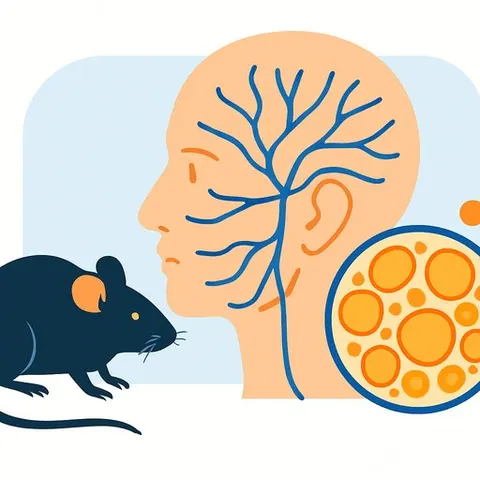
AI System Maps Obesity's Damage to Facial Nerves in Whole-Body Study
Researchers at Helmholtz Munich and Ludwig Maximilians University Munich have developed an AI system that revealed obesity damages facial nerves-a finding that was previously unknown. The discovery came from MouseMapper, a deep-learning platform that mapped disease-related changes across entire mouse bodies at cellular resolution.
The team found widespread inflammation and nerve damage in obese mice, particularly in the trigeminal nerve, a major facial nerve responsible for sensation and motor control. In obese animals, these sensory nerves showed significant loss of branches and nerve endings, which behavioral tests confirmed impaired nerve function.
The same molecular signatures linked to nerve damage appeared in tissue samples from people with obesity, suggesting the mechanism may operate similarly in humans.
How MouseMapper Works
MouseMapper uses foundation-model-based deep learning to analyze whole-body imaging data automatically. The system identifies and segments 31 organ and tissue types while mapping nerves and immune cells throughout the body without requiring researchers to select specific regions in advance.
To create the body maps, researchers tagged nerves and immune cells with fluorescent markers, then used tissue-clearing methods to make mice transparent while preserving the signals. Advanced light-sheet microscopy captured detailed three-dimensional images of entire animals, generating datasets containing tens of millions of cellular structures.
The AI then analyzed these images to identify anatomical regions, nerve networks, and immune-cell clusters. This approach pinpointed exactly where inflammation and tissue damage appeared across organs including fat tissue, muscle, liver, and peripheral nerves.
Broader Applications Beyond Obesity
The researchers believe MouseMapper could serve as a tool for studying diseases affecting multiple organ systems simultaneously-including diabetes, cancer, neurodegenerative diseases, and autoimmune disorders. Unlike earlier approaches focused on individual tissues, MouseMapper provides integrated whole-body analysis.
The team has made whole-body datasets publicly available online for researchers worldwide to explore obesity-related changes across organs and tissues.
The long-term vision involves building cell-level digital twins of mice in health and disease that researchers can query and screen computationally. This could identify the earliest disease changes, guide intervention design, and reduce the number of physical experiments needed.
The study appears in Nature.
For those working in research environments, understanding how AI for Science & Research applies to disease mapping can inform how these tools integrate into your workflows. The technical foundations-deep learning algorithms and foundation models-are covered in detail through resources like the AI Learning Path for Data Scientists.