AI Bots and Deepfakes Are Targeting Healthcare Accounts at Scale
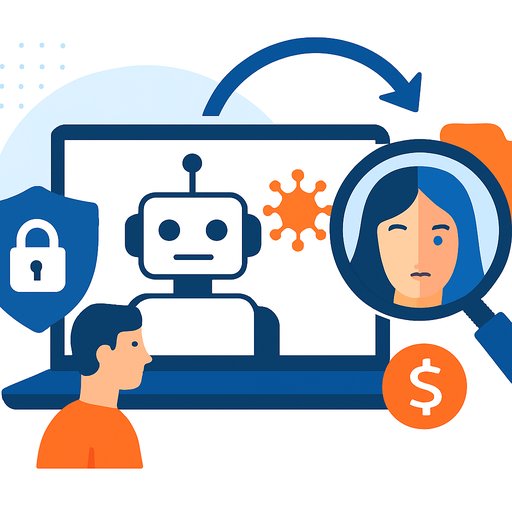
Healthcare organizations are facing a surge in automated bot attacks that exploit weak authentication systems and stolen personal data to access high-value accounts like health savings accounts and flexible spending accounts. A major U.S. healthcare provider discovered that bots account for more than half of all fraud in their systems, with over 15,000 unique bot fraud calls detected since summer 2025.
These attacks operate differently from traditional fraud. Bots use scripted commands to navigate IVR systems at near-human speed, validate stolen Social Security numbers and dates of birth, and probe for weaknesses-all without speaking to a live agent. Once they gather intelligence, attackers use that information to conduct social engineering attacks against contact center staff or attempt account takeovers.
Why Healthcare Is the Target
Healthcare combines three factors that make it attractive to attackers: high-value financial accounts, sensitive personal data, and legacy security systems that crumble when paired with compromised information.
Nearly 60% of organizations now report fraudsters using stolen personally identifiable information to bypass knowledge-based authentication. These older security checks were designed for a different threat environment-one where personal data wasn't widely available on the dark web.
The problem has intensified with generative AI. Deepfake attacks increased 880% in 2024, according to industry data. These aren't theoretical risks anymore. They're showing up in real accounts with real financial losses.
The Scale of the Problem
One healthcare provider faced over $40 million in account exposure related to fraudulent bot calls in 2025. The U.S. Department of Health and Human Services charged 324 defendants in the largest general healthcare fraud takedown in U.S. history, tied to $14.6 billion in intended losses.
Regulatory scrutiny is intensifying at the same moment that AI-driven attacks are becoming cheaper and faster to execute. For healthcare organizations, these pressures collide at once.
How Bot Attacks Work in Contact Centers
Attackers deploy bots across healthcare contact centers using repeatable tactics:
- IVR probing to gather system intelligence and test security responses
- Social engineering against live agents using information collected from IVR systems
- Automated account takeover attempts at scale
- Validation of stolen personal data without triggering fraud alerts
The bots interact with systems using programming-style commands that suggest script-driven interactions. Background noise analysis indicates attackers are operating from call-center-style fraud operations, deploying schemes at industrial scale.
Business Impact Beyond Financial Loss
Direct financial losses are immediate and measurable. But the damage extends further.
Investigations and remediation add operational costs. Call handle times increase as agents spend more time verifying customer identity. Agent fatigue sets in from managing suspicious interactions. Most significantly, patient and member trust erodes when accounts are compromised.
Healthcare organizations hold some of the most sensitive and valuable data consumers possess. When those accounts are breached, confidence in the organization drops drastically.
Moving Toward Real-Time Verification
The solution requires moving beyond legacy authentication. Healthcare organizations need real-time identity verification systems that can detect bot behavior, validate customers during live interactions, and distinguish between legitimate users and automated attacks.
This shift addresses both immediate fraud prevention and longer-term regulatory compliance. As enforcement actions increase, organizations that continue relying on outdated security controls face growing exposure.
For healthcare professionals managing operations, contact centers, or security, the priority is clear: legacy defenses are no longer sufficient. The question is how quickly your organization can adapt.
Your membership also unlocks: