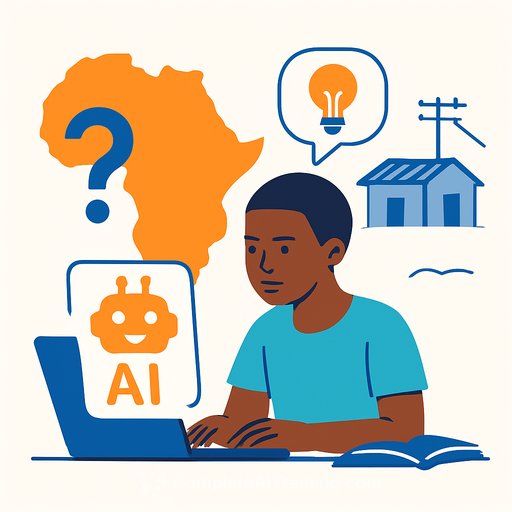
AI in African Classrooms: Big Potential, Bigger Barriers
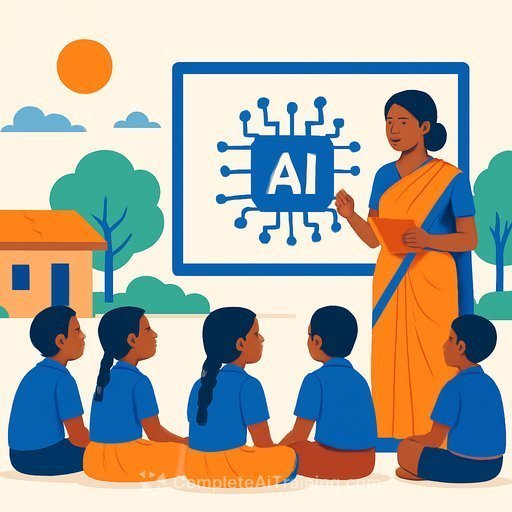
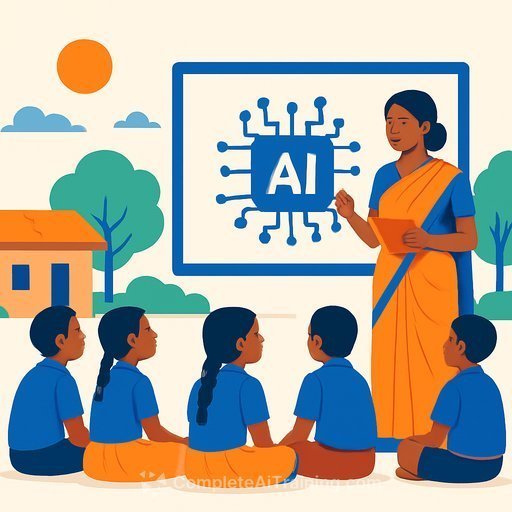
AI can help teachers teach and students learn. That's the upside. But a widening digital divide risks turning it into another advantage for the best-resourced schools while rural and underserved learners fall further behind, as a recent analysis warned.
Students are optimistic. Many see AI supporting personalised learning and multilingual help. Yet without reliable power, stable internet, and trained educators, those benefits stay out of reach for most.
If the basics aren't funded first, AI becomes exclusive - not inclusive.
What's Holding Schools Back
- Unreliable electricity and weak connectivity that disrupt lessons and tool access.
- Limited devices and shared access models that slow classroom adoption.
- Insufficient teacher training and support to use AI responsibly and effectively.
- Patchy policies on data privacy, procurement, and equitable rollout.
Where AI Can Actually Help (Once Fundamentals Are in Place)
- Personalised practice and feedback that adapts to student progress.
- Teacher time saved on grading, planning, and admin - more time for teaching.
- Multilingual support that reflects local languages and contexts.
- Early signals on learners who need help, if used with clear safeguards.
The Practical Roadmap for Education Leaders
Think infrastructure first, adoption second. Here's a sequence that works in low-resource contexts.
- Stabilise power and connectivity: Prioritise schools with solar or hybrid power and partner with ISPs for affordable school internet. Consider community networks and offline-first content where bandwidth is limited.
- Adopt equitable access models: Start with device labs and classroom carts before 1:1. Use shared schedules and maintenance plans to keep devices usable.
- Train teachers early and often: Begin with digital basics, then classroom use-cases for AI. Create school-based "teacher champion" groups and peer coaching.
- Choose tools that fit constraints: Favour low-bandwidth, offline-capable, multilingual tools with clear data policies and simple dashboards.
- Protect students and teachers: Set policies for data privacy, content filtering, age-appropriate use, and transparent model limitations.
- Fund with equity in mind: Allocate more to rural and low-income schools. Tie funding to infrastructure readiness and support.
- Measure what matters: Track attendance, time-on-task, teacher workload, and learning gains. Adjust based on evidence, not hype.
Funding and Partnerships That Move the Needle
Closing the gap requires coordinated investment: ministries, telecom providers, edtech companies, and development partners working from the same plan. Align budgets to power, connectivity, and teacher development before scaling flashy tools.
Use agreements that bundle connectivity, devices, and training, so schools don't get stuck with hardware that sits idle.
A 90-Day Starter Plan
- Weeks 1-2: Audit 10-20 schools for power uptime, bandwidth, device counts, and teacher readiness.
- Weeks 3-4: Pick three pilot sites (urban, peri-urban, rural). Define clear goals and metrics.
- Weeks 5-8: Train a small cohort of teacher champions. Set classroom routines and guardrails.
- Weeks 9-12: Run pilots with low-bandwidth tools. Collect data weekly. Fix pain points fast.
At the end, publish results and a simple scale-up plan tied to infrastructure milestones and teacher support.
Policy Principles to Keep It Fair
- Prioritise underserved schools for power and internet upgrades.
- Set national procurement standards for data privacy and safety.
- Fund continuous teacher development alongside any tech purchase.
- Require low-bandwidth and offline options for all approved tools.
AI can add real value in African classrooms. But it only works if electricity, internet, and teacher capacity come first. Build the floor, then add the tech.
Helpful resources
Upskilling for Teachers and School Leaders
If you're planning training tracks for staff, start small with practical use-cases and short modules. Consider curated options that map courses to education roles.
Your membership also unlocks: