AI in Trade Finance: From Ops Relief to Inclusive Advancement
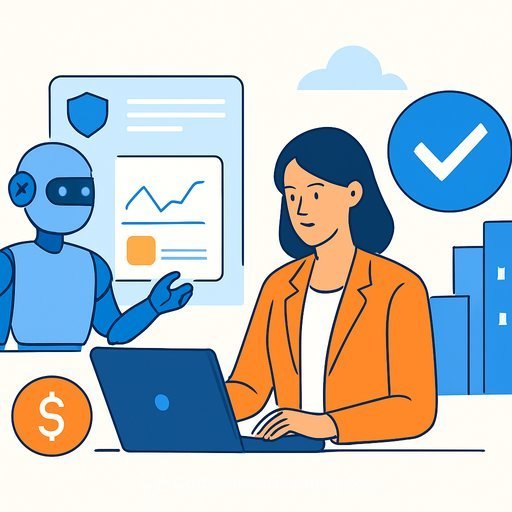
AI can automate routine work in trade finance-sanctions screening, document checks, AML/KYC-so more women, who have long been concentrated in support roles, get time and visibility for higher-impact work. If built and governed with inclusivity in mind, it can also reduce bias in hiring and evaluations, bringing more diverse thinking into decisions that move capital and risk.
The goal isn't just efficiency. It's opening the path to senior roles by shifting hours from repetitive tasks to analysis, client strategy, and judgment calls-areas where careers are made.
AI as a bias counterweight-if you design it that way
Over 90% of employers use some form of automation to filter or rank job applications, which means bias can scale fast without guardrails. With inclusive data, testing, and oversight, AI can also push hiring in a fairer direction by standardizing criteria and surfacing overlooked talent. The World Economic Forum has highlighted AI's growing role in recruiting.
- Use structured scoring rubrics and strip identifiers before model review. Keep final decisions with trained humans.
- Audit models for fairness (e.g., demographic parity, equalized odds) and monitor drift by cohort over time.
- Document prompts, features, and exclusions. Record rationales for shortlists and offers.
- Broaden pipelines: target returners, flexible workers, and talent outside power centers.
- Increase representation in AI teams; women make up roughly 22% of AI professionals-closing that gap improves the tech and the outcomes.
Language models can mirror social bias unless you correct for it. Inclusive design means diverse training data, adversarial testing, and policies that make biased outputs unacceptable in hiring decisions. For practical implementation resources, see AI for Human Resources.
Enabling the middle layer: more decisions, fewer checklists
Middle management in trade finance is getting leaner and more influential. As AI takes on screenings, verifications, and standard client queries, managers can spend time on pricing nuance, counterparty dynamics, and structuring choices that actually move P&L.
Agentic AI-LLMs that plan multi-step workflows with minimal oversight-now supports client service, early-warning signals, and portfolio trend scans. That reduces hours on commonplace risk and frees capacity for macro exposures, local intricacies, and "what-if" scenarios leadership cares about.
This shift matters for inclusion. Thirty-eight percent of women report having their judgment questioned in their area of expertise. More space to demonstrate analysis, influence outcomes, and own decisions accelerates progression to VP, director, and beyond. See AI for Finance for automation examples in AML/KYC, risk, and workflow design.
From imposter syndrome to systems that grow expertise
Trade finance has a steep learning curve: regulations, acronyms, and shifting policy. AI can flatten that curve with real-time explanations of structures, risk flags with mitigants, and comparisons to similar deals-and do it on demand for people outside the "inner circle."
This helps women returning from career breaks, staff working flexibly, and teams outside major hubs. Inclusion looks like permission to ask, test, and learn-then move fast on the insights.
Practical playbook for banks and trade finance leaders
- Redesign roles: Move 30-50% of recurring checks to AI-driven workflows. Replace "tasks completed" with "decisions influenced" as a core KPI.
- Promotion pipeline: Set targets for mid-level women leading deals, pricing committees, or sector theses. Tie sponsorship to those targets.
- Skills sprints: Run short, applied AI upskilling (ops → structuring; service → portfolio analytics). Certify skills and convert to scope increases.
- Fair hiring stack: Structured interviews, anonymized screens, and model audits. Publish your fairness metrics quarterly.
- Transparent evaluations: Use evidence-backed performance narratives (deal outcomes, risk-adjusted returns, client retention) over subjective "fit."
- Data governance: PII scrubbing, access controls, and model cards. Red-team models for biased outputs before production.
- Visibility loops: Rotate women into high-stakes committees and client pitches; track speaking time and decision ownership.
- Allies with accountability: Tie leader bonuses to measurable inclusion outcomes-hiring, promotions, pay equity, and attrition.
Guardrails so AI reduces bias-instead of scaling it
- Inclusive datasets: Balance by geography, role level, and career breaks. Remove proxy features that smuggle in bias.
- Fairness testing: Pre- and post-deployment checks by segment. Flag disparate impact and set reject/override policies.
- Explainability: Keep feature attributions and prompt logs. If you can't explain the shortlist, don't use it.
- Human-in-the-loop: Final say rests with trained reviewers who can challenge the model and document overrides.
What good looks like (track it)
- Hours on repetitive tasks drop; time on analysis and client strategy rises.
- More women move from ops/support to VP/SVP roles leading deals or portfolios.
- Candidate slates and promotion panels show balanced representation.
- Pay and attrition gaps shrink; judgment-based "potential" scores align with outcomes.
The bottom line
AI can clear the operational bottlenecks that stall careers and apply more objective standards to how talent is found and advanced. Used well, it widens access to expertise and gives women in trade finance space to demonstrate judgment, build influence, and lead.
Technology won't fix culture by itself. But with intentional design-and leaders who back it up-AI can help build a system where intelligence is augmented and opportunity is broader. For context on the confidence gap, see the Women in the Workplace research.
Your membership also unlocks: