AI note-taking in clinic: useful, but only with guardrails
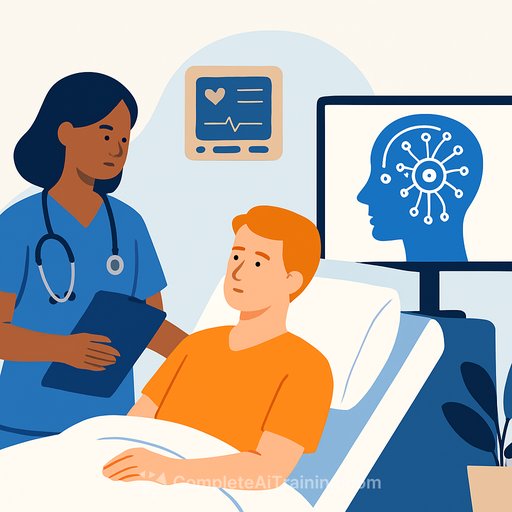
Two recent specialist visits started the same way: "Do you consent to AI taking notes during this appointment?" I hesitated. I'd just watched a near-miss on a medical drama where the AI mixed up Restoril and Risperdal. That's not a small typo - that's a clinical risk.
In practice, some clinicians report these ambient tools draft more complete notes than they could type in real time. That can be a win for chart closure and face time with patients. But there's a catch: the benefits show up only with tight oversight and a culture that never outsources clinical judgment to a model.
Why healthy skepticism helps
Patients are already met with AI summaries in search results. The sources vary, the quality varies, and the stakes are high. Rare disease communities, in particular, remain cautious - a recent index from a rare disease media group found most patients don't fully trust AI-generated health information.
That skepticism is productive. It nudges clinicians and patients to confirm, not just consume. If AI is in the room, trust should be earned through accurate output and visible verification.
Where AI scribes go wrong (and how that shows up in charts)
- Medication mix-ups: look-alike/sound-alike drugs, wrong dose, wrong route.
- Phantom facts: invented histories, family history, or ROS items never discussed.
- Clinical nuance loss: rare disease specifics flattened into generic labels.
- Attribution errors: who said what in multi-speaker encounters.
- Laterality and timing errors: left vs right, acute vs chronic, "today" vs "last month."
- Template creep: irrelevant negatives bloating the note and hiding the signal.
A quick oversight framework for clinicians
- Consent first, every time: plain-language explanation, opt-out available, visible indicator when recording.
- Scope control: limit the model to draft structure and boilerplate; clinical reasoning, assessment, and plan stay clinician-led.
- High-risk fields get human priority: meds, allergies, problem list, assessment/plan. Read these end-to-end before signing.
- Active correction loop: edit in front of the patient when feasible; confirm key items aloud to surface mishears.
- Audits: sample 5-10 notes per clinician weekly early on; track error types and fix upstream prompts/workflows.
- Security checklist: BAA in place, PHI encryption, data retention limits, and clear policy on audio storage/deletion.
- Version discipline: document model/vendor, prompts, and settings; re-validate on any update.
- Edge cases: accents, masks, background noise, interpreters, multi-speaker rooms - expect higher error rates and adjust.
Communicating with patients (a simple script)
"We use an AI assistant to draft notes so I can focus on you. I review and correct everything before it goes in your record. You can opt out anytime, and we don't keep audio beyond what's needed for the draft." Short, direct, and specific.
Rare disease visits need extra precision
Complex regimens, off-label use, and evolving symptom profiles raise the cost of small errors. Verify rare disease terminology, subspecialty acronyms, and med histories against the source list - not just what the model heard. If anything looks "too clean," assume it's incomplete.
What to measure
- Chart closure time and after-hours work (goal: down).
- Error rate by category (meds, history, ROS, plan) and severity.
- Patient and clinician satisfaction scores specific to documentation and communication.
- Escalations and safety events linked to AI documentation (zero is the target).
Clinical judgment stays in charge
AI can draft, summarize, and remind. It can't carry responsibility. Treat it like a new resident: helpful, fast, occasionally confident and wrong - and always supervised.
Policies worth reviewing
Training your team
If your clinic is standing up AI scribes or CDS tools, invest in prompt literacy, oversight workflows, and vendor evaluation basics. For structured options, see role-based AI courses here: courses by job.
Bottom line: AI is a useful starting point. Patients expect you to double-check. Keep consent clear, verification tight, and your clinical judgment on the hook - every time.
Disclaimer: This article is for information only and is not medical advice. Always rely on your clinical training, local policy, and patient-specific context.
Your membership also unlocks: