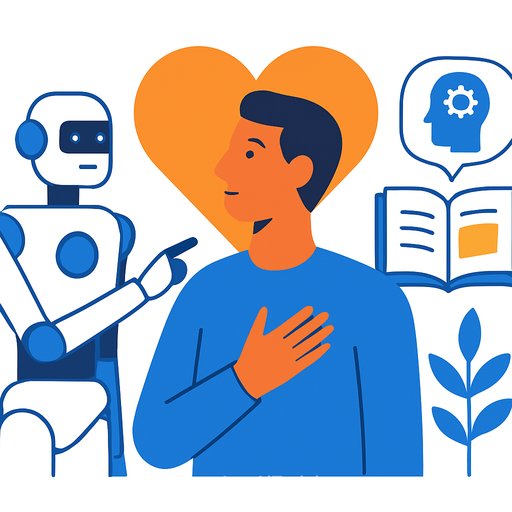
WISE 2025: Human Values First in an AI-Saturated Education System
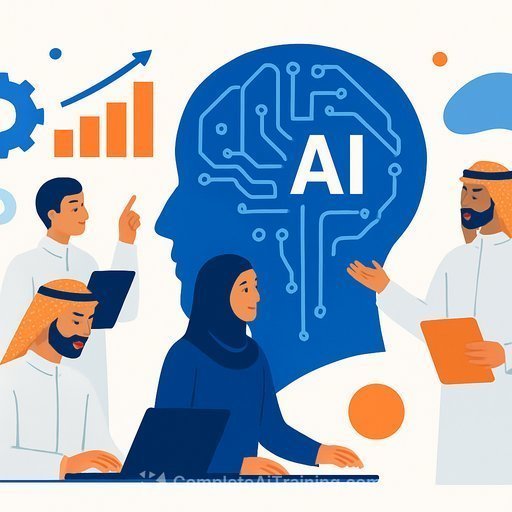
In Doha, global education leaders gathered for the 12th World Innovation Summit for Education under a clear theme: keep human values at the center as AI reshapes how people learn. The message was consistent across the stage - progress without ethics breaks trust, and learning without morality loses its purpose.
The summit, framed as "Humanity.io: Human Values at the Heart of Education," pushed a simple idea educators can act on now: keep humanity as the reference point for how we design curriculum, assessment, and policy in an AI-heavy environment.
Key signals from Doha
- Sheikha Moza bint Nasser called for a reset on education's purpose. AI has outpaced adaptation, and separating knowledge from values risks harm. Her warning was blunt: when education loses its moral core, it can slide into "absolute evil."
- Minister Lolwah bint Rashid bin Mohammed Al Khater tied national progress to human-centered choices. Keeping humanity as both the starting point and the goal helps turn challenges into shared growth.
- Mo Gawdat argued we're underestimating AI's impact, not overhyping it. With systems already advancing scientific discovery, future classrooms should prize questioning over memorization. The tool isn't the difference - how we use it is.
- Laila Lalami emphasized storytelling as a durable way to deliver complexity. She also urged schools to protect students' right to learn through mistakes instead of outsourcing thinking to AI-generated answers.
Why this matters for educators
AI is changing the work students do and the way they do it. Your job shifts from content gatekeeper to designer of experiences where judgment, ethics, originality, and the ability to ask better questions are the main outcomes.
That shift needs structure, not slogans. Below is a practical playbook you can adapt this term.
Curriculum: value-first, AI-aware
- Anchor to purpose. Start each unit with a human problem or ethical lens, not a tool. Ask: What decision quality or moral reasoning should students walk away with?
- Move from recall to inquiry. Replace fact-heavy objectives with question-led outcomes: interpret, critique, compare, justify, simulate, and create.
- Story over slides. Use narrative case studies to carry complex concepts. Pair data with human context so students practice empathy and judgment.
- Permit AI with constraints. Define where AI supports process (idea generation, outlines, feedback) and where original thinking is required (thesis, evidence selection, personal reflection).
Assessment: proof of thinking, not tool use
- Open-resource by default. Test transfer: unseen scenarios, multi-step reasoning, and citations that connect sources to claims.
- Oral defenses and live work. Short viva-style checks, whiteboard problem solving, and think-alouds make actual understanding visible.
- Portfolios with process. Require drafts, prompts used, AI outputs, and revisions. Grade decision-making, not just the final artifact.
- "Mistake credits." Encourage risk-taking by awarding points for documented missteps and what changed after feedback.
Ethics and safety: make it routine
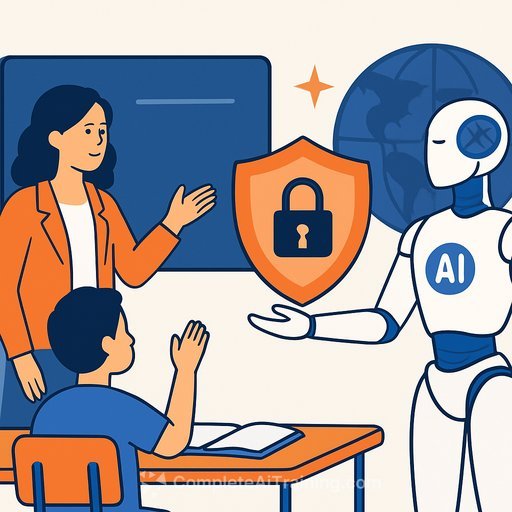
- Data dignity. No student PII in public models. Use institution-approved tools, anonymize inputs, and get consent for any dataset sharing.
- Bias checks. Require students to test outputs across demographics and document mitigation steps.
- Attribution norms. If AI contributes, cite the system, the prompt, and what changed post-edit. Treat undisclosed AI like any uncredited source.
- Age-appropriate use. Progressive permissions by grade level with teacher mediation and clear red lines.
Classroom prompts that raise the bar
- Counterfactuals: "Given this model's answer, construct the best opposing view. Who would be harmed if we accepted the first output?"
- Source triangulation: "Use two human sources and one AI summary. Reconcile conflicts, then justify your final position."
- Ethical audit: "Identify stakeholders, potential harms, and trade-offs. Propose guardrails before recommending a solution."
90-day rollout plan (adapt and scale)
- Days 1-30: Draft an AI use policy, pick two approved tools, pilot in 3 classes, and run a staff micro-training on ethical use and citation.
- Days 31-60: Convert two legacy tests to open-resource, add one oral defense per course, and launch a bias-check rubric.
- Days 61-90: Build a cross-course portfolio with process logs, publish exemplars, and collect student reflections on decision-making growth.
Leadership guardrails that keep trust
- Transparency: Publish your AI policy, approved tools, and data protections on a public page.
- Access equity: Provide school-managed accounts so students with fewer resources aren't left out.
- Professional learning: Monthly clinics where teachers bring one assignment to "AI-proof" or "AI-enhance."
What to teach students about AI
- How it works (in plain terms): pattern prediction, training data, and why confident answers can still be wrong.
- Limits and risks: bias, privacy, copyrighted material, and over-reliance that dulls thinking.
- Responsible use: goal-first prompting, verifying with credible sources, and leaving a human signature in the work.
Useful references
Skill up your team
If you need curated learning paths to bring staff up to speed on responsible AI use, explore these resources:
- AI courses by job role for fast alignment with teaching and academic support roles.
- Latest AI courses to keep PD current without adding busywork.
The takeaway
AI is changing how knowledge is produced and accessed. Your advantage as an educator is the part machines can't own: ethics, judgment, context, and meaning.
Design for those. Teach students to ask better questions, explain their decisions, and care about who is affected. That's how we keep education human while using the best tools available.
Your membership also unlocks: