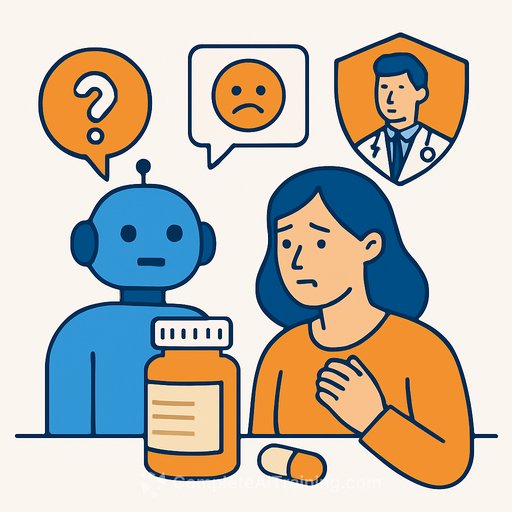
AI Chatbots and Psychiatric Medication Reactions: Assessing the Current Limits
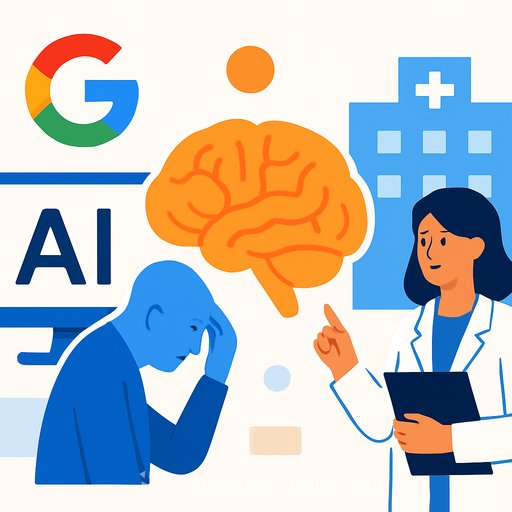
AI chatbots powered by large language models (LLMs) offer 24/7 availability and easy access, making them tempting sources for health advice. For individuals with mental health conditions, these tools are increasingly consulted about potential side effects of psychiatric medications—a situation that carries higher risks than general inquiries.
Given widespread gaps in mental health treatment access worldwide, including the U.S., many people turn to AI chatbots for urgent health-related questions. This growing trend raises an important question: how well do AI models perform when addressing mental health emergencies and medication side effects?
Evaluating AI’s Ability to Detect Medication Side Effects
Researchers at the Georgia Institute of Technology developed a framework to evaluate how accurately AI chatbots detect adverse drug reactions and how closely their recommendations align with expert psychiatric advice. The team included experts from psychiatry, computer science, and interactive computing.
The study analyzed nine different LLMs, including general models like GPT-4o and LLaMA-3.1, as well as specialized medical models trained on clinical data. They gathered real-world data from Reddit, where users frequently discuss medication side effects, to create a robust dataset for testing.
Performance was measured across two main objectives:
- Detecting whether a user was experiencing side effects or adverse reactions to psychiatric medication.
- Providing actionable and effective harm-reduction strategies aligned with clinical best practices.
Key Findings: Where AI Chatbots Fall Short
The research revealed that while LLMs can capture the general tone and display empathy similar to human psychiatrists, they struggle to grasp the nuances of adverse drug reactions. Distinguishing between different types of side effects remains a challenge.
More importantly, AI chatbots often fail to provide truly actionable advice that aligns with expert recommendations. This gap poses risks, given that incorrect or vague guidance could have serious real-world consequences for users managing psychiatric medications.
Implications for AI Development and Mental Health Access
Improving AI chatbots to better detect and respond to psychiatric medication side effects could have a meaningful impact, especially for communities facing limited access to mental healthcare providers. These tools offer constant availability and can communicate complex information in accessible language.
However, the study highlights the urgent need to enhance AI models so their advice is not just empathetic but clinically sound and practical. Closing this gap will require collaboration between AI developers, clinicians, and policymakers to ensure safe, reliable mental health support tools.
Ongoing research like this guides efforts to refine AI in healthcare, helping developers identify where improvements are necessary to protect users and improve outcomes.
Further Reading and Resources
- Complete AI Training: ChatGPT Courses
- Prompt Engineering for AI Models
- National Institute of Mental Health: Mental Health Medications
Reference: Lived Experience Not Found: LLMs Struggle to Align with Experts on Addressing Adverse Drug Reactions from Psychiatric Medication Use, (Chandra et al., NAACL 2025).
Funding: National Science Foundation (NSF), American Foundation for Suicide Prevention (AFSP), Microsoft Accelerate Foundation Models Research grant program.
Your membership also unlocks: