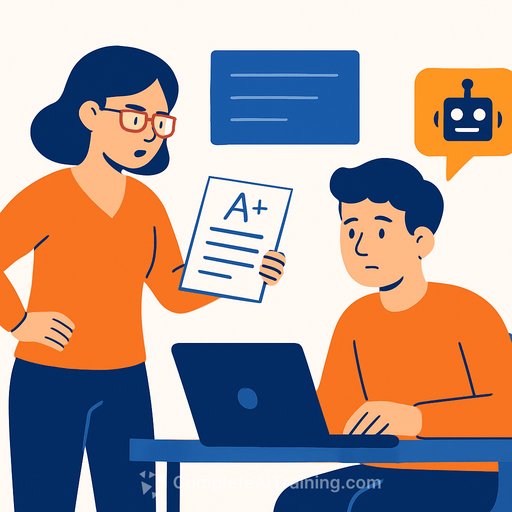
Cheating in 2025: The Rise of AI Tools
Cheating has been part of learning forever. But in 2025, it’s taken a new form. Students no longer have to pay for sketchy essay-writing services. Instead, they can generate entire assignments using free AI writing tools in seconds. These tools produce content fast, making it easier than ever to bypass genuine effort.
As someone who reviews student work regularly, it’s clear when AI tools like ChatGPT, Grammarly, or EssayGenius have been used to draft entire assignments. The writing often feels vague, and you'll spot the assignment prompt repeated oddly throughout the text.
How to Tell if Something Was Written by AI
- Key terms from the assignment prompt appear repeatedly.
- Inaccurate facts pop up due to AI hallucinations.
- Sentences don’t flow naturally.
- Explanations seem generic and circular instead of insightful.
- The tone doesn’t match the student’s usual style.
For example, a typical use case involves a student copying the essay question directly into an AI chatbot like ChatGPT, which then spits out an answer. The result often reads like keyword-stuffed SEO content rather than a unique, thoughtful essay.
Can Teachers Use AI Tools to Catch Students Using AI?
Yes. There are ways to be smarter about spotting AI-generated work.
Catching AI Cheaters
Understanding AI Capabilities
Some AI tools can scan an assignment and its grading criteria to produce a complete, cited paper in moments. Familiarizing yourself with these tools, such as GPTZero and Smodin, helps you recognize the kind of output they generate.
Doing as the Cheaters Do
Before classes start, try submitting your own assignments to AI tools. Seeing firsthand what these tools produce for your prompts will help you spot AI-written answers when they come in.
Getting a Real Sample of Writing
At the start of the semester, ask students to submit a short, personal writing sample. Prompts like “Describe your favorite childhood toy” or “Tell a story about a fun experience” work well. This gives you a baseline for their authentic writing style to compare against suspicious work.
Asking for a Rewrite
If you suspect AI use, run the submitted work through an AI rewriting tool. Usually, the rewritten version will be a lazy synonym swap and won’t improve or change the core content. This can highlight when a text lacks genuine thought.
Can You Always Tell if Someone Used AI?
Not always. The key is to gather enough evidence before confronting a student or involving your administration. Staying skeptical while grading and learning how AI outputs typically look will strengthen your ability to spot AI-generated work.
For those interested in learning more about AI tools, their capabilities, and how to work with them responsibly, resources like Complete AI Training offer courses and guides worth exploring.
Teaching in this new AI era means adjusting expectations and methods. The goal is to make genuine learning more appealing than the shortcut of AI-written assignments.
Your membership also unlocks: