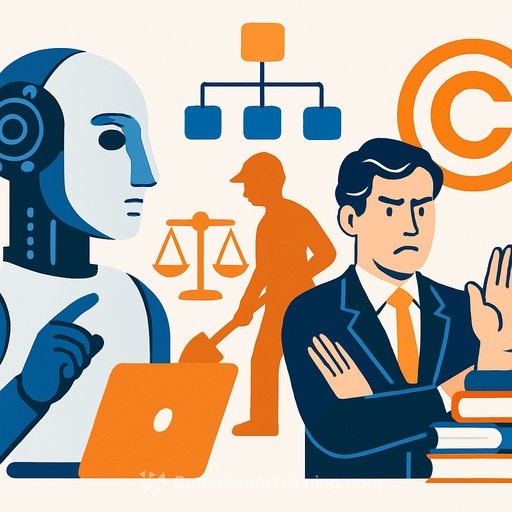
AI and Writing: Challenges Facing Authors and the Industry
AI's rapid growth has stirred intense debate in the writing community. From legal battles over copyright to cultural conflicts around AI usage, writers are grappling with new realities that affect their craft and livelihood.
David Baldacci Takes a Stand Against AI Training Practices
David Baldacci, the bestselling author known for his legal thrillers, recently spoke before a Senate subcommittee about the impact of AI companies using copyrighted books to train their models without permission. After discovering that AI-generated summaries pulled heavily from his works, Baldacci highlighted the harm this practice causes to authors and publishers.
This hearing, titled “Too Big to Prosecute? Examining the AI Industry’s Mass Ingestion of Copyrighted Works for AI Training,” raised bipartisan concerns about the unchecked use of creative content. Baldacci’s testimony reflects a growing movement among authors demanding accountability and fair compensation in the AI era.
Legal Battles: Fair Use and AI Training Under Scrutiny
Following the Senate hearing, a U.S. District Judge allowed a class action lawsuit against Anthropic’s Claude large language model to proceed. The suit challenges the legality of training AI models on pirated and scanned books without consent. While the judge previously ruled some uses as “exceedingly transformative” and therefore fair use, this rationale faces criticism, especially since pirated books downloaded from illegal sites were deemed not fair use.
The lawsuit categorizes works into “Pirated Books” and “Scanned Books” classes, complicating the legal definitions. The outcome could set important precedents for how AI companies source training data and how authors’ rights are protected.
Is “AI Shaming” a New Form of Classism?
Among the cultural debates, a recent academic paper suggests that phrases like “AI could have written this” function as classist slurs within knowledge work fields. This “AI shaming” allegedly serves as gatekeeping, reinforcing middle-class anxieties by excluding others from certain professional spaces.
While this claim may seem bold, it reflects real tension as AI tools become widespread. For writers and knowledge workers, the question is how to maintain quality and authenticity without alienating peers who use AI assistance.
Microsoft’s AI Ethics Under Fire
Former Microsoft engineers have publicly criticized the company for failing to live up to its promises on ethical and environmental AI use. Initially hired to develop tools for sustainable AI deployment, the engineers found Microsoft supporting fossil fuel companies by using AI to enhance oil extraction.
Despite public commitments to carbon-negative goals, Microsoft’s actions reveal a disconnect between corporate statements and actual practice. This kind of hypocrisy raises concerns about how AI development aligns with broader social and environmental responsibilities.
What Writers Need to Keep in Mind
- AI models often learn from vast amounts of existing content, raising copyright and ethical questions that affect authors directly.
- Legal rulings on fair use in AI training are still evolving, so staying informed about these developments is crucial.
- Conversations around AI use in writing are not just technical but also cultural, involving perceptions of quality, originality, and professional boundaries.
- Tech companies’ promises about responsible AI use may not always translate into action, impacting the broader ecosystem writers operate within.
Writers should approach AI tools critically, understanding both their potential and their pitfalls. For those interested in practical AI skills that respect ethical boundaries, exploring specialized training can be valuable. Check out AI courses designed for writers and creative professionals to learn how to use AI effectively without compromising your work’s integrity.
Ultimately, AI is a human-made product shaped by human decisions. It reflects the priorities and biases of its creators. As writers, maintaining awareness of these factors helps protect your craft and advocate for fair treatment in this changing landscape.
Your membership also unlocks: