
AI news ·
AI cleanup work costs engaged employees 1.5 weeks a year, Workday finds
AI tools save time, but a Workday survey found roughly 40% of those gains are lost fixing AI errors. Top performers bear most of that burden, spending hours auditing outputs instead of doing their actual jobs.
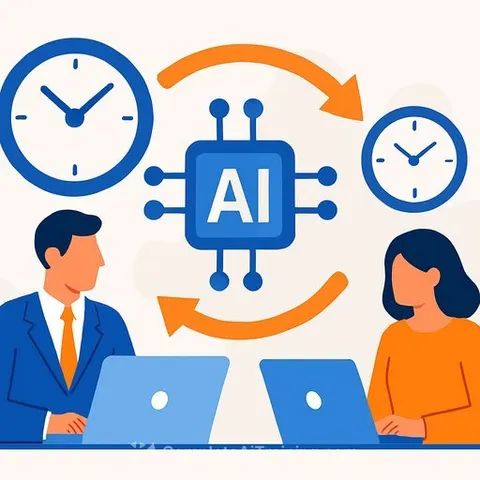
The Hidden Cost of AI: Your Best Employees Are Fixing Its Mistakes
AI is saving organizations time, but not in the way leaders expect. A Workday survey found that for every 10 hours of efficiency gained through AI tools, approximately 4 hours are lost fixing AI-generated content. That's a 40% offset that most organizations aren't tracking.
The problem compounds with your most engaged employees. They're the ones catching errors, validating outputs, and cleaning up mistakes-work that feels less like progress and more like constant maintenance.
Who Bears the Burden
Seventy-seven percent of daily AI users audit AI work with the same rigor they apply to human work. Workday estimates this creates an additional 1.5 weeks of lost time per highly engaged employee per year.
These aren't underperformers. They're the employees most willing to adopt new tools. Instead of accelerating their work, AI has made them quality control specialists.
The issue intensifies when employees use AI for complex work without proper training. Summarizing meeting notes works fine. Generating policy summaries or analyst reports often requires more expert time to fix than writing from scratch would have taken.
Where Leaders Miss the Signal
Managers focused on gross efficiency-how much time AI saves-often miss net value: whether AI actually improves results. Faster output doesn't equal better work.
Watch for these warning signs:
- Work bouncing back repeatedly for edits and reviews
- High performers spending more time editing than creating
- Speed increasing while mistakes and revisions also climb
- Certain workflows consistently requiring rework
If AI is generating friction instead of reducing it, the tool needs recalibration-not expansion.
The Training Gap
Sixty-six percent of leaders say AI skills training is a top investment priority. Only 37% of employees who use AI daily report increased access to that training.
This mismatch creates unrealistic expectations. Employees are asked to produce high-quality work with AI tools they haven't been trained to use effectively. Fifty-four percent of struggling AI users say their required skills haven't been updated.
Effective AI adoption requires more than tool access. It requires clear guidelines on when to use AI, how to validate outputs, and what success looks like. It requires guardrails that ensure outputs align with business goals.
Redefining the Work
Some organizations are pairing AI tools with training, quality standards, and accountability measures. They're updating job descriptions and helping employees understand which tasks benefit from AI and which don't.
The alternative-assuming faster automatically means better-leaves your strongest people exhausted and your productivity gains illusory.
For managers, the first step is simple: ask the teams handling most of your AI-generated work where they're spending unexpected time. The patterns you find will show you where AI adds value and where it creates burden.
AI for Management resources can help leaders assess these dynamics and build training programs that align with organizational needs.