25th Insurance Innovators Summit: 3 takeaways insurers can act on now
Over 2,000 insurance leaders met in London for the 25th Insurance Innovators Summit. The message was clear: move faster, get more precise, and make decisions backed by better data. Here are the three takeaways that matter-and how to operationalize them across underwriting, claims, and distribution.
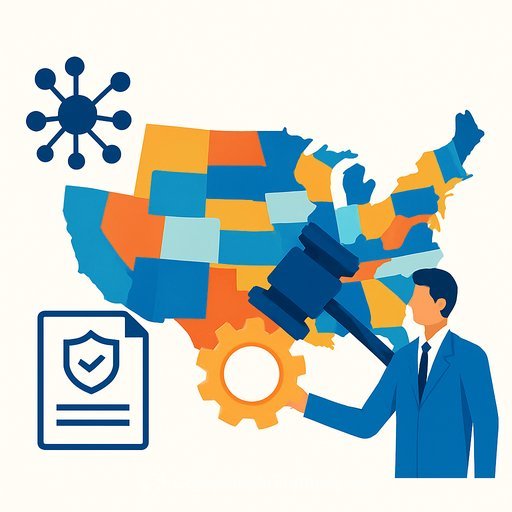
1) AI is leaving the lab. Scale it with controls or expect blowback
Insurers are shifting from pilots to production: claims triage, subrogation recovery, policy servicing, and underwriting assistants are going live across P&C and specialty. The wins are real-cycle time down, loss adjustment expense down, and better broker responsiveness. The risk is equally real: model drift, prompt leakage, biased outcomes, and weak audit trails.
What works right now is boring on purpose: tight data scopes, role-based access, red-teaming, and human-in-the-loop for any decision with customer or regulatory impact. Treat model risk the same way you treat credit or cat risk-own it, measure it, document it.
- Stand up an AI product council with CUO, CIO, Claims, Legal, and Compliance sign-off.
- Inventory every model touching pricing, claims, FNOL, and fraud. Assign an owner. Set review cadences.
- Use a common control set (e.g., the NIST AI Risk Management Framework) for consistency across vendors and internal builds.
- Prioritize co-pilots for underwriters and adjusters where a 10-20% productivity lift is achievable without policy wording changes.
If your teams need practical upskilling to deploy these tools responsibly, see curated options by role here: AI courses by job.
2) Climate risk must show up in pricing, capacity, and wording-not just reports
Across property, energy, and ag, the assumption of stationarity is broken. Frequency and severity are shifting, and secondary perils are driving surprise losses. Southeast Asia was a frequent reference point: fast-growing exposure, flood and cyclone risk, and a stubborn protection gap.
Carriers that are winning are blending vendor cat models with event attribution studies, forward-looking scenarios, and higher-resolution flood data. They are also rewriting wordings (sub-limits, aggregates, hours clauses), expanding parametric triggers, and getting earlier with reinsurance partners on capital needs.
- Run pricing stress tests with updated hazard assumptions; escalate classes where technical price is consistently below actual.
- Refresh accumulation controls for flood and convective storm; link to real-time exposure movement.
- Pilot parametric covers for SME and public-sector clients to close speed-of-payment gaps.
- Ground your climate narrative in credible science (start with the IPCC AR6 Synthesis Report).
3) Fraud is scaling with AI. Your defenses need to scale faster
Deepfaked documents, voice clones in call centers, staged losses coordinated on social platforms-fraud is now industrial. Claims teams report more complex rings and cleaner forgeries, especially in motor, workers' comp, and small commercial property.
The fix is layered and fast: behavioral signals at FNOL, document forensics, network analytics across claims and payments, and feedback loops to underwriting. Collaboration matters-consortium data and shared indicators catch patterns single carriers miss.
- Introduce risk-based authentication at intake; step up checks only when signals stack.
- Deploy image/video forensics and device fingerprinting to cut manual review load.
- Stand up an SIU-model feedback loop so declines and reversals retrain models weekly.
- Measure what matters: prevented loss, false positive rate, adjuster minutes saved.
What to execute in the next 90 days
- AI: Ship two production use cases with clear guardrails-one in claims ops, one in underwriting support. Publish a model inventory and control checklist.
- Climate: Update peril assumptions and aggregates ahead of renewals; brief brokers and key clients on the pricing impact and options, including parametrics.
- Fraud: Add at least one new upstream signal at FNOL and one downstream payment control. Track lift in detection and reduction in cycle time.
- People: Train underwriters, adjusters, and product owners on AI literacy and safe workflows. If you need structured paths, explore the latest AI courses.
No one has spare capacity, but the carriers that act on these three fronts-governed AI, pricing that reflects today's hazards, and scaled fraud defenses-will protect margin and grow with confidence over the next cycle.
Your membership also unlocks: