AI-generated code is shipping faster-and breaking more. Here's how to keep it in check
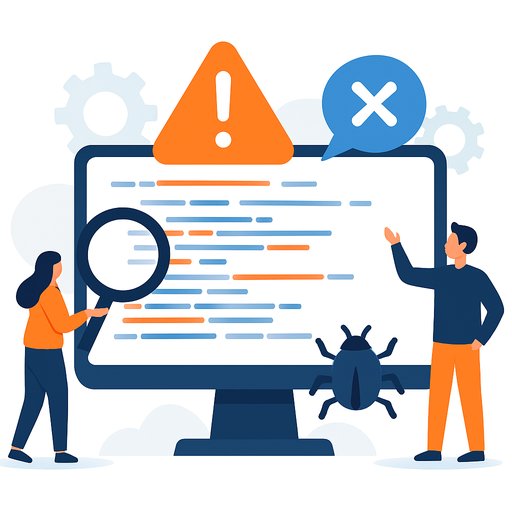
AI coding assistants are now standard in many repos (see Coding). A new analysis from CodeRabbit says that comes at a cost: AI-authored pull requests produced 1.7x more issues than human-only PRs during review.
The gap is clear in the numbers. AI PRs averaged 10.83 issues per review vs. 6.45 for human code. The distribution matters even more: AI changes had a heavier tail, meaning more "busy" reviews with spikes of problems that take real time to unwind.
What the data shows
- Scope: 470 open-source GitHub PRs analyzed (320 AI-coauthored, 150 human-only).
- Issue volume: 1.7x more issues in AI PRs; 10.83 vs. 6.45 per PR.
- Variance: AI PRs created heavier tails-fewer "easy" reviews, more spike-heavy, deep-scrutiny reviews.
- Categories: Logic and correctness led the problem list. AI PRs generated more issues across correctness, maintainability, security, and performance.
- Security: Vulnerabilities weren't unique to AI, but appeared more often, raising overall risk.
- Naming and formatting: Nearly 2x more naming inconsistencies; formatting problems were 2.66x more common in AI PRs.
- Behavioral bugs: Incorrect ordering, dependency flow issues, and misuse of concurrency primitives were far more frequent.
- Performance: Regressions were rare, but disproportionately caused by AI changes.
- Positives: Humans made more spelling errors (18.92 vs. 10.77) and more testability issues (23.65 vs. 17.85).
- Visual fit vs. local idioms: AI code often "looks right" but violates project conventions or structure.
Why this matters
AI accelerates output but increases review effort and unpredictability. That heavy tail means you'll get more PRs that burn cycles: debugging logic errors, untangling concurrency, and cleaning up naming and formatting.
If you're measured on stability and lead time, you need process upgrades, not just better prompts. Treat AI-assisted changes as high-variance and put guardrails around them.
Guardrails to implement now
- Provide project context up front: invariants, config patterns, architectural rules, and codebase idioms. Bake these into templates and prompts.
- Enforce strict CI on readability: linters, formatters, naming rules, and import hygiene must gate merges.
- Require pre-merge tests for any non-trivial control flow. Don't approve without green tests touching new logic paths.
- Codify security defaults: parameterized queries, input validation, approved crypto libs, secret handling, and least privilege. Run SAST and dependency checks by default. See the OWASP Top 10 for baseline coverage.
- Favor idiomatic data structures and patterns. Enforce batched I/O, pagination, timeouts, and backoff where applicable.
- Add smoke tests for I/O-heavy and resource-sensitive paths (file, network, DB, cache).
- Adopt AI-aware PR checklists. Require a short "reasoning" summary: assumptions, invariants touched, tradeoffs, known risks.
- Use a third-party review tool for static analysis and policy checks, and require a second human reviewer for high-risk areas.
Quick review checklist for AI-assisted PRs
- Style and structure: Naming matches domain language? Formatting passes CI? Follows project idioms?
- Tests first: Do tests cover edge cases, error paths, and boundary conditions? Run them locally.
- Correctness: Check null handling, off-by-one, ordering, state transitions, and error propagation.
- Dependencies and concurrency: Validate dependency flow, lock usage, async/await patterns, and ordering guarantees.
- Security: Look for injection risks, unsafe deserialization, path traversal, insecure randomness, weak crypto, and secret leaks (env, logs, exceptions). Reference OWASP Top 10.
- Performance: Watch for N+1 queries, I/O in tight loops, unbounded pagination, and unnecessary allocations.
- Configs and migrations: Verify feature flags, config defaults, and reversible migrations.
How to roll this out without slowing the team
- Start with high-signal gates: naming/formatting CI, unit test coverage on changed files, and security checks.
- Track metrics: issues per PR, time-to-approve, and post-merge incidents. Compare AI vs. human PRs over time.
- Scope AI usage: allow AI for boilerplate and tests first; require extra review for core logic and concurrency-sensitive code.
- Level-up the team: short training on prompts with constraints, reasoning summaries, and security defaults helps cut noise (see AI for IT & Development).
AI isn't "set and forget." Treat it like a junior teammate who works fast and makes different classes of mistakes. With the right guardrails, you keep the speed and cut the risk.
If you're formalizing policy and upskilling your org on AI-assisted coding, explore practical training to standardize reviews and prompts: AI Certification for Coding.
Your membership also unlocks: