AI-Generated Code Is Amplifying Security Risks Faster Than Organizations Can Control
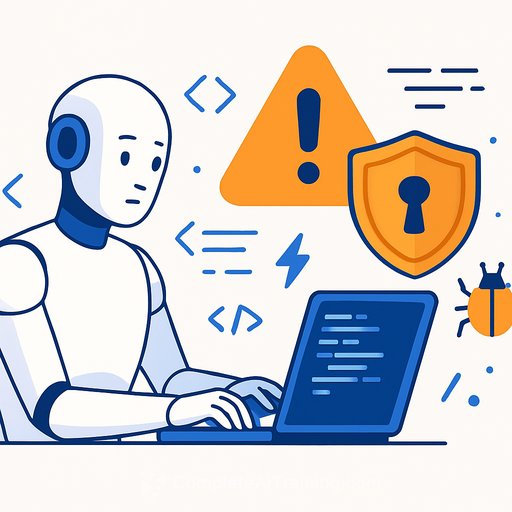
Agentic AI has moved from experimental to embedded in enterprise development workflows. Developers now use AI agents as coding assistants across practically every project, and the code they generate is accumulating in repositories at unprecedented speed. But the security implications are catching up just as fast.
AI agents excel at predicting the next line of code. They don't understand the security consequences of what they're suggesting. When developers working under pressure accept AI-generated patterns without scrutiny, insecure code gets committed. The autonomous nature of these agents only accelerates the problem.
A Gartner report found that 32% of IT workers using generative AI tools hide them from their security teams. Combined with low-code platforms and rapid development practices, AI copilots are expanding the enterprise attack surface significantly.
The Executive Confidence Gap
Leadership is pushing AI adoption hard. Gartner found that 79% of IT leaders expect significant benefits from agentic AI. They're converting custom-built chatbots into agents by linking them with APIs and tools-often without adequate security preparation.
The disconnect between confidence and readiness is stark. Only 14% of IT leaders say their data and content are ready for human-AI interactions. Yet 81% of executives surveyed by PagerDuty are willing to let autonomous systems take action during security breaches or outages.
When asked about their ability to detect and mitigate AI failures, 96% of executives expressed confidence. But 84% have already experienced AI-related outages. Trust in fully autonomous agents dropped from 43% a year ago to 27% now, according to Capgemini research.
What CISOs Can Actually Do
Security leaders aren't powerless, but they need to act now. Three areas require immediate attention:
- Developer risk management. Security education and upskilling matter more than ever. Developers need to understand secure coding practices and how to review AI-generated code critically. Benchmarks to track progress in acquiring new skills are essential.
- Shadow AI inventory. Organizations must know what AI agents exist, which developers use them, and which codebases they touch. This visibility enables risk prioritization based on agent type and project sensitivity. Gartner predicts that by 2029, more than half of successful attacks against AI agents will exploit access control issues through prompt injection.
- Governance and automation. Policy enforcement through automated systems ensures AI-assisted code meets secure development standards before reaching critical repositories.
The Path Forward
AI-assisted development isn't going away-the productivity gains are too significant. But uncontrolled use is creating vulnerabilities that most security programs aren't prepared to defend against.
Organizations that implement visibility, observability, governance, and developer training can reverse the trend. Gartner estimates that CIOs and CISOs working with business leaders on structured security programs could reduce critical cybersecurity incidents by 50% by 2028, even as high-level AI initiatives grow by 20%.
For executives and strategy leaders, the message is straightforward: AI governance isn't optional. It's the foundation for safely scaling AI-assisted development. Consider exploring AI for Executives & Strategy to understand how to implement these programs effectively.
Your membership also unlocks: