AI Incentives in Trump's Healthcare Bill: What Hospital Leaders Need to Know
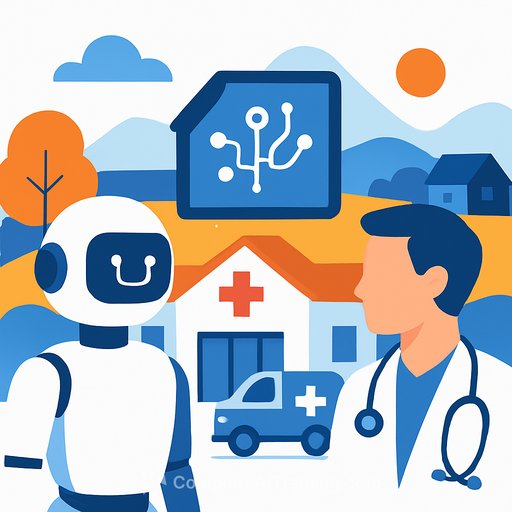
The administration's latest healthcare bill ties state funding to meeting three of 10 criteria, including expanded use of AI in care settings. The Rural Health Transformation Fund sets aside $50bn over five years for "technology-driven solutions" in rural hospitals, from remote monitoring and robotics to AI-enabled tools.
Analysts caution that the fund is small compared with a projected $911bn reduction in Medicaid spending over the next decade. That gap will hit patients who lose coverage and the hospitals that depend on Medicaid reimbursements.
Where AI Can Help Right Now
Rural facilities run lean. They face chronic staffing gaps and high burnout among clinicians. AI can reduce administrative drag and help teams focus on patient care.
Documentation is a prime use case. Physicians spend many hours a week on notes for EHRs, and recent research shows AI-generated notes can match general physician quality (though not expert-level notes). As Chenhao Tan put it, "If the baseline is tired human doctors, then I think it is even easier to make an argument that AI may do better than them."
There's a potential recruitment upside as well. Karni Chagal-Feferkorn suggests better tooling could entice clinicians to choose rural practice: "If the equipment is state-of-the-art, and they feel that much of the burdensome work is done by AI… this might have a great impact."
Risks You Have to Account For
AI is not a free pass to cut staff. Under-resourced hospitals adopting tools as a cost-saving move-without governance and safety infrastructure-are inviting errors, patient harm, and liability.
Cybersecurity exposure will grow as data-sharing expands across systems to support use cases like medication reconciliation. As Chagal-Feferkorn notes, AI can make some attacks easier for non-experts. More data flows mean more potential breach points.
Regulatory Snapshot
The FDA regulates AI that evaluates or diagnoses conditions because those tools are considered medical devices. Note-taking and transcription software generally fall outside that scope, even if they market themselves as HIPAA compliant.
For reference, see the FDA's page on AI/ML-enabled medical devices: FDA AI/ML medical devices. HIPAA requirements and guidance are here: HHS HIPAA.
Practical Action Plan for Rural Hospitals
- Define the clinical target: Choose 1-2 high-friction workflows (e.g., note drafting, prior auth prep, claim edits) with measurable outcomes.
- Design for human-in-the-loop: Keep clinicians in control. Require sign-off for any outputs that touch orders, diagnoses, or patient instructions.
- Vet vendors like a device: Ask for real-world validation in similar populations, bias testing results, security attestations, uptime SLAs, model update policies, and a clear data-use agreement (no secondary use without consent).
- Integrate safely: Pilot in a test environment. Use minimal PHI, role-based access, audit logs, and a rollback plan. Confirm clean integration with your EHR and pharmacy systems.
- Upskill your staff: Train "superusers," create quick-reference SOPs, and set escalation paths. Teach prompt discipline, verification habits, and error reporting.
- Cyber basics first: MFA, network segmentation, encryption at rest/in transit, zero trust where possible, and routine phishing drills. Add red-team tests for AI-enabled endpoints.
- Measure what matters: Track documentation time saved, turnaround time, denial rates, clinician burnout indicators, patient-safety events, and net cost per encounter.
- Compliance and governance: BAAs in place, DPIAs where required, incident response workflows, and a model registry that logs versions, prompts, and performance.
- Equity checks: Review performance across age, race, language, disability, and payer status. Add language support and accessibility safeguards.
- Budget the total cost: Include licenses, implementation, integration, GPUs/compute, monitoring, security, change management, and retraining-not just the subscription price.
Use Cases With the Best Early ROI
- Clinical documentation assistance: Draft notes from transcripts; clinicians edit and sign.
- Inbox triage and summaries: Summarize long histories and outside records; flag meds and allergies.
- Revenue cycle support: Code suggestions, claim edit checks, and denial-prevention prompts with billing oversight.
- Care coordination: Medication reconciliation and cross-provider record merges to avoid dangerous interactions (with tight privacy controls).
Funding Reality Check
The $50bn Rural Health Transformation Fund can jumpstart projects, but it won't cover the broader fiscal pressure from Medicaid cuts. Treat grants as seed money, not a full operating budget.
Form regional consortia for group negotiations, shared security services, and pooled pilots. Standardize templates and training to reduce duplication across facilities.
What to Watch Next
- State guidance on scoring the "three of 10" criteria and acceptable proof of AI adoption.
- FDA updates on AI/ML device change control and post-market monitoring expectations.
- Insurer policies on reimbursing AI-augmented services and documentation.
Upskilling Options
If you're standing up governance, training your clinical champions, or writing SOPs, structured learning helps. See role-based AI course paths here: AI courses by job.
Bottom Line
AI can relieve administrative load and strengthen care continuity in rural hospitals, but only with the right staffing, safety nets, and security. Implement it as a quality and access initiative-never as a shortcut to cut headcount.
Start small, measure rigorously, keep clinicians in control, and harden your cybersecurity. That's how you turn incentive dollars into safer care and sustainable operations.
Your membership also unlocks: