
AI news ·
AI companies face political backlash as former White House counsel warns of failure to communicate public benefits
AI companies spent billions building products but almost nothing explaining them to the public. Now politicians in both parties are running against the technology, and some executives admit they have no dedicated communications teams.
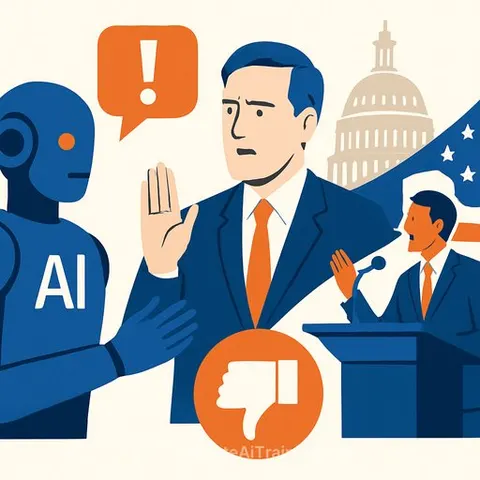
AI Companies Face Political Backlash Over Failure to Communicate Benefits
Major technology companies have invested billions building artificial intelligence products but almost nothing explaining them to the public. The result: AI has shifted from an industry priority to a political liability.
That disconnect emerged during conversations between tech leaders and government officials in the Trump administration's first hundred days. When asked how to improve their widely-used AI platforms, executives at some of the world's largest tech companies gave the same answer: they lacked dedicated communications teams.
"You have a major communications problem," one White House official told a billion-dollar AI company leader. "Everyone uses your product, but every time I turn on the TV, I only ever hear about its dangers."
The response was telling. The engineer had spent so much time perfecting the product that public communications had never been a priority.
Political Positioning Accelerates
The absence of a coherent public message has created an opening for politicians. Governors across red and blue states are now positioning themselves against AI, promising to limit the technology to protect jobs.
Even historically pro-business politicians have begun distancing themselves from the industry. Some Republican officials told White House contacts they will not publicly discuss AI because their association with Big Tech is costing them in polls.
Internal discussions suggest 2028 presidential candidates are already planning anti-AI campaigns to distinguish themselves from pro-tech figures.
Companies have already faced consequences. Some relocated to business-friendly states after politicians returned their donations amid growing public animosity toward AI and data centers.
The Communication Gap Widens
Americans use AI daily to improve their lives-yet the public narrative centers almost entirely on risks and dangers. That gap between reality and perception has become the industry's central vulnerability.
The tobacco industry spends more than $8 billion annually on marketing in the U.S. for a simple product. Tech companies sell sophisticated, complicated products that require explanation but spend a fraction of that on public education.
Without serious investment in communications, anti-AI sentiment could become one of the few issues uniting both political parties. That outcome would damage not just individual companies but American competitiveness in a technology the government views as central to national security and economic growth.
Tech leaders have a narrow window to change course. The alternative is watching AI become what Big Tobacco became: a sector defined by public suspicion rather than public benefit.
For communications professionals advising tech companies, the lesson is clear. Learn more about AI for PR & Communications strategies to help organizations navigate this shifting landscape.