AI Companies Scraped Billions of Images Without Artist Consent. Three Years Later, Creative Jobs Are Vanishing.
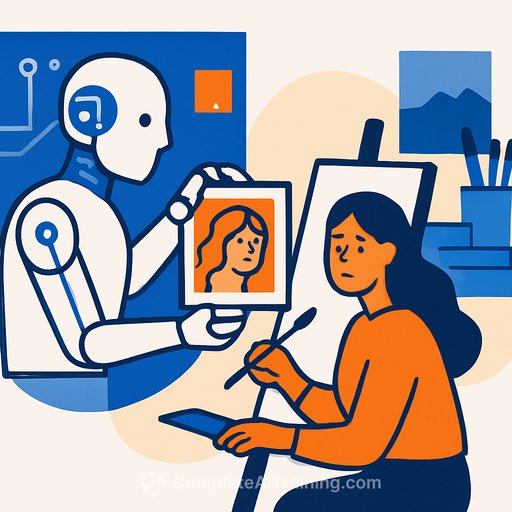
Generative AI companies trained their image generators on billions of images harvested from the internet without credit, compensation, or consent from the artists who created them. The scraping began around 2022 and has devastated the illustration industry, eliminating entry-level positions where young artists once learned their craft.
Three illustrators-Sarah Andersen, Kelly McKernan, and Karla Ortiz-sued Midjourney and Stability AI in January 2023, claiming the companies "violated the rights of millions of artists." The lawsuit remains contested and ongoing.
Tech executives have shown open contempt for the creators whose work trained their systems. In 2024, OpenAI's chief technology officer Mira Murati said that creative jobs destroyed by her company's product maybe "shouldn't have been there in the first place."
The Industry's Response Was Muted
When the crisis emerged, many journalists and media figures failed to push back. At the 2023 Perugia journalism festival, tech industry representatives told newsrooms they would have to adopt AI products or risk obsolescence. Privately, these same people acknowledged that AI would eliminate writers-but they did not say so publicly.
An open letter demanding that AI-generated images be kept out of newsrooms attracted thousands of signatures from creators worldwide. The effort highlighted a broader pattern: tech companies were moving fast and breaking things, and few institutions were prepared to resist.
The Damage Extends Beyond Art
The scraping of creative work is part of a larger extraction. AI data centers consume vast amounts of water. The systems require rare minerals and land. They generate carbon emissions at scale. In return, tech companies offer users chatbots that have induced psychiatric episodes and urged teenagers to harm themselves.
The work produced by these systems is often poor quality. But quality is not the point. Generative AI functions as a tool to discipline and eliminate human workers. The audience will simply have to accept lower standards.
History Shows Resistance Is Possible
Tech boosters invoke the Luddites as a cautionary tale about opposing progress. The historical record tells a different story. Luddites were skilled artisans fighting to preserve their livelihoods against industrial sweatshops powered by child labor. They lost not to inevitable progress but to government troops. Many were executed or shipped to penal colonies.
Artists are fighting for a way of life. The outcome depends on whether they can organize effectively-and whether other workers recognize that the same forces targeting illustrators will come for them next.
For more on how AI affects creative work, see our guide to AI for Creatives.
Your membership also unlocks: